






06 November, 2026
Workstation Sink Guide: The Accessories That Make It Worth It
Discover which accessories make a workstation sink worth it, from colanders to drain covers, plus tips on caring for the bowl and when to call a plumber.

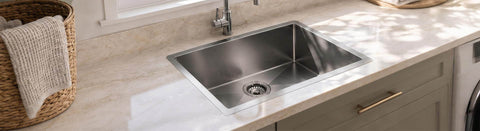
A workstation sink only pays off once you've sorted out which accessories should sit in that bowl. Each listing bundles in the sink itself plus strainer waste, hanging basket and drain cover — so whatever colander, grid or waste you pick needs to match that spec from day one. Below is a rundown of what's worth adding, what you can handle yourself and what needs a licensed plumber, so the bench stays cohesive even as the sink does more work.
Video Credit: Kitchinsider
What's a Workstation Sink?
In lots of ways a workstation sink is a prep bench, not just a basin. Inside the bowl you'll find a colander, strainer waste, hanging basket and drain cover — each one drops in or hangs off the bowl itself rather than cluttering the bench beside it. Chuck a colander or hanging basket into the bowl, and chopping, rinsing and draining all happen in one spot instead of shuffling things across the benchtop.

The Benefits of Workstation Sinks
In a small kitchen where every centimetre of bench space is valuable, the concept of a workstation sink can be very handy. A colander fitted in the bowl allows you to wash and drain vegetables without getting the benchtop wet. Cook a few meals in there and the benefit becomes obvious fast. A hanging basket comes standard on some workstation sinks instead, adding a spare compartment for scraps or soaking produce. The result: that sink area takes on far more prep work than any standard bowl manages.

Choosing Your Sink
First you need to select your sink, as everything else depends on it. We offer OSONS Yasumi Japanese single bowls as workstation kitchen sinks in two sizes (802 x 503 mm and 750 x 490 mm), in top, flush or under mount designs. Ensure you select a bowl size that's appropriate to the cupboard width, and have your benchtop installer verify that the benchtop can accept the type of sink you want. They're the ones cutting the benchtop, and the licensed plumber installing the plumbing — connecting the waste and tap is not a DIY job, so call a licensed plumber for that step. If your sink has a tap hole, make sure any mixer you want to install there is WaterMark certified before the licensed plumber can fit it. Taps sold for use over a kitchen sink are generally covered by the WELS scheme — check the star rating on the specific product listing.

Accessories That Earn Their Bench Space
The most useful sink accessories are those you regularly use at the sink. Square stainless steel colanders for kitchen sinks can be used for washing fruit and vegetables and draining pasta, allowing you to prep food in the sink instead of the bench. Some product listings indicate which models they fit, so check to see if your sink is included, and if it isn't, compare the dimensions of the colander with your bowl — this fitting check and swap is DIY-friendly. A sink protector grid is another accessory worth considering alongside a colander, as it sits in the base of the bowl to guard the surface from scratches and impact while you wash up, and like taps registered under the WELS scheme (WELS scheme), grids are matched to a specific sink model, so check the product listing for compatibility before buying.

Caring for and Protecting the Bowl
Bowls cop a fair bit of punishment day to day, so they deserve some care. Sink protector grids rest at the base of the bowl and prevent heavy pots and pans from knocking against the bottom of the sink. Most sink protector grids for sale are built to match a specific Meir sink model code. For a Yasumi bowl, grab a non-model-specific option like the TWM Navona range (available in multiple sizes) and check its dimensions against yours, or just measure the bowl's interior before you order. Pulling the grid out for a clean is easy enough to do yourself, and it's worth doing often since debris and odours build up right there. Replacing the strainer waste, though, crosses into plumbing territory rather than DIY. Get a licensed plumber to install a product carrying a WaterMark licence (WaterMark Certification Scheme) — drinking water and drainage fittings must appear on the WaterMark Schedule of Products.
References
WaterMark Certification Scheme, Australian Building Codes Board