03 June, 2026
Complete Guide to Types of Showers
Explore all types of showers for your Australian bathroom renovation. Our complete guide helps you choose the right shower with confidence.

Video Credit: JSB Home Solutions
There aren't many things that offer the immediate, day-to-day gratification of a well-planned bathroom renovation—the bathroom being where your shower is. After spending ages deliberating shower designs, walking through many stores and talking to bathroom experts on this issue, I'm happy to say that Australian bathroom renovators and buyers today have an amazing array of shower types to choose from. Regardless of whether you are renovating an existing bathroom or building new, taking the time to figure out what types of showers are available before you buy will save you many hours of research, save you money on any costly mistakes and save you a lot of frustration.
What Are the Main Types of Showers?
Basically, you can choose from five types of showers in Australian homes: alcove, walk-in, corner, wet room, and bath-shower combination. Here is the detail on each one:
Alcove showers are the most standard: they are built out with three walls and the fourth wall has a shower screen on it. The alcove style is functional, space-efficient and great for bathrooms with narrow width dimensions. The most common size for an alcove is 900×900 mm, while 1200×900 mm has been getting more and more popular.
Walk-in showers have an opening where they don't use a shower door (a fixed side panel only). They are luxurious and easy to clean. A corner shower utilises two walls and is great for small and narrow bathrooms. A wet room is a completely waterproofed floor area of a bathroom and doesn't require any type of shower screen. Wet rooms look amazing, but they need a lot of additional waterproofing and require a more detailed build. The bath-shower combination is still popular, especially in homes with small children, as parents will often want the children to have the opportunity to bathe.

Shower Enclosure Styles and Configurations
Once you have decided what type of shower is right for you, you'll need to decide on your shower screen—this is the main cost and maintenance difference between different enclosure styles and also a huge part of waterproofing a shower. Frameless screens are popular right now and I do see why. The shower space appears larger without any frame lines, plus the lack of exposed aluminium rails makes it easier to keep clean and stop mould growing in corners.
The toughened glass on both frameless and semi-frameless screens needs to be at least 6 mm thick (AS/NZS 2208:2023), as opposed to framed screens, which only need 4 mm glass. You can also find 10 mm glass from brands such as Covey and Fienza. This is much heavier and thicker and a noticeable weight difference. Ensure that the wall on which your frameless shower screen is fixed can support that much weight. Expect to pay from $400 or so for the simplest frameless setup through to $2,550 or more for the larger, more complicated configurations.
Whichever style you choose, Grade A safety glazing will be mandatory, and it's always good practice to look for the permanent compliance mark etched into the glass before you accept a delivery. Some shower screens boast a nano coating which encourages water to bead and run off the glass surface quickly, drastically reducing how long you'll spend on cleaning. Brands like Aquapel offer aftermarket nano coating spray-on treatments that typically need reapplication every 12 to 18 months. It could be worth the extra dollars.
Hinged, pivot and sliding shower doors are the main contenders when it comes to what kind of door you want, and each option comes with advantages in different scenarios. Sliding shower doors are a good fit for a small bathroom where a swinging door might get in the way; however pivot and hinged options will be less visually imposing. Semi-frameless screens provide something in the middle, an affordable option with a far lighter feel than the fully-framed alternative.

Shower Head and Spray System Types
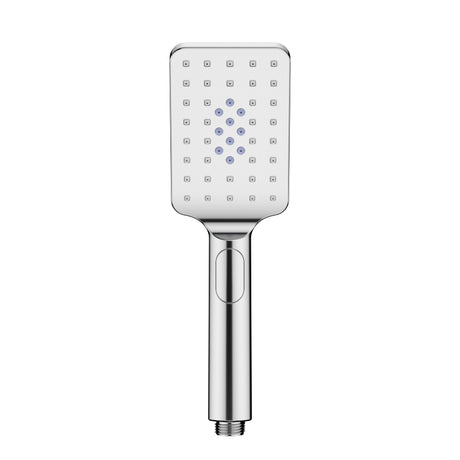
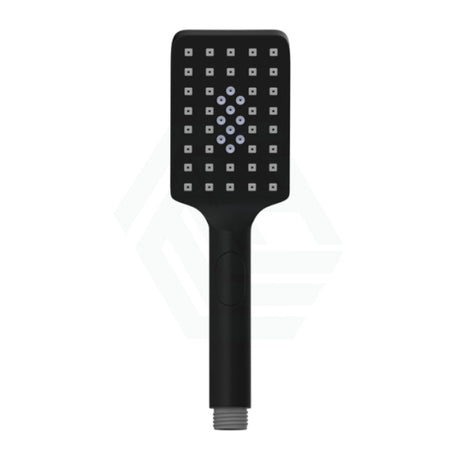
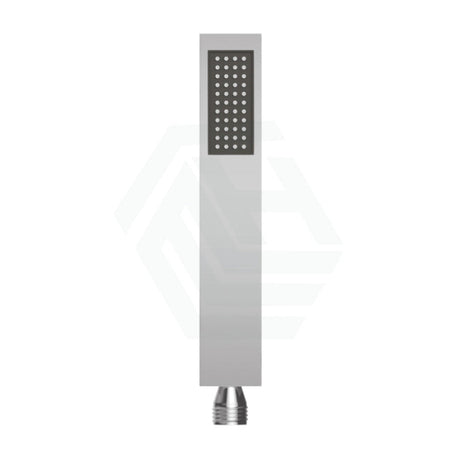
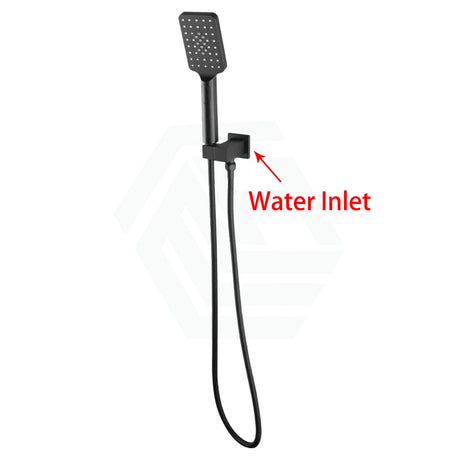
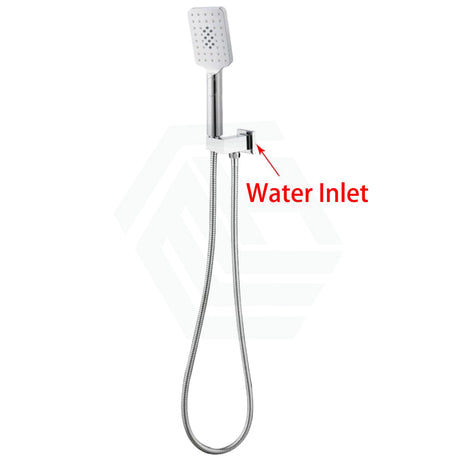
You also need to think about what kind of shower head and spray system you'd prefer, another decision impacting on comfort levels and water use. The ever-popular ceiling-mounted rain heads are sweeping Australia's bathrooms and it's easy to see why; the spray is wide and full and just so luxurious. Prices range from $60 to $654 for a ceiling-mounted rain head depending on finish and size. Fixed, wall-mounted showers are simple, robust and efficient, and are fairly straightforward to install. Handheld heads on a rail are an absolute must with children or if you need to wash a large dog. Aquaperla, Macho-SS and more carry rail sets between $72 and $553. Twin rail showers, a combo of a fixed overhead shower and a handheld shower, are becoming the standard in mid- to high-end renovation projects. Prices range from $269 to $1,784.
A WELS rating (AS/NZS 6400:2016) is compulsory for shower heads in Australia. Shower heads should be three-star or better. These are rated by water use per minute, with a 7–9 litres per minute shower head offering a good balance of efficiency and power. Additionally, all bathroom products need WaterMark approval (WaterMark Certification Scheme) to be sold in Australia.

Shower Installation and Construction Considerations
You've selected your shower head — great! But knowing how the shower should be installed is just as important, and waterproofing is the first thing to get right. Waterproofing in particular is compulsory to be completed by a licensed waterproofer, and you should expect to have the walls of your shower waterproofed to 1800 mm (NCC 2025, ABCB Housing Provisions, Part 10.2) or more from the floor substrate under the NCC 2025. Don't forget the shower base: the shower's floor area, including the hob or step down, must be fully waterproofed too. Where the walls meet the floor the perimeter flashing must have a minimum 50 mm horizontal leg, and a 25 mm vertical leg above the finished floor level. Not should—the code.
Floor falls are also important. Plan on at least a 1:60 to 1:80 slope to the waste so that the floor does not puddle, and your tile choice matters here too. The AS 4586 P-rating slip resistance (AS 4586:2013) minimum for floor tiles also must be met; you are better off sticking to matte finish porcelain tiles. For the shower walls, the most popular tiles at the moment are large format (600×1200 mm), but they require more cutting and an experienced tiler. An alcove footprint of at least 1200 mm wide is required to convert to a walk-in shower without moving walls.
If you are opting to put in a bath shower, the screen needs to be professionally measured and installed by a licensed tradesperson—it cannot be a DIY job. Beyond the screen itself, there are also plumbing standards to keep in mind. AS/NZS 3500.4:2025 states that any bathroom or shower outlet discharging hot water must not exceed 50°C (AS/NZS 3500.4:2025). A thermostatic mixer is the best solution here; this is especially important for families with young children and elderly people.

What Shower To Choose?
If you have done your homework, including knowing your exact requirements and budget, it should then be an easy task for you to compare your options and choose the correct shower style for your bathroom.
In smaller bathrooms (up to 4 m²) the 900×900 mm corner or alcove shower is your most space-efficient option. The average price for a semi-frameless sliding screen is going to be between $130 and $600 for the screen alone; remember the installation price is separate. The average price for the shower fit-out only (not including tiling or waterproofing) of a 1200×900 mm alcove shower with a frameless screen and a twin rail set should be between $3,000 and $7,000 for mid-range renovations. The shower fit-out for wet room or large walk-in showers can exceed $15,000 once waterproofing throughout the bathroom and large floor tiling, together with a high-quality mixer, are included.
In a family bathroom, the question becomes whether you will be installing a shower only, or a shower with a bath. If there is both space and budget to do so it is preferable to install a shower separate to the bath. If the floor area is an issue, you can always choose the corner bath; they do not take up too much floor space and are tucked neatly in the corner of the bathroom. For those who have the space for both a bath and a shower, it always makes for an elegant and classic look to have the freestanding bath installed beside a walk-in shower.
I have observed many bathroom renovations myself and talked to a number of bathroom designers over the years and my best piece of advice is this—do your homework; have an idea of the layout you need in order to build your knowledge on the different types of showers available. Once you know what you want, everything else will fall into place.
References
AS/NZS 2208:2023 Safety glazing materials in buildings (incorporating Amendment No. 2:2025), Standards Australia
National Construction Code 2025, ABCB Housing Provisions, Part 10.2 Wet area waterproofing
AS/NZS 6400:2016 Water efficient products — Rating and labelling (incorporating Amendment No. 1:2022 and Amendment No. 2:2022), Standards Australia
AS/NZS 3500.4:2025 Plumbing and Drainage — Heated Water Services, Standards Australia
AS 4586:2013 Slip resistance classification of new pedestrian surface materials (incorporating Amendment No. 1:2017), Standards Australia
WaterMark Certification Scheme, Australian Building Codes Board