





05 November, 2026
Hybrid Flooring Pros and Cons: What Australian Homes Should Know
Hybrid flooring pros and cons for Australian homes: a surface and core that resist wiped-up spills, underfoot feel, how it's installed, and the trade-offs around cost and repairs explained.

Picture your living room floor after a rainy afternoon of muddy paw prints, a toddler's spilled juice, and a dragged-in pile of shoes—does that scenario make you nervous? It shouldn't, because hybrid flooring is built with exactly this chaos in mind. Think of each plank as a sandwich: a sturdy core, a realistic woodgrain layer, and a tough, transparent wear layer on top that shrugs off scuffs and spills. It feels firm and substantial underfoot, stays flat through Australia's temperature swings, and clicks into place without nails, glue, or sanding. Of course, no flooring is perfect, and we'll walk through where it genuinely shines—and where it can let you down.
Video Credit: MYHOMEWARE
What is hybrid flooring?
Think of a hybrid flooring plank as a multi-layered creation, each with its own function.
On the bottom, there is a core, then a decorative layer (woodgrain print) often mimicking oak, spotted gum, blackbutt, and other timbers. Finally, there is a transparent wear layer on the top.
Some hybrid floors are supplied with an attached underlay, which saves having to install a separate underlay beneath the planks when installing. This is why hybrid flooring is different from vinyl or laminate, or hardwood flooring, and what makes it unique, appealing and practical.
In short, it's a blend of different types of flooring, packed into one plank. It's a type of flooring designed for real life. You know, for families who track dirt onto their floor, pets who sprint across the floor, or that occasional cup of tea that ends up on the floor.

The Pros of Hybrid Flooring
Why would anyone want to use hybrid flooring in the first place?
Firstly, it feels firm and substantial underfoot, unlike a thin, hollow-sounding vinyl.
Secondly, its rigid core is dimensionally stable, but like any floating floor it still moves a little as temperatures change, so it has to be laid with the expansion gaps its installation guide specifies.
Thirdly, because it uses a floating click-lock installation system, there is no need for nails, glue or sanding, and many products can be installed directly over existing tiles (always check the manufacturer's instructions before doing this).
Fourthly, the surface and core resist topical spills like a cup of coffee if you wipe it up promptly — but standing water or leaks can still get in at the joints. It's worth weighing the hybrid flooring pros and cons against the needs of your household before deciding.
Before you decide on hybrid flooring, here are some possible disadvantages.

The Cons of Hybrid Flooring
There are a few potential negatives to take into account when choosing hybrid flooring. One is that floating floors can sound hollow underfoot in socks, particularly in large open-plan areas, a floating-floor trait generally that is minimised by a rigid core and a good underlay, rather than being specific to one core type.
Choose the correct underlay to prevent a hollow sound when walking on the floor, don't try to save money here.
When it becomes scratched or worn, you cannot sand and refinish hybrid boards like solid timber, so the wear layer you choose when buying is the one you will be stuck with for the lifetime of the floor.
"Waterproof" is misleading by itself as a claim for this type of flooring: standing water, leaks, or soaking will seep in through the seams and edges, causing permanent damage.
That is exactly why hybrid flooring should never be installed in bathrooms, ensuites, powder rooms or laundries, as tiles are a better option in these areas. Tiles are designed for high-moisture environments, which hybrid flooring cannot withstand.
To compensate for these shortcomings, some people opt for a thicker board, so let's examine what a thicker board actually provides you with, before weighing the fuller set of hybrid flooring pros and cons.
Is a Thicker Board Better?
It might seem like the additional millimetres of thickness would make for a more durable, quieter and longer-lasting floor. Unfortunately, this is not necessarily true.
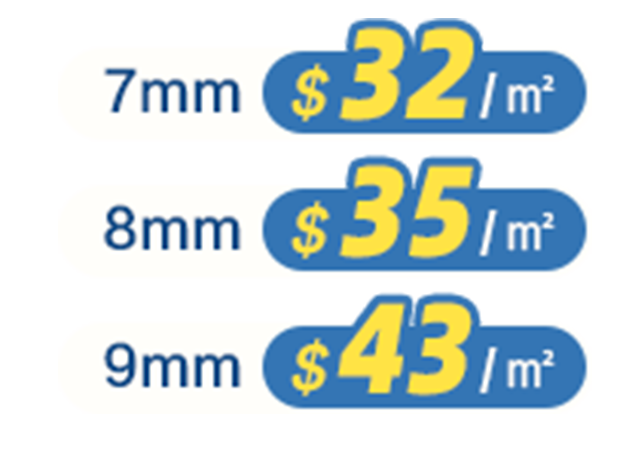
Increased thickness does provide a little extra comfort underfoot, and can help cover small subfloor imperfections, but the core and attached underlay will do the heavy lifting, no matter how thick the board is.
8mm hybrid flooring is usually a sensible middle choice for most purposes, but once again, thickness is less important than the core material and the underlay below it. Look past the numbers, and look at the core and underlay instead.
Now that we have discussed the practicalities, let us look at whether hybrid flooring is suitable for your home.

Is Hybrid Flooring Suitable for Your Home?
Hybrid flooring is an excellent option for living rooms, bedrooms, hallways and kitchens, where you can enjoy the warmth and wood grain effect without having to worry about maintaining timber flooring.
If you want a floor with a bit more design, herringbone hybrid flooring will provide a pattern, but it requires more labour to install, and produces more waste, so include this cost before buying. Although a simple plank layout is quicker and easier for a DIYer to install, herringbone is definitely worth it if you want to make a visual impact in a hallway or living room.
As ever, evaluate hybrid flooring pros and cons in relation to your requirements, not someone else's Pinterest board. If you want the sturdiest underfoot feel, look at SPC hybrid flooring, whose rigid stone-plastic core gives the firmest feel of the hybrid types.