17 June, 2026
Toilet Meaning: A Plain Aussie Explanation
Understand the toilet meaning — from its French origins to how Australians use the word for the fixture and the room today.

Video Credit: Bathroom Remodel Tips with Richie
What Does "Toilet" Mean?
The word "toilet" gets thrown around very loosely in Australia, so we usually don't bother to stop and wonder what it actually means. Does it refer to the fixture? The room it lives in? Or both? The truth is: both, or either depending on the situation. But the reason why the word can refer to both the fixture and the room where it resides is that the meaning is not as new as some people believe.
The toilet meaning today originated from the French word "toilette," which was a diminutive version of the word "toile," which in itself means "a small cloth/linen." A "toilette" originally described a piece of cloth put on top of a dressing table and, by extension, the act of washing oneself at that dressing table. By the 18th century, the English language had adopted the word "toilet" to describe the act of washing and grooming, and by extension, the actual room used for that purpose. The actual toilet fixture as we know it today is only something recently associated with the word "toilet."
To put it in plain English, the toilet meaning refers to either the ceramic fixture connected to the drain (the one people usually think of) but also refers — rather informally and casually — to the room that houses said toilet. It may also get referred to as a "bathroom" (or dunny), depending on the person you speak to and their region of origin.
For the purpose of this guide, toilet refers to the actual fixture connected to the drain, not the room we find it in. It's worth understanding how the toilet — and its many Aussie nicknames — evolved over the past 200-odd years here in Australia.

A Brief History of the Toilet in Australia
Back in colonial Australia, sanitation — if one can put it politely — was rudimentary. Privies (small outdoor toilet structures built upon a pit) were the most common arrangement for many homes in Australia, well into the late 1800s. In urban areas, the "pan system" was used: a removable pan beneath the seat, collected by council workers who became known as "dunny men." This lasted until the 1960s in some Australian states. Many people find this surprising but it is quite true.
Indoor toilets started to become common from the early 1900s but first became popular in wealthier houses. Eventually, this filtered down to the common Australian housing stock, with S-trap and P-trap connections linking the toilet pan to underground drainage — a fundamental shift that moved sanitation indoors permanently.
Dual-flush toilets are what are used in many of the homes in Australia today. But they did not always exist. The dual-flush toilet was actually an invention of an Australian gentleman named Bruce Thompson, launched in 1980 by a local manufacturer. Since then, the Water Efficiency Labelling and Standards (WELS) scheme was introduced in 2005 to mandate water efficiency standards for all toilets, cementing the place that dual-flush has in our culture. That path from the humble outdoor dunny to the sleek dual-flush unit of today is one made by the engineers. But with the cover off the cistern, how does a toilet in Australia actually work today?

How a Toilet Works: Key Parts Explained
A toilet is actually a little more mechanically interesting than it might seem. The basic system has two main assemblies: a pan (the bowl part) and the toilet cistern (the water reservoir above or behind it). Once the flush button is pressed, the flush valve opens and empties the cistern into the pan at volume and velocity. That rush of water carries waste through the trap — either an S-trap (floor outlet, with a setout of 100–120mm (AS/NZS 3500.2:2025)) or a P-trap (wall outlet, with a setout of 185mm) — and into the drainage system.
The cistern then empties, the fill valve opens, and it will run until the cistern refills to a set level, then shuts off automatically. On dual-flush models, there is a choice of a full flush (typically 4.5L) and a half flush (typically 3L) at WELS 4-star, at the push of a button on the flush panel.
This is useful to understand just in case things go wrong. Knowing which component is responsible — whether it is slow refill, a phantom flush, or a cistern that is continually running — saves time and money before you call a licensed plumber.

Types of Toilets Available in Australia
There are four different types of toilets you can find when looking at toilets in Australia:
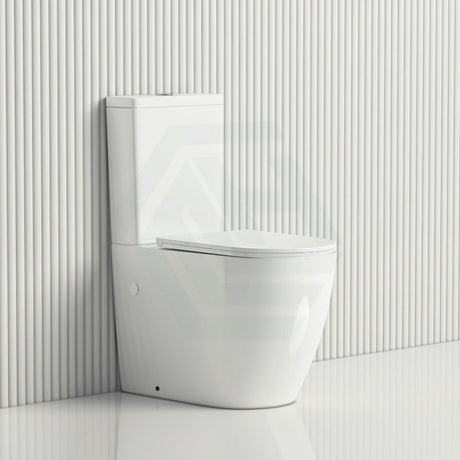
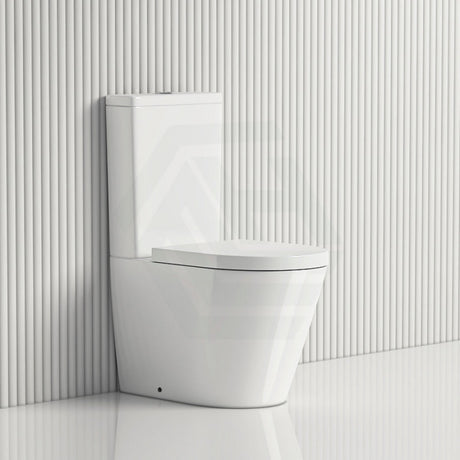
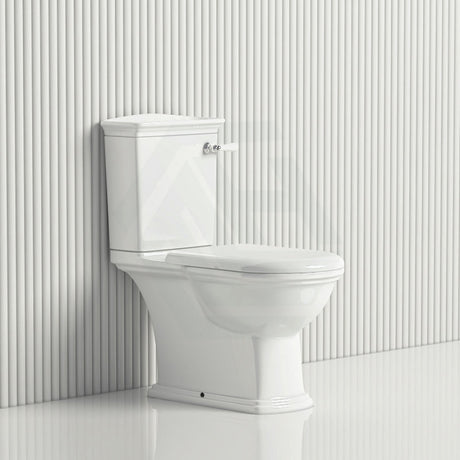
Close-coupled, which is the most common and most affordable option (the cistern sits on top of the pan), generally $185 to $500. Easy to install and spare parts are widely available.
Back to wall (the pan is butted up to the wall with the cistern hidden behind), generally $300 to $800. This type has a cleaner look than the close-coupled, and is easier to clean around the bottom of the pan.
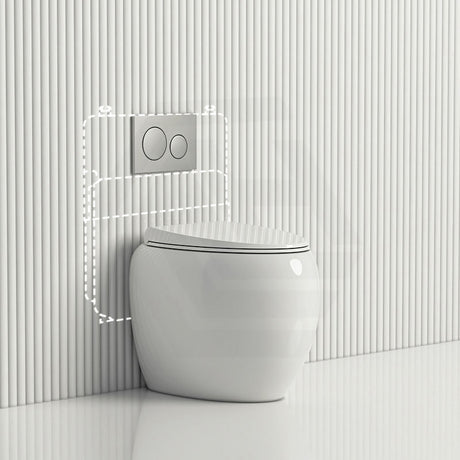
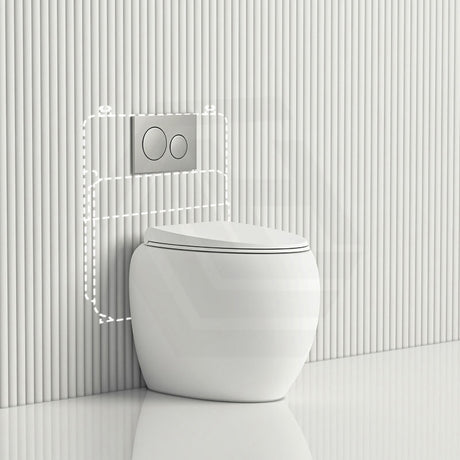
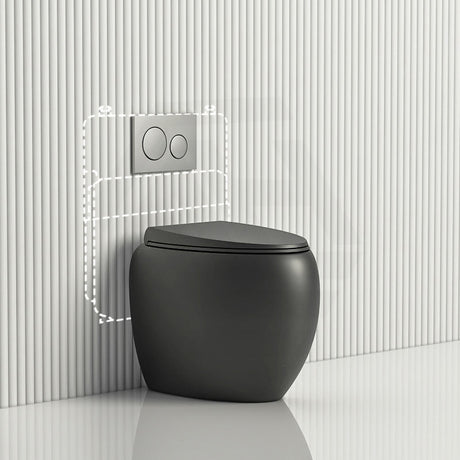
Wall-hung (the pan is fixed to the wall with no floor support, and the cistern is concealed in the wall within a structural carrier frame), $303 to $934 for the pan. Very clean look, and easy to mop floors beneath, but installation complexity and cost are higher. The in-wall cistern is an additional cost.
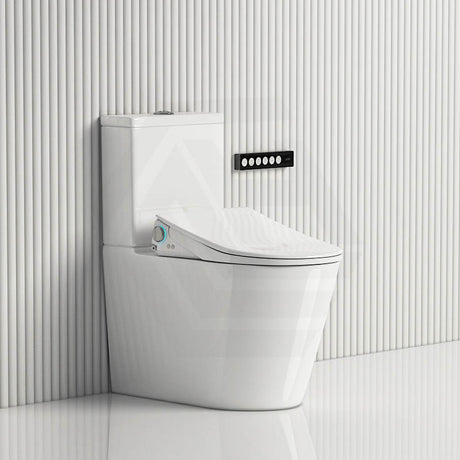
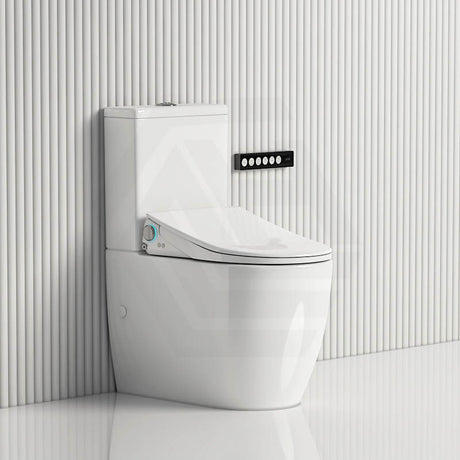
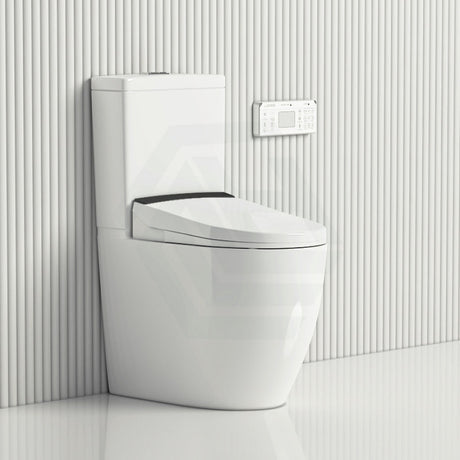
Smart toilets, with a price to suit. Kohler produces toilets at the premium end with smart functions including integrated bidet, heated seats, and auto-flush. Expect to pay at least $1,619, with options climbing significantly from there — and if you're renovating to accommodate one, it's worth knowing that the NCC 2025 Livable Housing Design Standard is essential reading: If you're renovating, the NCC 2025 Livable Housing Design Standard is essential reading: it mandates that new constructions and major renovations feature at least a 1200mm by 900mm (NCC 2025, ABCB Livable Housing Design Standard) clear circulation space in front of the toilet pan, plus a minimum 900mm clear width between walls flanking the pan.

Buying a Toilet in Australia: What to Look For
I've watched people spend endless time finding the most desirable shape and colour and then overlook the critical specs that determine whether the toilet will even fit or function in their bathroom. Here's the important stuff.
First and foremost is the setout measurement and trap type. Measure from the wall to the centre of your floor waste outlet before purchasing your toilet. If this is incorrect, you won't be able to connect the pan to the waste outlet, and there is a significant chance you'll face expensive modifications. Note that tiling can shift your setout by 10 to 15mm, so always measure after tiling is complete.
Check the WELS rating. Every toilet sold in Australia must be registered and labelled with a WELS star rating before being sold. A 4-star rating indicates 4.5L for the full flush and 3L for the half flush — the current benchmark for water efficiency. Toilets with a lower WELS rating are legal to purchase but will likely cost more to run over time.
Also look for the WaterMark certification mark on the product. This is a mandatory national standard for plumbing and drainage products. If a product lacks WaterMark certification, do not buy it no matter how cheap it is.
Consider a rimless design. Fienza, for one, makes rimless pans in which the traditional rim ledge — where dirt and bacteria tend to build up — is removed, making cleaning significantly easier.
For toilet suite prices in Australia: entry-level options cost between $185 and $400, mid-range rimless suites from brands like Fienza and Poseidon range from $400 and $800, and premium or designer suites cost upwards of $800. A decent toilet cistern is worth investing in — it's the mechanism that makes the whole thing run, and cheap fill valves are a common cause of expensive repairs.
Lastly, think about toilet parts availability for the suite you're considering. If you plan to own this toilet for 15 to 20 years, the chances are you'll eventually need parts. Going with a major brand known for good distribution within Australia — like Fienza, Poseidon, or for in-wall systems, Geberit — means toilet parts will be cheaper and easier to source than those for an expensive but little-known brand.
References
AS/NZS 3500.2:2025 Plumbing and Drainage — Sanitary Plumbing and Drainage, Standards Australia
National Construction Code 2025, ABCB Livable Housing Design Standard, Part 3 Internal doors and corridors and Part 4 Sanitary compartment
AS/NZS 6400:2016 Water efficient products — Rating and labelling (incorporating Amendment No. 1:2022 and Amendment No. 2:2022), Standards Australia
WaterMark Certification Scheme, Australian Building Codes Board