29 April, 2026
Toilet Types Explained: Finding the Right Fit for Your Bathroom
Toilet types explained: close-coupled, back-to-wall and wall-hung options with rimless, dual flush and smart features. Practical guide to choosing the right toilet for your Australian bathroom.

The toilet aisle is more confusing than it should be (here's your cheat sheet)
Right, so you've just walked into your local bathroom showroom or, more likely, you've found yourself mindlessly scrolling online, and suddenly all these toilet types come flooding out at you; close coupled toilet types, back to wall suites, wall-hung pans, rimless this, dual flush that, and a 'smart toilet' that costs more than your first car. Honestly, I don't blame you; it's confusing.
The thing is, the type of toilet you pick will have far-reaching consequences that'll influence everything from your bathroom's layout to your water bills, and getting the wrong one could end in calling a plumber to sort things out for a fee that you would have otherwise avoided. Which is why it is vital that we fully break down how to decide exactly which toilet is the right fit for you, and once you understand the three distinct toilet types based on mounting style, flushing system, and level of features, the decision-making process will make much more sense.

Mounting styles: close-coupled, back-to-wall and wall-hung compared
Which brings us to the first big point of confusion.
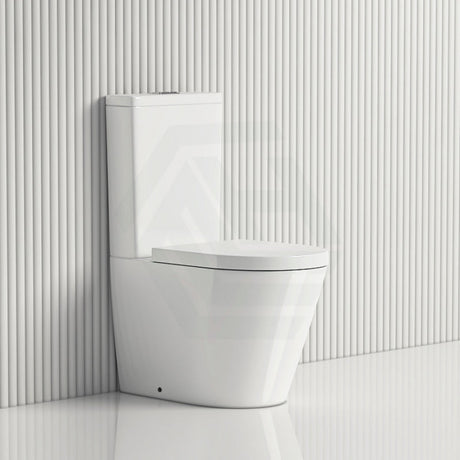
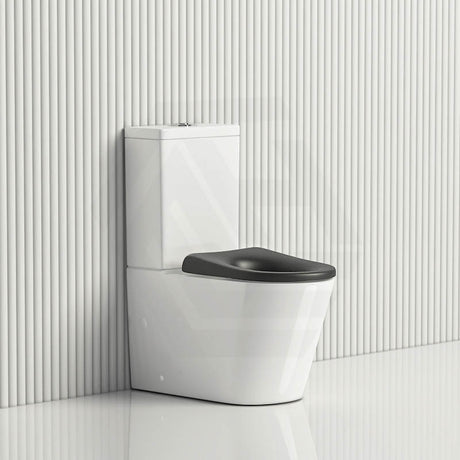
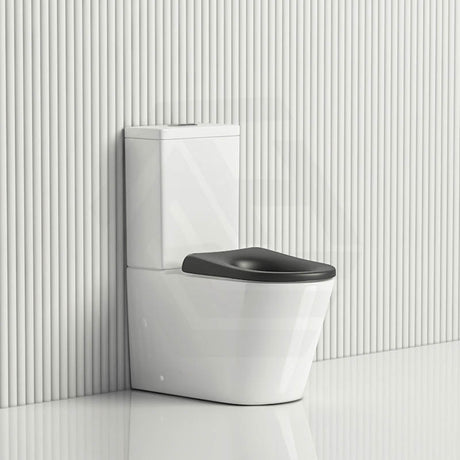
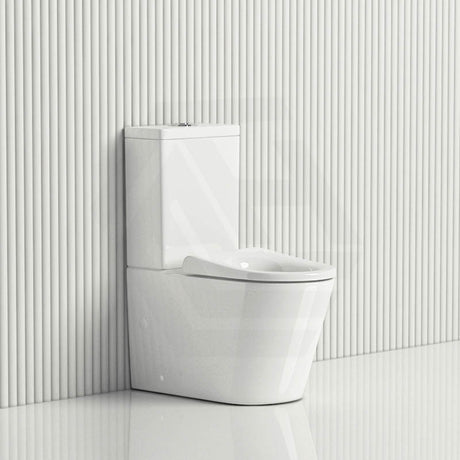
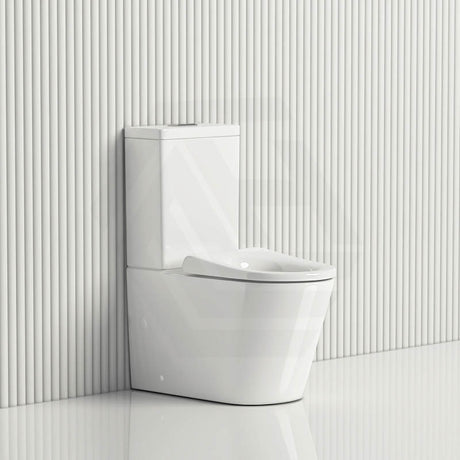
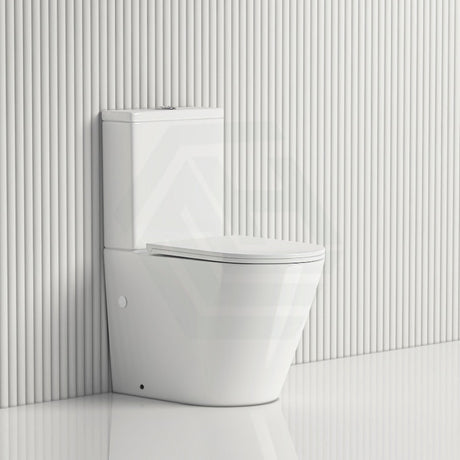
A close-coupled toilet is likely what we've all grown up with where the cistern rests on the back of the pan and everything is fully exposed. Not only do they tend to be the cheapest option costing between $300 to $800, but they are also the easiest style of toilet to install. Of course, what you gain in cost savings and simplicity in installation is that they will take up the most visual space (even when it's empty) and the gap between the back of the cistern and the wall is basically a dust magnet.
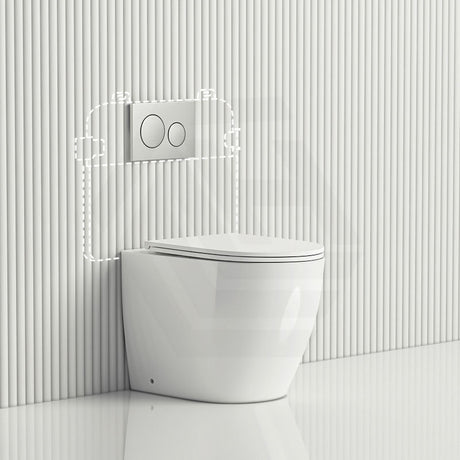
A back to wall toilet is essentially the next upgrade in terms of design and functionality. This is where the pan sits up against the wall (or a freestanding unit) and the cistern is hidden (whether it's in-wall or behind cabinetry). You'll get a far cleaner, sleeker look and much easier maintenance as there are nowhere for dust to accumulate, and nowhere that you'd struggle to clean around. Back to wall toilet suites can cost between $185 and $1,199, depending on the style and brand of your choice. Check out Poseidon and Fienza for some good options in the back to wall range.
Wall hung toilets have a lot of things going for them; these types of toilets aren't connected to the floor at all. They're actually mounted into the wall on a steel frame with an in-wall cistern ($165 to $1,283 separately) doing all of the heavy lifting in the background. Not only do they look stunning in a modern style bathroom but cleaning the floors is infinitely easier thanks to being able to mop under them unimpeded. Now, here is the kicker, which I wish would have come sooner, these toilets must be professionally installed as an in-wall cistern can't simply be installed by trying to DIY it yourself. A licensed plumber is an absolute must to get in-wall systems installed, but rest assured it is worth the price. An in-wall toilet suite can range anywhere between $543 and $1,284.

Flush systems, water ratings and the rimless revolution
Now, every toilet will have a WELS star rating as you walk out of the bathroom showroom. This is where the water efficiency labelling and standards rating comes into effect, and if you're planning on going for a 4-star rated toilet (which I would suggest) the water efficiency rating will dictate that it will use 4.5 litres on a full flush and 3 litres on a half flush. With this rating, you're almost certain to get a dual flush system, and these will be found across almost all types of toilets, which is fantastic, considering how much money it saves you on water bills over the long run.
And now, rimless. If you haven't shopped for a toilet in the last five or so years, it's possible that this is all new to you. Rimless toilets do not have the internal rim channels where the water traditionally runs around the bowl of a toilet. Rather, the water sheets directly across the surface of it. Fewer nooks and crannies for bacteria to get stuck in means easier cleaning. Many manufacturers including Kohler, Fienza and Poseidon feature this technology as standard on most of their toilets, and honestly speaking, once you clean the rimless toilet you just won't look back.
If your toilet running constantly is driving you up the wall, the culprit is almost always the inlet valve, or the flush valve seal, located inside the cistern. It's a common enough occurrence, and while it may be worth getting a plumber to attend to it in no time, you should look at the parts that make up the valve before you start thinking about getting your whole toilet replaced because a lot of the time, it can be the $15 part you need.

Smart toilets and bidet seats: are they worth the upgrade?
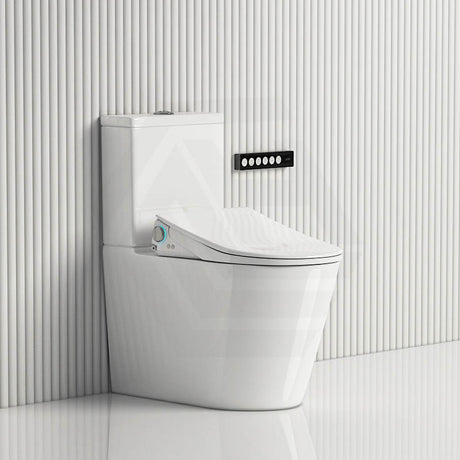
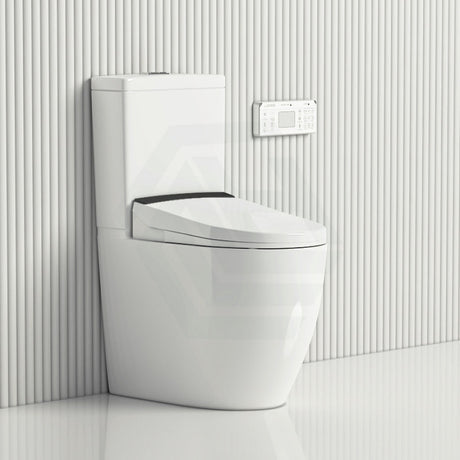
Finally we have fun time. Smart toilets include heated seats, a bidet wash, warm air dry, night lights, auto flush, and some even have fans that deodorise and self cleaning nozzles. It's definitely the best toilet that you will ever get your bum on.
However, if you are in a price sensitive space, this is definitely the more expensive route to take with prices in Australia for smart toilets ranging from $1,619 to a staggering $6,205 for a high end model, but if you've ever been on a smart toilet for even five minutes in a showroom, you will see why people fork out this kind of money.
If you've flinched at that price (and that's fair), then you can look at retrofitting a bidet seat cover which are just like their high end cousins in terms of features. They're fitted to your existing toilet, and prices start at $80 for a basic unit and run through to $1,846 for the premium models. The only caveat is that if you're after the heated seats and electronic options, you will need a power point located near your toilet, so make sure you do a quick check first, before you buy your unit. A bidet in toilette setup — essentially a toilet with bidet functionality built in — has been becoming increasingly popular in Australian homes and bathrooms over the last few years and it doesn't take a genius to figure out why it's the superior option when it comes to hygiene.

Sizing, dimensions and what to check before you buy
Before you fall in love with a toilet, measure your bathroom. Toilet dimensions standard across Australia have most measuring between 650 and 750 mm deep, and 350 and 400 mm wide, but it's the set-out measurement you really need to take a look at. For an S-trap toilet, which is the majority of toilets, the waste leaves through the floor and you take a measurement from the finished wall through to the centre point of the waste pipe, this is typically around 100 and 120 mm. 185 mm is standard for a P-trap (wall outlet).
Get the setout wrong and you'll be forced to undertake costly works to make your new toilet connect to your existing plumbing system. A simple way to work this out: Measure the distance from the wall to the centre of the bolts which hold your current toilet in place. This will give you a fair indication of the setout distance your current toilet has. Toilet dimensions Australia searches spike every time somebody finds out their new toilet is incompatible with their existing plumbing. Don't be that person.
While on the topic, ensure that you buy products that are WaterMark certified (WaterMark Certification Scheme). This is a mandatory national scheme that all plumbing products must undergo to be sold in Australia. In short: If the product bears the WaterMark logo it meets our Australian standards. If it does not, walk away.
One more thing — before you buy that new fancy smart toilet bowl, you need to know if you have the necessary power supply in the bathroom for it, as most models (or even smart toilet seats and electronic bidet seats) require a dedicated power point in close proximity and a qualified licensed electrician will be needed to install it in the bathroom.
References
WaterMark Certification Scheme, Australian Building Codes Board