18 May, 2026
How to Choose a Bathroom Vanity: The Complete Buying Guide
Wondering how to choose a bathroom vanity? Our Australian buying guide covers sizing, style and storage so you can renovate with confidence.

Video Credit: Penny Modern
If there's one choice you make in your bathroom renovation that will then determine everything else, including the layout, plumbing, storage and overall feel of your space, it is the choice of your bathroom vanity. I have thought about this quite a lot (and probably even too much), and I firmly feel that having a good understanding of how to choose a bathroom vanity can be the difference between having a bathroom you merely put up with and one you look forward to using every day.
Understanding Bathroom Vanity Dimensions and Sizing
Let's start with this: it's important to know exactly how a bathroom vanity fits in your space before you decide to fall in love with a particular bathroom vanity style or colour. It is simply a case of getting your measurements right and knowing what those measurements mean in terms of bathroom vanity dimensions.
Standard-sized bathroom vanities in Australia usually come in widths ranging from 600mm all the way up to 1800mm. This typically comes in increments of 750mm, 900mm, 1200mm, 1500mm and 1800mm. The 900mm single vanity is one of the most popular sizes for bathrooms in Australia as they offer plenty of storage without feeling too big and imposing. The depth generally sits at around 450mm for the most part, and bathroom vanity height to the benchtop sits at 860mm for freestanding models. For wall-hung vanities, these are adjustable in many instances and can sit anywhere between 850mm and 900mm from the floor, depending on the household.
One thing that can really trip people up is not necessarily the width but rather the clearance around your bathroom vanity. Under the National Construction Code 2022, new dwellings must have clear spaces of 900mm x 1200mm (NCC 2022, ABCB Housing Provisions, Part 12.2) to the front of most bathroom fixtures. Now while these may not necessarily be a required feature for a bathroom in your home unless it's being built to meet the Livable Housing Guidelines, they're still something I'd suggest you follow. Also account for any door swing, any plumbing rough-ins and any towel rails or cabinetry in the vicinity of where you're planning to put a bathroom vanity.
Once you have your measurements, your next step will be to pick a bathroom vanity style that will suit the measurements in your footprint and also your bathroom layout requirements.

Bathroom Vanity Styles: Which One's Right for You?
Four vanity styles dominate most bathrooms: freestanding, wall-hung (also called 'floating'), semi-recessed, and fully recessed — and you'll likely land on one of these four. Each style has its own trade-offs, so it's worth a closer look.
Wall-hung vanities are everywhere right now — and fair enough, they make a room feel bigger and the floor underneath? Dead easy to mop. The catch: solid timber noggins or a steel frame behind the wall is non-negotiable, so there's real prep work before a single thing goes up. An unprepped wall adds time and cost — don't let that one catch you off guard.
Legged freestanding vanities are back in a big way — heritage and transitional bathrooms in particular suit them down to the ground. Tight on space? Want a more open, airy feel? Semi-recessed units pull that off without chewing into your floor space. Day-to-day, matte finishes are a different story — fingerprints and water spots barely register, which counts for a lot in a well-used bathroom. Sure, gloss looks stunning in photos — real life is another matter, where every scratch, mark and water spot is on full display.
Style sorted? Material is where your attention goes next. Cabinet, benchtop, basin — three separate material calls, each with its own price tag and durability story.

Vanity Materials: What You Need to Know About Cabinets, Tops and Basins
Here's what trips most buyers up: the cabinet, benchtop and basin are three separate decisions — and that distinction is exactly where the confusion starts.
Cabinet carcasses come in three main materials — PVC board (fully waterproof, standard at the entry-level), moisture-resistant MDF (mid-range, water-resistant but not fully waterproof, which matters in a bathroom), and plywood (structurally superior, the premium pick, and what higher-end brands like Aulic and CETO use). Plywood cabinets genuinely outlast the alternatives — most homeowners swap a vanity when it gives up the ghost, but with plywood that day comes a lot later. Spending a bit more on plywood makes sense if you'd rather not revisit this decision in five years.
The benchtop is a separate choice entirely. Ceramic tops are a common mid-range option and usually feature an overflow hole. Poly tops are generally the most affordable option and typically do not include an overflow feature, which will narrow your choice of waste fitting. Stone and engineered stone tops are the most visually impressive but add 20–40kg to the vanity, so you must confirm the unit is rated to carry that weight before purchasing.
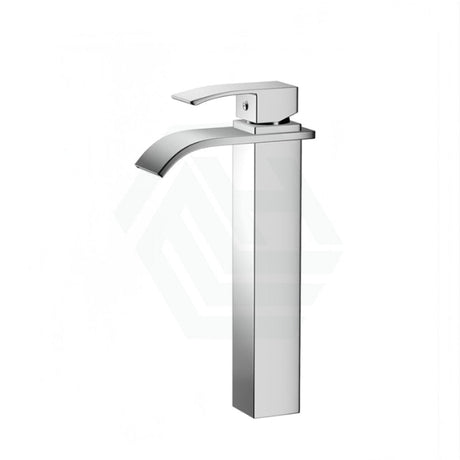
Basins come in an array of types. The above-counter vessel basin is currently the most popular — visually striking and very much here to stay. Semi-recessed basins fit nicely on narrower vanities as they don't protrude as far. Drop-in or inset basins suit more classic setups but are less popular than they once were. Note that above-counter basins do not have a tap hole, so the basin mixer mounts to the bench — you will need a tall basin mixer for these. If your vanity features a no-overflow basin, you will need a matching no-overflow pop-up waste fitting. All tapware and waste fittings must be WaterMark certified or they may not be approved by your local authority.
Material selection is a key decision, but how the vanity is installed and your existing plumbing are equally important considerations. If your existing rough-in is incompatible with your selected vanity, you may need to move it, and that will come with additional costs.

Plumbing, Installation, and Practical Considerations
In Australia, the waste centre is typically positioned 300mm from the wall — though it's not universal, and if your rough-in sits elsewhere, the waste will need to be moved. A licensed plumber must handle the basin connection to both the water supply and waste pipes — across every Australian state and territory, that's the law, and a certificate of compliance is required. DIY-ing the basin connection to the water supply isn't legal — no matter how simple it looks. For a clean, uncomplicated vanity connection, a licensed plumber will generally wrap it up in two to four hours.
Planning a LED shaving cabinet or a hardwired mirror above the vanity? That's a job for a licensed electrician — full stop.
Soft-close hinges and drawer runners are standard on mid-range to premium vanities — Aulic, for instance, uses Häfele German hardware, which is excellent — and upgrading from doors to drawers for under-basin storage is something I would strongly encourage. Drawers are far more functional than doors for day-to-day use. If you are also considering a soaking tub as part of your bathroom renovation, check your sub-floor and wall structural requirements for all fixtures before bringing in any trades, as this can save considerable time and cost.
With this knowledge, you should be able to create a realistic budget that accounts for the vanity unit itself, labour, fittings and any structural preparation work.

Budget Breakdown: What to Expect at Every Price Point
An entry-level vanity, typically PVC board construction with a ceramic basin, generally ranges between $300 and $700 for the unit. These are a sound choice for a secondary bathroom or an investment property. In the mid-range, priced $700 to $1,500, you will find moisture-resistant MDF or plywood construction with better hardware and a more refined finish. Premium vanities — from $1,500 to $3,500 and above, including CETO, Aulic and the higher end of the Lukka collection — are built from plywood with stone benchtops and designer basins that can genuinely transform a bathroom.
Labour to install the vanity and basin generally runs between $200 to $600. Costs increase with complex installations or where significant wall preparation is required. Plumbing re-routing will add further cost where needed, and all of these individual line items add up quickly when you look at the bigger picture. Even a small ensuite renovation in Australia costs upwards of $10,000, with Sydney and Melbourne sitting towards the more expensive end of the scale. Keep this in mind when deciding where to spend and where to save.
If soaking bath tubs or a bath soaker is also part of your renovation budget, I would suggest investing more heavily in a quality vanity rather than a higher-end designer basin. You use the vanity every single day, and smooth-running drawers that hold up over ten years are far more valuable than a luxury basin that rarely gets noticed. Understanding how to choose a bathroom vanity that balances quality and cost means spending the money on what genuinely matters to you — and you'll get the balance right.
References
National Construction Code 2022, ABCB Housing Provisions, Part 12.2 Livable Housing
State plumbing licensing legislation (VBA Victoria; Fair Trading NSW; QBCC Queensland; Building Practitioners Board WA; CBOS Tasmania; ACTPLA ACT; Building & Energy SA; ABPB NT)
AS/NZS 3000:2018 Electrical Installations (Wiring Rules), Standards Australia
WaterMark Certification Scheme, Australian Building Codes Board