15 May, 2026
Bathroom Mirror Ideas: Styles, Sizes and Placement Tips
Explore our top bathroom mirror ideas for Australian homes. From frameless to framed styles, we cover shapes, sizes and placement tips.

Video Credit: Be Leaf Renovation
It seems there is one thing in the bathroom renovation game you can almost be sure to get wrong, and that is the mirror! I've seen the most beautiful vanities completely let down by a tiny mirror, placed too high, the wrong shape. Getting it right is essential for pulling together a beautiful bathroom, and getting it wrong is so very obvious. So I thought it was time we share our top bathroom mirror ideas, from styles through to correct placements.
Popular Bathroom Mirror Styles and Shapes
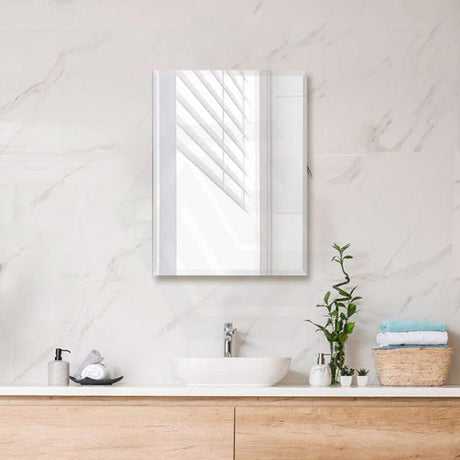
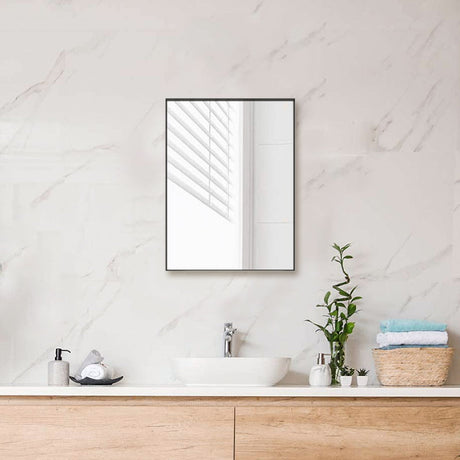
There are many popular bathroom mirror ideas to choose from. In Australia at the moment, frameless mirrors remain incredibly popular, as well as framed mirrors in styles such as Matt Black, Brushed Gold and Brushed Nickel. Framed standard mirrors are available in styles from the likes of Fienza and Aquaperla, and range from $138 to $448 AUD. Perfect for any budget.
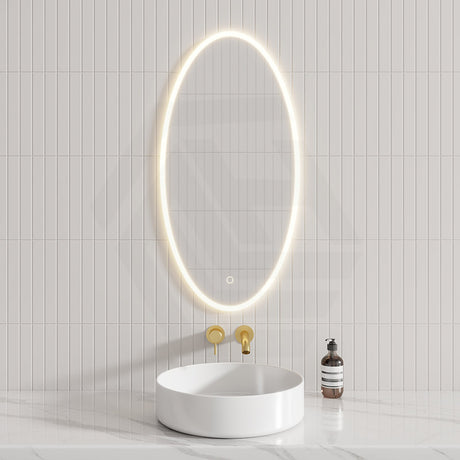
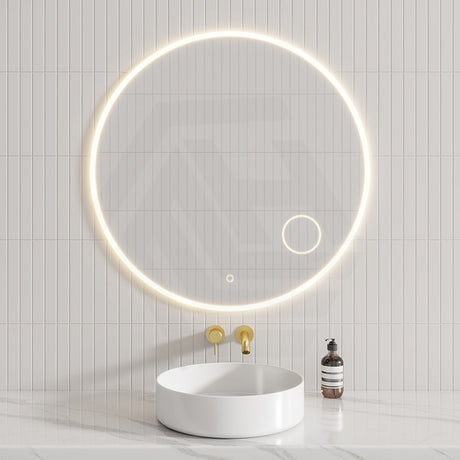
Round mirrors are everywhere these days, and I absolutely love these in an ensuite and powder room. They can help break down square tiles and hard edges with a softer edge. Oval LED mirrors (from $246 to $734 AUD) are another soft edge option but with the added practicality of lighting. Rectangular mirrors continue to hold strong in larger family bathrooms, often because they sit across the width of a double basin vanity.
Also, a word about the shaving cabinet (which incorporates both storage and mirror into one). These are absolutely the ones for bathrooms with tight storage requirements. LED shaving cabinets range from $390 to $1,096 AUD. These tend to be a little more expensive, but I think they are very much worth the investment in a smaller ensuite or bathroom. Once you've decided on what style is best for your bathroom, the next big decision is the sizing of the bathroom mirror.

Choosing the Right Mirror Size for Your Bathroom
The best rule of thumb when deciding on a bathroom mirror size is to go for a mirror that is approximately 50 and 90 per cent of the width of your vanity. So if you have a 900mm wide vanity, then you could fit a mirror between 450mm to 810mm wide. Over a 1200mm or 1500mm double-basin vanity, you might run two mirrors rather than one wide panel — that tends to look more considered and allows each person their own zone.
The height of the mirror should also be considered. In a bathroom with standard 2400mm ceilings, anything between 700mm to 900mm tall is a great size. If you have a ceiling height of 2700mm or taller, the mirror will be able to sit slightly taller. In a tiny ensuite, 600mm-wide vanities look best with round or oval mirrors in the 500mm to 600mm diameter range — anything wider will overwhelm the wall.
With the size selected, the mounting height and method are equally critical. Mounting at the wrong height or using the wrong technique can make the mirror difficult to use and potentially unsafe.

Bathroom Mirror Placement and Height Tips
The general rule, which is good for most people, is to set the bottom edge of the mirror at about 900mm to 1000mm from the finished floor level. This puts the middle of the mirror at eye level for someone between 165cm and 185cm tall. For a family of different heights, mounting the mirror at the lower end (900mm) will look best to shorter family members but will be fine for taller ones.
If you are working to an accessibility standard or a new building with Livable Housing requirements, the NCC 2022 Livable Housing provisions set out minimum clearance zones (NCC 2022, ABCB Housing Provisions, Part 12.2) and accessible design standards that may impact on bathroom vanity and mirror mounting positions for Class 1a dwellings constructed after October 2023.
Plan for a 100mm clearance between the top of your tapware or basin and the bottom edge of the mirror. Mirrors mounted too close to the taps look crowded and don't allow you to easily access the taps. Regarding mounting, framed mirrors are a DIY task, but make sure to hit a stud or use rated plasterboard fixings. There are load limits for plasterboard fixings and you will certainly need a toggle bolt rated to the weight of a framed mirror, or better still, hit a stud.
The mounting height will set you up for good usage. It also must work in concert with the vanity and basin it sits above in style, depth and design. Your vanity unit design will dictate which type of mirror will work best for your bathroom.

Pairing Mirrors With Bathroom Vanities and Sinks
This is where bathroom vanity ideas and mirrors come together. Wall-hung vanities with above-counter basins sit closer to the wall than freestanding vanities, meaning the viewing angle from the mirror is more acute. Be aware of this when placing a deep shaving cabinet as the additional cabinet depth could put a reflective surface further from your face than you would expect.
For bathroom vanities with sinks that have undermount or inset basins, a wide rectangular mirror or frameless full-width mirror tends to look the best and creates a nice horizontal line with the benchtop. When using a vessel basin over an above-counter bathroom vanities with sink, a round or oval mirror echoes the round basin and provides a nice visual flow.
Shaving cabinets with recessed storage are also a popular choice above wall-hung vanities in small bathrooms where every bit of storage space is required. Note that NCC 2022 wet area waterproofing (NCC 2022, ABCB Housing Provisions, Part 10.2) regulations set out how walls adjacent to basins and showers are to be treated, which may affect your mirror backing and wall substrate — make sure your tiling and installation team is aware of this.
Finally, once your mirror and vanity have been matched and installed, your last consideration is deciding on mirror lighting locations, finishes, and additional functional features such as demister pads — your choice here can significantly improve bathroom function.

Lighting, Framing and Finishing Touches
The position of lighting relative to your mirror is an essential element of good bathroom lighting ideas. Sconce lights on either side of the mirror at 1500mm to 1600mm off the floor are the best position for flattering, shadow-free light for grooming. Vanity bar lights are popular for small or narrower bathrooms where there may be no lighting locations either side of the mirror, though they can cause shadowing around the jawline and brow if placed too far from the mirror surface.
Installing any hardwired LED mirror or light fixture in the bathroom must be carried out by a licensed electrician. This is a legal requirement under AS/NZS 3000:2018, which outlines electrical zones (AS/NZS 3000:2018) within wet areas and states that fittings must be appropriately IP rated for the location — the minimum rating for a Zone 2 location is IP44. Do not attempt DIY hardwired LED mirror installation; the SAA certification provided with the fixture is only valid if installed by a licensed electrician. A licensed electrician typically takes one to two hours to install a hardwired LED mirror, and while you have a tradie on site, it's also worth thinking about your bathroom's ventilation setup.
If your bathroom has no natural light source, NCC requirements also specify a minimum exhaust ventilation (NCC 2022, ABCB Housing Provisions, Part 10.8) rate of 25 L/s for a windowless bathroom — adequate ventilation is the most effective prevention against a permanently fogged mirror, making it a key consideration when selecting an anti-fog mirror.
A simple way to refine your overall bathroom design ideas is by ensuring your mirror's frame finish ties in with your other bathroom fittings. A Matt Black mirror frame with Matt Black taps makes for a purposeful, considered overall look. Similarly, Brushed Nickel frames paired with brush-finished Nickel taps create a cohesive result. Fienza and Aquaperla both produce mirrors suitable for use with a wide array of different bath vanity with sink configurations, making it easier to coordinate your bathroom design. Dimmable LED lighting is also worth considering, as many bathrooms double as a relaxation space and the ability to dim the light at night makes a real difference to the overall feel.
References
National Construction Code 2022, ABCB Housing Provisions, Part 12.2 Livable Housing
National Construction Code 2022, ABCB Housing Provisions, Part 10.2 Wet Areas
AS/NZS 3000:2018 Electrical Installations (Wiring Rules), Standards Australia
National Construction Code 2022, ABCB Housing Provisions, Part 10.8 Condensation Management