28 August, 2026
WaterMark Toilet AS 1172: Australian Standards Explained
Understand watermark toilet as1172 certification before you buy. Covers flush volumes, licence numbers, and compliant installation.

Choosing a toilet for your home feels straightforward — until you realise the wrong purchase could actually be illegal. In Australia, the WaterMark Certification Scheme is the mandatory national product certification scheme for plumbing and drainage products, meaning any toilet installed in a building must carry valid certification. AS 1172 is the specific standard that governs how every certified toilet must perform, covering everything from bowl dimensions to flush volumes — including the requirement that a 4-star toilet must use no more than 4.5 litres per full flush. Understanding these rules before you buy protects your renovation, your plumber's licence, and your peace of mind.
Video Credit: Australian Building Codes Board
What Is the WaterMark Certification Scheme?
Why does one toilet cost twice as much as another? Is the cheaper toilet even legal to use in your home? Often, the answer comes down to one word: certification. And in Australia, when it comes to plumbing, that means WaterMark.
The WaterMark Certification Scheme is the mandatory national product certification scheme for plumbing and drainage products. Managed by the Australian Building Codes Board (ABCB), it is not a voluntary program to signify that a product meets certain performance standards; rather, it is a legislative requirement. State and territory plumbing laws mandate that any plumbing product used in a building must have WaterMark certification. Without it, you are breaking the law. A licensed plumber would be in breach of the law if they were to install a product without WaterMark certification, and plumbers in most states could lose their licence for doing so. Plumbing authorities may refuse to accept it as well. You don't want to be taking that risk on your home renovation.
There is one additional thing you should note: as of 1 May 2026, all copper alloy products intended for contact with drinking water will require Lead Free WaterMark certification. The requirements for this certification are more stringent than those for standard WaterMark certification.

How AS 1172 Applies to Toilets in Australia
With that in mind, we'll now take a closer look at the standard that dictates how every WaterMark toilet must perform — the watermark toilet as1172 series.
AS 1172 is divided into two parts, AS 1172.1 and AS 1172.2. Each part sets out separate performance requirements for toilets. AS 1172.1 covers WC pans — the bowl of a toilet made of vitreous china — and details its material composition, dimensional tolerances, and required test results. AS 1172.2 covers cisterns, setting out required maximum water consumption per flush, required water consumption per flush in dual-flush models, and the type of inlet and outlet valves required.
The flush volume requirements are dictated by the Water Efficiency Labelling and Standards (WELS) scheme. A 4-star toilet must use no more than 4.5 litres (AS/NZS 6400:2016) per full flush, and no more than 3 litres per half flush. WaterMark and WELS are independent obligations — a product must comply with both to be approved for sale. Both schemes are managed independently, although they often overlap in terms of the standards a product must meet. Brands like Fienza and Poseidon typically offer full lines of WaterMark certified toilets that also carry WELS 4-star ratings.

Reading a WaterMark Licence: What the Numbers Mean
Now that you understand what the watermark toilet as1172 standard entails, the next logical question is how you can determine whether a specific product has been certified against it.
Each WaterMark-certified product carries a licence number in the format WM-XXXXXX. This number will appear on the product itself, on the packaging, and on the product specifications page. Each licence number corresponds to a particular product model, so it's important to confirm that the model you are buying actually has a WaterMark licence number. Just because a company claims that their products are "WaterMark certified" doesn't mean they all are.
You can easily check the validity of a WaterMark licence number through the WaterMark Product Database maintained by the Australian Building Codes Board. It's free to use and accessible online. Make sure that the licence is active — there are times when WaterMark certification is suspended, and the product will no longer have a valid licence number. Never buy a product with an expired licence, and make sure your supplier is aware of the issue if this occurs. Imported products can sometimes have inconsistent documentation, so be extra careful.

Buying a Compliant Toilet: What to Check Before You Purchase
The packaging or catalogue should have the WaterMark licence number listed. It should also have a WELS star rating label — a legal requirement in Australia at the point of sale. Check the rough-in size before buying: the standard S-trap setout in Australia is 140 mm from the wall to the centre of the pipe, but 180 mm is also fairly common in older homes. Incorrect pan-to-existing waste-pipe match-ups are one of the biggest, most expensive and frustrating renovation nightmares.
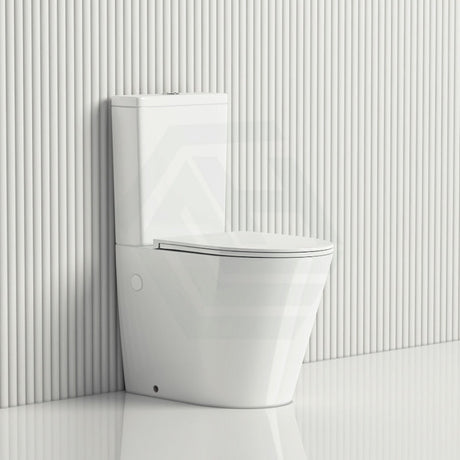
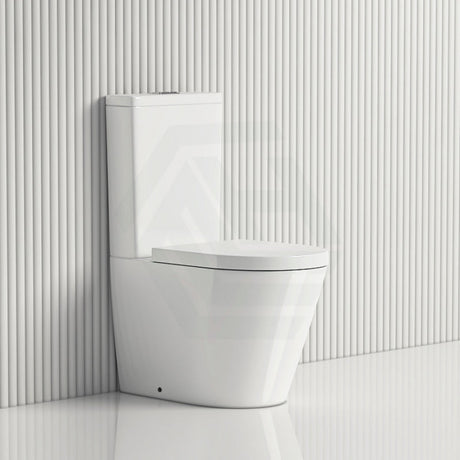
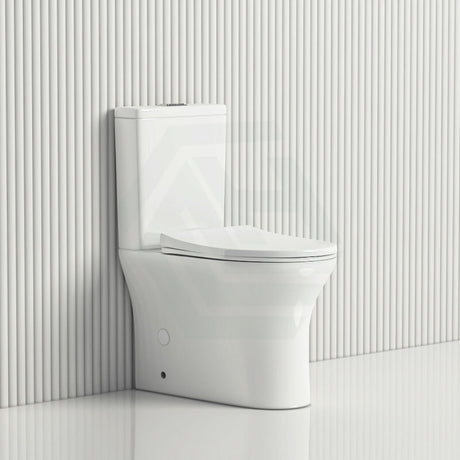
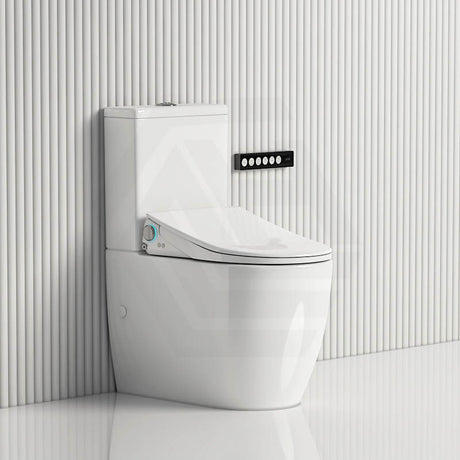
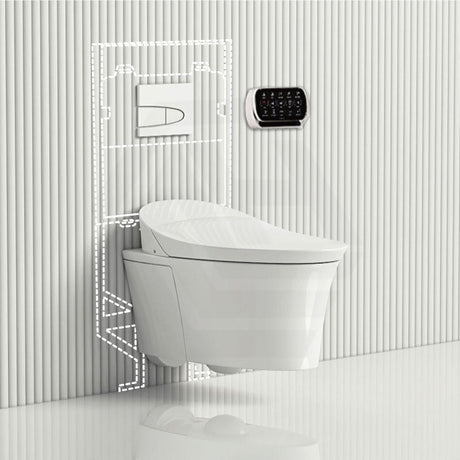
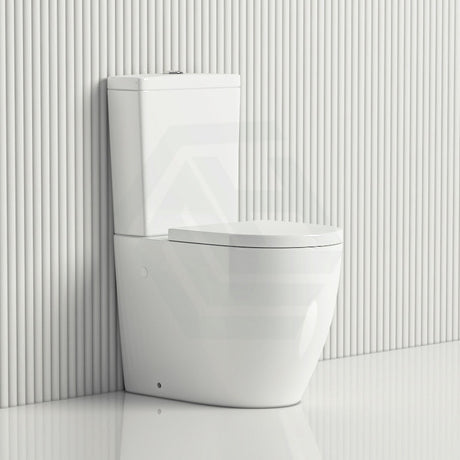
Suite configuration is another consideration. A back to wall toilet suite — where a concealed cistern and pan are fitted together and set flush against a wall panel or vanity cabinet — is very popular at the moment. Fienza and Kohler both offer toilet suites in this configuration, starting at around $185 and going upwards of $1,000. A wall-hung toilet is another option; this needs an in wall cistern and is usually sold with a back to wall pan. There are some good budget alternatives such as R&T, but Geberit is still the gold standard for in wall cistern systems. For whatever toilet suites you choose, each element of the suite — the pan, cistern, inlet valve and push button — should have its own WaterMark licence number.

Installation Requirements and Common Mistakes to Avoid
Once you've purchased your watermark toilet as1172 compliant model, it must be installed by a licensed plumber — this is a legal requirement in all states and territories. A like-for-like toilet replacement typically takes two to four hours. After the job's done, your plumber will provide a certificate of compliance (the name of this document varies by state). The certificate shows that the installation complies with AS/NZS 3500.2:2025 — Plumbing and Drainage — Sanitary Plumbing and Drainage. This document covers connections to sanitary plumbing and drainage, including details of the pan collar size, grade of drainage and the type of connection to the waste pipe.
Do not attempt to install your toilet unless you're a licensed plumber. Some avoidable mistakes include not measuring the rough-in accurately, not keeping the WaterMark documents in case of a plumbing inspector visit, and not using WaterMark fittings to connect the cistern to the water supply. Each mistake could result in a failed inspection or a leaking toilet. Understanding WaterMark before you buy will help avoid a lot of stress and expense in the future.
References
WaterMark Certification Scheme, Australian Building Codes Board
AS/NZS 3500.2:2025 Plumbing and Drainage — Sanitary Plumbing and Drainage, Standards Australia
AS/NZS 6400:2016 Water efficient products — Rating and labelling (incorporating Amendment No. 1:2022 and Amendment No. 2:2022), Standards Australia
State and territory plumbing licensing authorities (Building and Plumbing Commission Victoria; Building Commission NSW / NSW Fair Trading; Queensland Building and Construction Commission; Plumbers Licensing Board Western Australia (administered by Building and Energy); Consumer, Building and Occupational Services Tasmania; Access Canberra ACT; Office of the Technical Regulator / Consumer and Business Services South Australia; Plumbers and Drainers Licensing Board Northern Territory)