06 July, 2026
Complete Guide to Flush Toilet
Learn how a flush toilet works, the types available, and key components to help you choose the right suite for your Australian bathroom.

Most people spend more time choosing a tile grout colour than they do understanding the sanitary suite that anchors the entire bathroom — and that imbalance is worth correcting. A well-chosen toilet suite balances spatial flow, hygiene performance, and long-term reliability, so the decision deserves a methodical approach. This guide covers how these fixtures work, the types available across a broad price range from approximately $185 to $1,199 depending on brand and features, the key components inside every suite, and how to match the right configuration to your project — whether you are renovating a period home or fitting out a contemporary ensuite.
Video Credit: Our Little World - Explorations for Kids
How Do Flush Toilets Work?
The flush toilet is perhaps the most essential piece of sanitary equipment you have at home, yet we never seem to give the broader picture as much thought when buying one as we do when selecting a tapware finish or tile type. This shouldn't be the case. If you know how a flush toilet actually works, you'll be much more likely to make a well-informed purchase.
So, here it is, in as simple a format as possible. The process relies on hydraulic force and gravity. When a toilet flush button is pressed, the flush valve in the toilet cistern opens to release the stored water, which then rushes into the pan. That volume of water forces the waste out through the waste outlet, either by way of S-trap (down through the floor) or P-trap (back out through the wall). The waste then enters the waste pipe, eventually leading to the sewer. The toilet cistern is now empty and the fill valve activates to refill the cistern, until the process is primed.
Store, release, empty, and refill. That is the basic concept, and all configurations of flush toilets operate along this principle. What differs from one scenario to the next is the way a flush toilet is packaged, concealed, and specified.

Types of Flush Toilets Available in Australia
Now that we understand what a flush toilet does, you can pick one that will fit your space and your project.
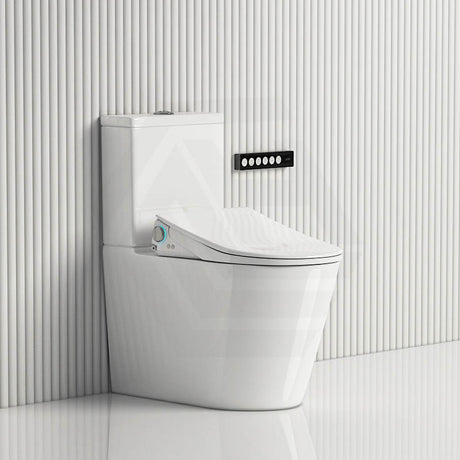
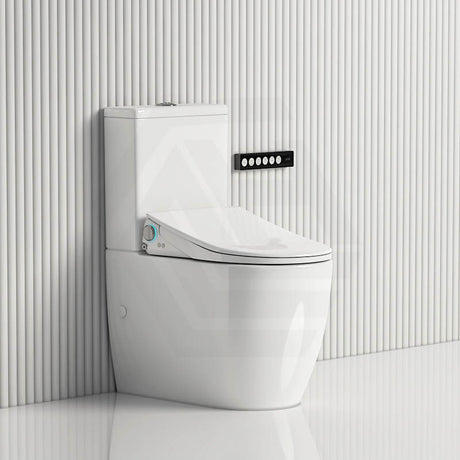
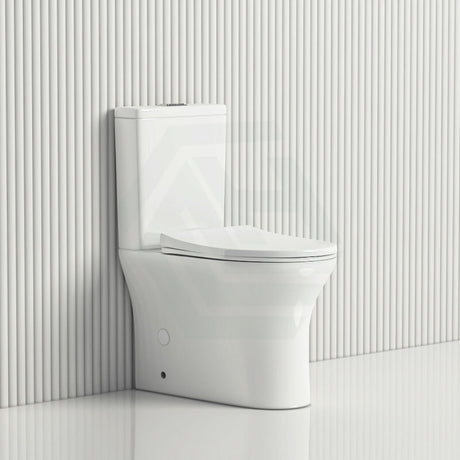
The standard close-coupled toilet is the model you're most likely familiar with in Australian homes: the cistern and pan are one unit and can be easily fitted and replaced. The back-to-wall and wall-faced models conceal pipework in the space behind the pan for a more elegant finished look. These are currently the most popular configuration in Australian renovations, available across a broad price range from approximately $185 to $1,199 depending on brand and features.
Tuck the cistern inside the wall cavity and the whole toilet disappears — clean lines, zero visual clutter. Geberit sits at the top of the in-wall cistern market, and R&T is the name worth knowing if you're after something reliable at a mid-range price. Budget anywhere from $543 to $1,284 for a complete in-wall toilet suite. Wall-hung pans belong here too — they're a smart pick for tight bathrooms where every centimetre of floor matters and the room needs to feel bigger than it is.
Heritage toilet suite designs, in which exposed pipes are part of the design, also continue to find buyers, particularly in period home renovations. Just be sure that your existing plumbing setup and rough-in dimensions are compatible.
Remember that all products sold in Australia must be WaterMark certified. WaterMark certification is not an optional extra quality feature but is a national requirement — non-certified products may not be accepted by local plumbing authorities.

Key Components: Cistern, Bowl, and Flush Button
Whatever design of flush toilet suite you settle on, it can be broken down into the same three core components. Having knowledge of these parts is crucial if you want to buy a toilet suite.
The toilet cistern is the reservoir where water is stored for each flush. Inside are the fill valve and flush valve. With a dual-flush model, cistern capacity is generally 4 to 6 litres. Most cisterns are made from vitreous china; some concealed in-wall cisterns are made from polymer. Under AS/NZS 3500.2:2025, every sanitary plumbing connection must comply with regulated drainage requirements — including the connection from the toilet cistern to the pan and the waste pipe connection. This is licensed plumber territory, not a weekend project.
The bowl deserves a proper look. Long-term performance hinges on pan shape, trap type, and the quality of the ceramic. Brands like Fienza and Poseidon have made rimless designs their standard — and for good reason, since there's no internal rim channel for bacteria to hide in, so the bowl stays cleaner with far less effort. For a family bathroom that cops a lot of use, Fienza's Tornado flush and Nano-Glaze ceramic treatment are features worth hunting down.
The toilet flush button — also called the actuator — is its own specifiable component, and you can choose between single-flush or dual-flush versions. Chrome, matte black, and brushed nickel are all on the table for finishes — your bathroom's colour scheme will steer you toward a wall-mounted or cistern-front actuator.

How to Pick the Right Flush Toilet for Your Bathroom
Start by measuring your rough-in dimensions. An S-trap floor outlet sits at a standard setout of 100 to 120 mm from the wall. P-trap wall outlets call for a standard setout of 185 mm. Stuff this up and you're looking at an expensive fix — either a new pan or a trap relocation.
After that, take a look at the WELS label. Under the WELS Act 2005, every registered product must carry a label before it hits the market. With a 4-star WELS dual flush toilet, you're using 4.5 litres on a full flush and just 3 litres on a half flush — that adds up to real water savings.
Entry-level back-to-wall toilets will set you back somewhere in the $185 to $400 range. Rimless mid-range suites sit in the $400 to $800 bracket, and premium designer options climb from $800 upward. Smart toilets — think bidet, seat heater, auto flush — are a category unto themselves, with prices from $1,619.

Installation, Upkeep, and Mistakes to Avoid
Across every state and territory, the law demands a licensed plumber handle any connection between the pan and the waste pipe. On top of that, your plumber fits and connects the cistern, checks the waste pipe and water line for leaks, seals every connection, and signs off on a compliance certificate.
After installation, give the bowl and cistern inlet a descale each year. When the inlet gets blocked, water flow drops and the flush loses its punch. Plan on a new flush valve washer somewhere around the five to seven years mark. A cistern that's slow to refill after a flush is a sign the fill valve needs attention — leave it too long and you risk an overflow.
Of all the components, the toilet flush button is the one thing you're allowed to swap out yourself — no licensed plumber needed. A quick actuator finish change — chrome to matte black or brushed nickel — freshens up the toilet without a single plumbing job.
Skipping the trap type and rough-in dimension check before you buy is easily the most common — and most costly — blunder. When in doubt, have a chat with your plumber before you purchase the pan.
References
WaterMark Certification Scheme, Australian Building Codes Board
AS/NZS 3500.2:2025 Plumbing and Drainage — Sanitary Plumbing and Drainage, Standards Australia
AS/NZS 6400:2016 Water efficient products — Rating and labelling (incorporating Amendment No. 1:2022 and Amendment No. 2:2022), Standards Australia
State and territory plumbing licensing authorities (Building and Plumbing Commission Victoria; Building Commission NSW / NSW Fair Trading; Queensland Building and Construction Commission; Plumbers Licensing Board Western Australia (administered by Building and Energy); Consumer, Building and Occupational Services Tasmania; Access Canberra ACT; Office of the Technical Regulator / Consumer and Business Services South Australia; Plumbers and Drainers Licensing Board Northern Territory)