04 June, 2026
Outdoor Bathroom Ideas for Australian Bathrooms
Get inspired by outdoor bathroom ideas suited to the Australian climate. Discover smart designs and materials for your backyard retreat.

Video Credit: Rustic Spirits Homestead
What Makes a Great Outdoor Bathroom in Australia
Warm Queensland mornings hit different — you crack the back door and the day's already golden. Bush scent, a kookaburra somewhere nearby — and your backyard bathroom is right there, walls nowhere in sight. No walls boxing you in, the whole garden spread out ahead, sun pouring straight down — it's a different thing entirely. A well-done outdoor bathroom delivers exactly that. That is why you should consider having one. Australia is very suitable for this idea and is a great location for outdoor bathrooms as our climate allows us to be out-of-doors for most of the year.
Here's the catch though — beautiful as it is, the Australian climate can turn brutal fast. Globally, few places match the UV intensity you'll cop here in Australia. Salt air — especially along the coast — chews through a surprising range of materials over time. Inland summers bring scorching, dry heat; head north and it flips — relentless humidity and monsoonal downpours. All outdoor bathroom ideas must be able to stand up to Australia's challenging climate in one way or another. This is not something you can put off — you should plan very specifically.
You might also consider this: the climate is not the enemy. If you can use the climate to your advantage, you can create a beautiful outdoor space that you can use all year round, rather than having to replace your fixtures in a year or so. Now that you know the outdoor bathroom requirements for the climate and location of your site, you must then consider how you will plan the outdoor bathroom site, as your site plan will have many implications for what materials and fixtures you will need to select next.

Planning and Layout Considerations
Relative to your existing plumbing stack, where you drop the bathroom — that one decision dwarfs everything else on the project. If you can manage it, hold that distance to 3 to 4 metres. Every extra metre of pipe run is more time on the clock for your licensed plumber — the bill climbs quicker than you'd expect. One thing to be clear on — every state and territory in Australia requires a licensed plumber for new connections, full stop. No exceptions.
Lock in your privacy screening before anything else — that choice ripples through every other planning decision you'll make. Three options worth serious consideration: timber slat fencing at 1800 mm, a panelled bamboo screen, or a rendered masonry wall. Homeowners and architects alike reach for all three — each one holds its own aesthetically. Don't rush this choice — the privacy screen is what gives the whole space its character. Timber slats read as laid-back and natural; go masonry and the whole thing shifts toward something crisper, more architectural.
Proper drainage is non-negotiable — every outdoor wet area has to shift waste away cleanly and efficiently. Your floor needs a minimum fall toward the waste point — without it, water will pool and cause problems. Check in with your local council early too — development approval can be required for new structures or enclosed outbuilding areas, depending on your situation. Approval thresholds differ quite a bit between states and territories, so don't assume — check first. From council approval through to completion, budget eight to fourteen weeks for a typical outdoor bathroom build — get that into your schedule early. With a solid site plan locked in, your next job is choosing materials and fixtures that'll hold up to whatever conditions your site throws at them.

Materials and Fixtures That Can Handle the Outdoors
Cut corners on the floor and you'll pay for it later — this is one area that demands you get it right first go. Under AS 4586 slip-resistance criteria, wet and exposed outdoor bathroom areas must carry a P4 or P5 rating — that's the minimum Australian standards will accept. Polished porcelain looks the part, sure — add water and an outdoor setting, though, and it's a slip hazard waiting to happen. Go matte or textured porcelain with a confirmed P-rating; quality outdoor-rated tiles sit at $62–$66 per piece and they're worth every cent.
Enclosed wet areas are governed by (NCC 2022, ABCB Housing Provisions, Part 10.2) — shower walls must be covered to 1800 mm above the floor substrate, and any wall beside a bath has to reach at least 150 mm above the rim. AS 3740:2021 is the other document your licensed waterproofer will lean on — it's a recognised compliance pathway. Hardwired fittings — lighting included, at the bare minimum — belong in the hands of a licensed electrician, and anything close to water needs an appropriate IP rating per AS/NZS 3000:2018. IP65 (AS/NZS 3000:2018) — that's your minimum for outdoor bathroom lighting; don't spec anything lower.
With electrical compliance ticked off, tapware is next — WaterMark certified brass body mixers with a marine-rated finish are the right call. Wall-mounted mixers from Meir and Bella Vista run $72–$375 and strike a good balance between looks and durability. Towel rails, hooks, soap holders — go 304-grade stainless steel across the board. Drop below that grade and you'll see visible rust within months, especially on the coast.
Materials sorted, you can turn to the feature most people have in mind from the very start — the bath itself.

Choosing the Right Bath and Fittings
This is where outdoor bathroom ideas get really exciting. The image of a bath situated under the sky, in a garden setting surrounded by foliage, is one of those design details that makes the whole process feel worthwhile.
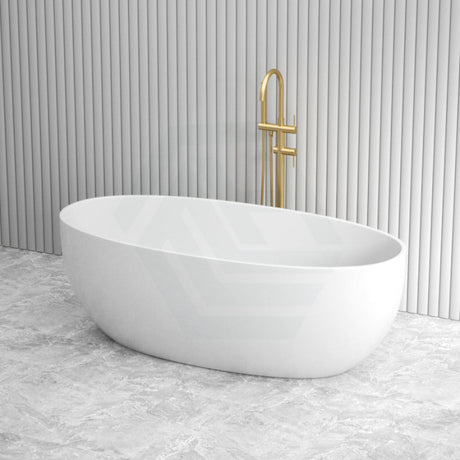
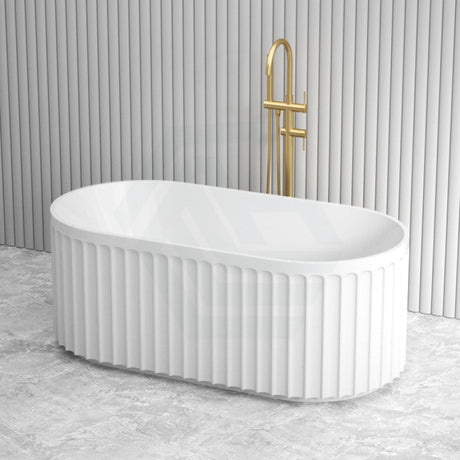
For outdoor use, there are two main style variants to consider: the freestanding bath and the clawfoot bath. Both are freestanding by nature and do not require a surround installation, which makes them ideal outdoors — there is no need to waterproof a surround and the bath itself becomes a sculptural element.
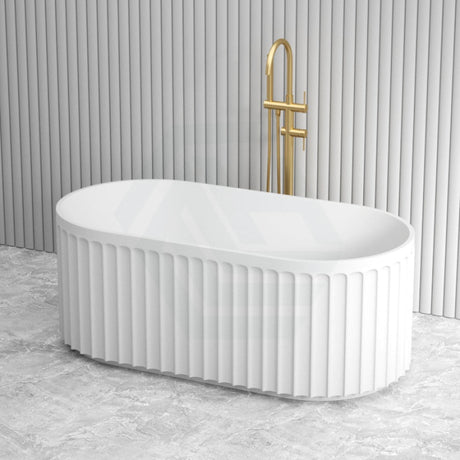
A freestanding bath has a sleek, modern profile. These are generally manufactured from acrylic with a fibreglass backing and typically come in 1500 mm and 1700 mm lengths, ranging from $878 and $7,182, with Broadway leading the local market for range. A clawfoot bath has a more romantic, traditional aesthetic, with the legs providing visual levity and complementing a natural outdoor setting. Both require a licensed plumber to connect waste and water supplies, with all fittings being WaterMark certified.
Check with your preferred supplier whether any acrylic bath will have a UV-stable finish, as this is important in north-facing orientations. Stone resin is likely to perform better in direct sun, though these baths are heavier and more expensive, so the supporting base will need careful consideration.
While the bath and tapware provide much of the overall look and feel, a fully freestanding outdoor bathroom will also need appropriate toilet fixtures and finishing details before it is ready to use year-round.

Adding a Toilet and Final Details
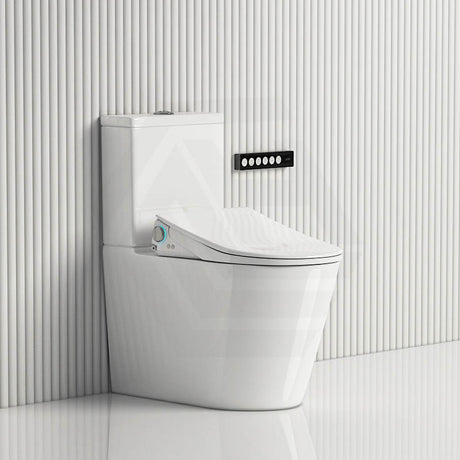
A toilet isn't always necessary, but for a freestanding guest bathroom or pool bathroom it lifts the space from a simple amenity to something genuinely functional. Back-to-wall toilet suites are a good fit here — the plumbing stays hidden — but the unit does need shelter from a roof and at least partial side walls. Stick to WaterMark-certified, WELS 4-star suites — Fienza and Poseidon both have suitable options ranging from $185–$1,199. Before any work kicks off, lock in trap locations with your licensed plumber — you're looking at an S-trap at 100–120 mm or a P-trap at 185 mm setout.
The details count too: louvred panels or base gaps for cross-flow ventilation, lighting rated to at least IP65 for after-dark use, and powder-coated steel or marine-grade materials for cabinetry — standard MDF won't survive outdoors.
Get the design right and build to Australian Standards — the result is a genuinely beautiful addition that'll serve your home for years.
References
National Construction Code 2022, ABCB Housing Provisions, Part 10.2 Wet Areas
AS 3740:2021 Waterproofing of Domestic Wet Areas, Standards Australia
AS/NZS 3000:2018 Electrical Installations (Wiring Rules), Standards Australia
WaterMark Certification Scheme, Australian Building Codes Board