04 June, 2026
Very Small Toilet Room Ideas for Australian Bathrooms
Discover very small toilet room ideas for Australian homes. Practical tips on layout, sizing, tiles and fittings for tight spaces.

Video Credit: Luke Catleugh
What Makes Tiny Toilet Rooms So Tricky to Get Right
Some toilet rooms don't even hit a square metre — wall to wall, they're genuinely tiny. Across Australia, this is pretty common — Queenslanders, Federation terraces, cramped modern apartments — the toilet gets its own little compartment, separate from the main bathroom altogether. These spaces are genuinely tricky to get right, and the standard bathroom planning rules? They don't apply.
Roughly 0.9 m × 1.2 m is where most very small Australian toilet rooms begin — and at that scale, floor centimetres, wall surfaces, even door swing direction each become a genuine design decision. The National Construction Code sets the floor here: clear width between finished wall surfaces must reach 900 mm either side of the pan, and a circulation space of 1,200 mm × 900 mm is required from the front edge of the pan. None of that is optional — it's the hard baseline your design must clear, full stop.
In practice, fixture depth, door clearance, and wall space are all competing for the exact same tight footprint. Standard close-coupled suites stick out around 700 mm from the wall — chew through most of a 1.2 m room depth before standing room even enters the equation. A very small toilet room demands a different mindset entirely — compliance and spatial constraints lead; aesthetics come after.

Space-Saving Layouts and Minimum Dimensions for Tiny Toilet Rooms
Compliance baselines sorted, spatial constraints understood — now comes layout, and that choice alone can make or break a very small toilet room well before any fixture gets picked.
For tight footprints, three layouts consistently come out on top. Pan against the rear wall, door up front — the straight or galley arrangement is the go-to, viable in rooms as narrow as 900 mm so long as pan projection still delivers the required 600 mm clearance to the door or opposing wall. Move the door to a side wall with a corner-entry layout and you can claw back up to 200 mm of usable depth along the main axis. A pocket or sliding door is the most space-efficient option — door swing disappears entirely, and the room functions comfortably in footprints where a hinged door simply wouldn't work.
Door swing direction? It's the detail that catches people out every time. That 820 mm hinged door — minimum clear opening for livable housing compliance — sweeps an arc that can swallow the entire floor of a compact room. A sliding or cavity door specified at the framing stage sidesteps the problem altogether — and the cost difference then is a fraction of what it'd be to fix later. Tight layout? Sort the door out first.

Floor Space and Fixture Choices in a Small Toilet Room
Layout locked in, door swing sorted — fixture selection is now the biggest lever for reclaiming floor area, and different suite types perform very differently in a tight footprint.
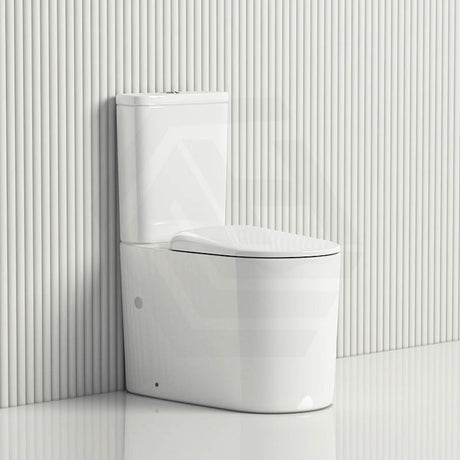
The key comparison here is between three toilet suite types: wall-hung (floating toilet), back to wall toilet, and close-coupled. Close-coupled suites — where the cistern sits directly on the pan — typically have pan projections of 680 mm to 720 mm. For a room barely 1.2 m deep, that's a lot to ask. Back-to-wall suites change the equation — pan projection from around 480 mm, cistern tucked inside a floor-level unit or in-wall frame and out of sight. Wall-hung suites go further still — frames sit within the wall cavity, and floor depth drops by 150 mm to 200 mm compared with floor-mounted alternatives.
All toilet suites must be WaterMark certified with a WELS rating in Australia. A 4-star WELS-rated toilet uses 4.5 L on full flush and 3 L on half flush. Check with a licensed plumber whether an S-trap or P-trap suite is required to match the existing waste outlet position.
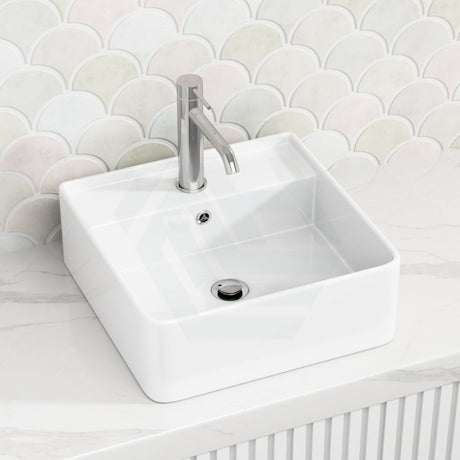
Basin fixtures are a separate component from the toilet suite. A wall-mounted basin suits small toilet rooms well, available from as little as 250 mm to 400 mm wide, with no impact on floor space.

Storage, Finishes, and Lighting Tricks for Compact Toilet Rooms
Storage is achievable even in a very small toilet room. A recessed niche built between wall studs at 450 mm centres provides a depth of 90 mm to 100 mm — enough for hand soap, candles, and extra toilet roll — without consuming any floor space. If the flush plate permits, a shelf can be installed above the cistern. Concealed under-basin storage is also possible with a narrow vanity unit as shallow as 200 mm deep. PVC cabinetry performs better in a high-moisture environment, though an MDF option is also viable. Note that most vanity units are sold without the basin mixer and waste.
For finishes, large-format tiles in 300 mm × 600 mm and 600 mm × 600 mm sizes with minimal grout lines help to visually expand the room. A gloss or semi-gloss finish in water-resistant paint or wall tiles reflects more light than matte surfaces. The NCC stipulates a minimum exhaust flow rate of 25 L/s for sanitary compartments; a more robust exhaust system will also preserve your finishes and extend their durability. Exhaust fans and hardwired light fittings must be installed by a licensed electrician in accordance with AS/NZS 3000 (AS/NZS 3000:2018).
A downlight positioned directly above the toilet can create unflattering shadows. Wall sconces mounted at 1,500 mm above the floor on either side of the toilet provide more balanced illumination. A mirror cabinet above the basin integrates storage and lighting into a single unit — a practical solution for a compact space.

Best Products for a Very Small Toilet Room in Australia
When it comes to the suite itself, a back to wall toilet works well across most small room layouts. Back-to-wall models from Poseidon and Fienza cover a wide range, from $185 to $1,199. Back-to-wall suites generally top out at 550 mm pan projection, and a good number of models come in a rimless format that's far easier to keep clean. Rooms shallower than 1.0 m are where a floating toilet really earns its place — the pan fixes to an in-wall cistern frame tucked behind a false wall. Cistern frames from Geberit and R&T are widely available, with complete wall-hung packages priced from $543 to $1,284. For rooms under 1.0 m deep, wall-hung pans from RAK Ceramics and Kohler are a strong pick — both brands offer compact projections that suit tight spaces well.
A narrow vanity at just 200 mm deep gives you concealed storage without eating much into the room's overall depth. Before you buy any fixtures, check the trap type with your licensed plumber. WaterMark certification is a must for any suite, and a 4-star WELS rating or better is worth chasing — it's good for sustainability and helps at resale. Across every Australian state, hooking a toilet suite up to existing waste plumbing is licensed plumber territory — factor that cost into your budget from the start.
References
National Construction Code 2025, ABCB Livable Housing Design Standard, Part 3 Internal doors and corridors and Part 4 Sanitary compartment
WaterMark Certification Scheme, Australian Building Codes Board
AS/NZS 6400:2016 Water efficient products — Rating and labelling (incorporating Amendment No. 1:2022 and Amendment No. 2:2022), Standards Australia
National Construction Code 2025, ABCB Housing Provisions, Part 10.8 Condensation management
AS/NZS 3000:2018 Electrical Installations (Wiring Rules) (incorporating Amendment 3:2023), Standards Australia