11 June, 2026
How Long to Renovate a Bathroom: a Step-by-step Aussie Guide
Find out how long to renovate a bathroom with this step-by-step Aussie guide. Realistic timelines for cosmetic updates and full renovations.

Video Credit: The DIY Guy
Whenever someone discovers my profession, that's the first thing they want to know: "Okay, but how long is this gonna take?" Rightly so – ask that before you pick out any tiles, or get sucked into a YouTube video on tapware in the middle of the night, or do anything at all.
The short answer is anything from one week to six weeks and up. The long answer requires a bit of deconstruction.
What Affects How Long a Bathroom Renovation Takes
First and foremost, the length of a bathroom renovation depends on the scope. A cosmetic makeover (a new vanity, a fresh lick of paint, new accessories) can realistically take between one to two weeks if trades are available and products are in stock. A full gut renovation (taking everything back to a bare shell to start again) can take anywhere between three to six weeks, longer depending on variables.
The age of the home is another significant one here. The older a house, the more likely you are to find the worst-case scenarios behind your newly exposed wall linings, such as rot or failing waterproofing, asbestos and more. Every one of these potential complications will add time to your renovation schedule, not to mention that building regulations here in Australia are no laughing matter — the NCC stipulates specific cure times (NCC 2025, ABCB Housing Provisions, Part 10.2) and application standards for waterproofing, which means there are legally required hold points built into every renovation schedule whether you like it or not.
Then of course, the size of the bathroom makes a big difference, too, with an ensuite bathroom of 3–4 square metres taking much less time than a family bathroom measuring 7–9 square metres.
Knowing which variables apply to your project, you can then line them up with the phase-by-phase timeline below to give you a better understanding of just how long your bathroom renovation will actually take.

The Step-by-Step Bathroom Renovation Timeline
Below is the standard sequence of events for a bathroom renovation and why you shouldn't attempt to rush any of the individual stages.
Strip-out and demolition: This phase takes one to two days. A skip bin is brought on-site, everything is stripped out and you are left back at bare substrate — ready for the trades to move in. The subsequent rough-in plumbing and rough-in electrical work — both requiring licensed trades (state and territory plumbing licensing legislation) as per state and territory plumbing licensing legislation — typically combined requires another two to three days.
This is often where people underestimate the process and forget to allow extra time for waterproofing. Your waterproofer will apply the membrane in one day, but it must then cure for 24 to 72 hours before tiling can begin — that waiting period is not negotiable, and the membrane cure before tiling is a hard requirement under the standard. Shower wall waterproofing must reach a minimum height of 1800mm above the floor substrate. In my experience, the biggest cause of renovations blowing out on schedule is people skipping this essential curing period. Waterproofing is the most important component of your bathroom and a failure here requires a complete re-do.
Tiling requires somewhere between three to five days depending on how involved the job is and what size tiles are used. Allow a full 24 hours for the adhesive to set before grouting can take place. Allow a full 24 hours for the adhesive to set before grouting can take place. Knowing what the phases are is one thing; knowing how long each trade spends on site and understanding the exact order in which the phases need to be done is what transforms a rough timeline into a workable plan.
Fix-out — where your plumber and electrician return to connect fixtures, hardwire the exhaust fan (minimum 25 L/s flow rate per NCC 2025, ABCB Housing Provisions, Part 10.8), install the heated towel rail — is another one to two days.

How Long Each Trade Takes (and Why Sequencing Matters)
Your plumber visits twice: rough-in (one to two days) and fix-out (half a day to a full day). Your plumber must have their rough-in work approved before your waterproofer can start. Your tiler sequencing depends entirely on the waterproofing membrane cure (AS 3740:2021) being complete before a single tile goes up. That sequencing discipline carries through to your electrician too, who — much like your plumber — visits twice: rough-in and fix-out.
Trade availability is really one of the biggest unknowns for Australian renovations today. In metro areas, expect one to two weeks of wait time to secure a trade. In regional areas, that goes up to double.
Trade timing aside, the fixtures you have in mind also play a surprising role in determining how long the various phases of your reno take, and can even delay some phases by days or weeks if they are not accounted for early on.

Fixtures That Can Help or Hurt Your Timeline
If you have chosen a wall-hung toilet, you will need an in-wall cistern — Geberit frames are the most commonly specified in this instance — which requires extra framing and plumbing in the rough-in compared to a close-coupled suite. With a p trap toilet, you must confirm your floor waste position prior to tile laying; otherwise, you can face expensive and time-consuming modifications.
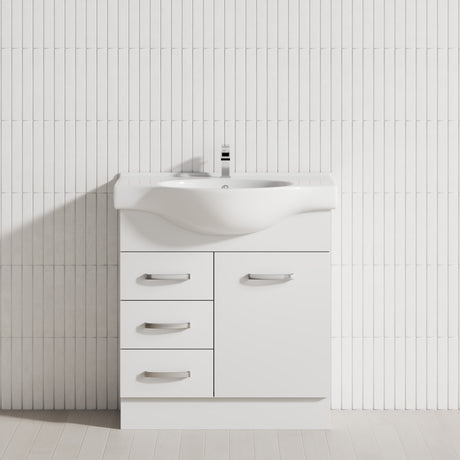
A freestanding vanity will actually help reduce your wall work time since there are no wall fittings or height requirements; however, you will still need to confirm your waste fitting position before tile-laying. Note that a freestanding vanity does not come with a basin mixer or waste — you will need to source those separately.
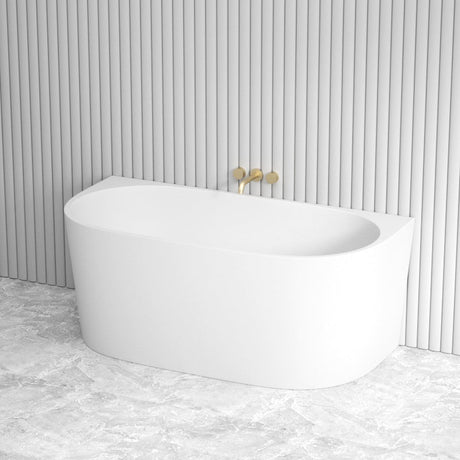
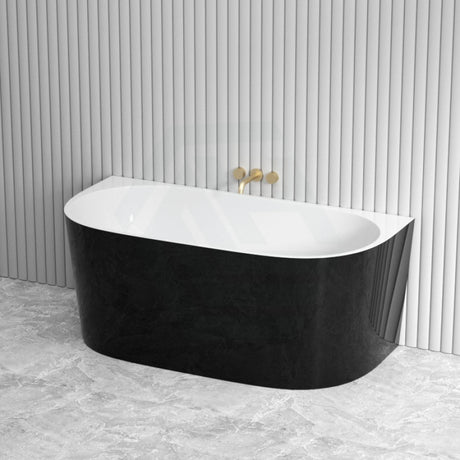
A freestanding bath is a separate consideration entirely. You will need to confirm your waste fitting position before tile-laying, and it will require additional floor reinforcement based on the weight of the tub. Broadway freestanding bath options start at $878, and are a popular local choice, but some imported tubs can take anywhere between four to twelve weeks to be delivered. If a freestanding bath has not been ordered before your installation stage, your entire project risks stalling while you wait on a tub arriving from overseas.

Ensuring Your Renovation Timeline Stays on Course
Secure your trades before demolition. This is vital. Turning up to an empty room with no plumber is the fastest way to add three weeks to your project.
Order your fixtures and tiles prior to stripping out your old bathroom; this is particularly important for any imported items. Factor 20 to 25 per cent contingency time and budget into your timeline. Keep track of your sign-offs yourself — once demolition is complete, rough-in inspected, waterproofing cured, tiling complete and fix-out complete, you know where you stand.
Knowing ahead of time how long to renovate a bathroom and creating a schedule based on realistic rather than hopeful estimates is the difference between a project arriving when it should and a project arriving months late.
References
National Construction Code 2025, ABCB Housing Provisions, Part 10.2 Wet area waterproofing
AS 3740:2021 Waterproofing of Domestic Wet Areas, Standards Australia
National Construction Code 2025, ABCB Housing Provisions, Part 10.8 Condensation management
State and territory plumbing licensing authorities (Building and Plumbing Commission Victoria; Building Commission NSW / NSW Fair Trading; Queensland Building and Construction Commission; Plumbers Licensing Board Western Australia (administered by Building and Energy); Consumer, Building and Occupational Services Tasmania; Access Canberra ACT; Office of the Technical Regulator / Consumer and Business Services South Australia; Plumbers and Drainers Licensing Board Northern Territory)