11 June, 2026
Hobless Shower Meaning: a Plain-english Aussie Guide
Wondering about hobless shower meaning? This plain-English Aussie guide explains what a hob is and why more Australians are ditching it.

Video Credit: GD Building Supplies
What Does Hobless Shower Mean?
Put simply, a hobless shower is a shower recess without a raised lip (or hob) at the opening. The shower floor is level with the rest of the bathroom floor so there is no need to lift your feet to get in or out.
To get the full hobless shower meaning, you need to first understand what a hob is. It's the lip along the front opening of a typical shower recess—usually 75 mm to 150 mm high. It used to be standard in most Australian homes, and it does the job of keeping the water in the recess and of providing a wrap for the membrane to stick on. However, a hob can be seen as an unnecessary trip hazard and can give bathrooms a more compartmentalised look.
So, if a hobless shower doesn't have a hob, how do you stop water going everywhere? A hobless shower, which is also known as a step-free or curbless shower (although hobless is the industry standard in Australia), doesn't have this raised edge. Instead, the floor is sloped towards the drain and the water is contained by the waterproofing. There are also semi-recessed showers, where the shower floor is slightly lower than the rest of the bathroom floor, with just a small lip to stop water from flowing, but it isn't truly hobless.
With a better understanding of what the term means, it's time to break down the elements of what goes into building one (the flush shower floor only works if the details at the bottom are correct).

How a Hobless Shower Is Built: Construction Basics
Where hobless showers tend to have more to do than traditional showers is that the floor needs to have a fall towards the floor waste of at least 1:60 (or 1 mm for every 60 mm of horizontal distance). The tilers we know like to use 1:80, and they prefer to have it over a larger shower recess so the fall is noticeable, but not so steep you lose your balance. It's best this is considered during the construction of the bathroom (you cannot correct this once the tiles have been laid).
The skill comes when applying the membrane. The membrane must cover the floor area, then go up the walls to 1800 mm from the floor substrate and must be lapped correctly at all wall-to-floor junctions. You don't want water getting behind it or into the floor substrate to cause damage to the structure, so it must be applied correctly—and by a licensed waterproofer. Allow 24 to 48 hours between membrane coats, then a final cure period of 48 to 72 hours before tiling can begin; budget five extra working days in your renovation schedule to absorb this. This is not a job for the DIY crowd; it is a requirement in most Australian states.
In addition to this, you need to think about your substrate. If the bathroom is on a concrete slab, it will be the easiest option as it will require less work to achieve your desired fall in the floor. However, a timber floor will require engineering approval, a more solid substrate such as fibre cement sheeting, and attention should be paid to how the substrate may deflect, as this could lead to cracked tiles or even failure of the waterproofing system.
Your options for the drain are central, with a floor waste in the centre, or a linear drain along one side of the shower. With tile-insert floor wastes—such as those from Lauxes—a tile can rest inside the grate, giving you an intentional-looking floor instead of an unsightly industrial one. A linear drain also makes it easier to fall the floor, as water only needs to fall in one direction.
Your choice of floor tile matters just as much as the drain. When it comes to wet area floors, the minimum slip-resistance rating is P3 (AS 4586:2013) per the AS 4586:2013 industry guidance. If you have a hobless shower where the wet zone blends into the rest of the bathroom floor, the entire wet area floor is required to be rated P3.
So what we have so far gives us enough understanding of the build complexity of a hobless shower that we can consider whether or not it's a good idea for your project.

Hobless Shower Pros, Cons and Practical Considerations
A hobless shower really is easier to clean because there is nothing around the edge to scrub. You are less likely to see soap scum at ankle height, because it cannot get caught at a grout line the way it does on a hob edge.
Hobless showers are great for people with mobility impairments and they look great in photos, which is why you see them on The Block season after season. They generally add real resale value at current market rates, particularly in bathrooms with a contemporary fitout.
A hobless shower also has some real disadvantages:
• The additional cost is higher ($500 to $1,500 extra over a hob shower, depending on the substrate and the drain chosen).
• Water containment is more difficult, as there is nothing physical to contain water—you need to ensure your floor fall is sufficient.
• The membrane will need additional curing time before tiling can begin (per AS 4586:2013), which delays the timeline.
• If you have a timber floor, it is not suitable in certain circumstances and will cost more to make suitable.
For tile selection, matte or honed porcelain finishes from DW Tile or Everstone offer solid grip without compromising appearance. Polished tiles on a hobless shower floor are a disaster waiting to happen.
Another important consideration for Australian homeowners and builders is compliance with Australian Standards.

Australian Standards and Compliance for Hobless Showers
In a residential bathroom, a hobless shower meaning is understood as a design and lifestyle preference rather than a requirement. It becomes mandatory in other building classes—such as Class 3 buildings like boarding houses and aged-care facilities—or where a project must meet the NCC Livable Housing Design Standard, which also sets out specific waterproofing obligations. Part 10.2 (NCC 2025, ABCB Housing Provisions, Part 10.2) of the NCC 2025 Housing Provisions stipulates the waterproofing requirements applicable to all shower areas, whether hobless or not. Waterproofing is required to a height of at least 1800 mm from the floor substrate on shower area walls, and wall-to-floor junctions must include a perimeter flashing with a horizontal leg of not less than 50 mm. AS 3740:2021 provides an alternative compliance pathway. Once waterproofing is sorted, the next thing to nail down is the shower's footprint.
On dimensions, a minimum clear floor area of 900 mm × 900 mm (AS 1428.1:2021) must be provided within the shower recess per AS/NZS 1428.1. That is the minimum—larger dimensions are always advisable, especially where the design needs to serve users across a range of ages and abilities.
Just remember that in most states you must engage a licensed waterproofer to carry out all waterproofing works.
Getting the minimum code right is only part of the picture; the fixtures surrounding your hobless shower are what turn it into a truly functional, liveable, and future-proof bathroom.

Hobless Showers and the Accessible Bathroom: Related Fixtures
To maximise the function of your hobless shower, the rest of the bathroom should be designed with the same principles in mind—adequate floor space, clear walking paths, and fixtures that enhance ease of use. Three fixtures are worth considering:
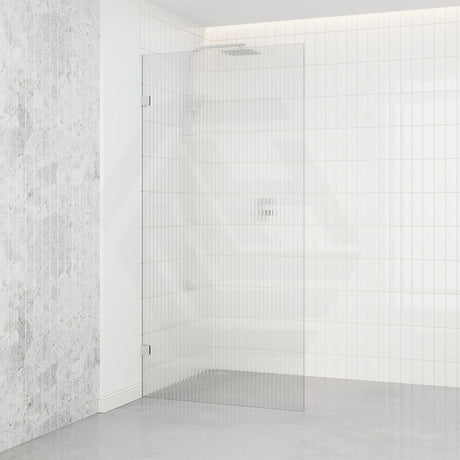
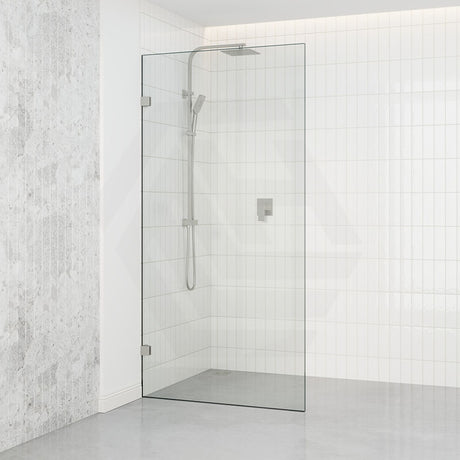
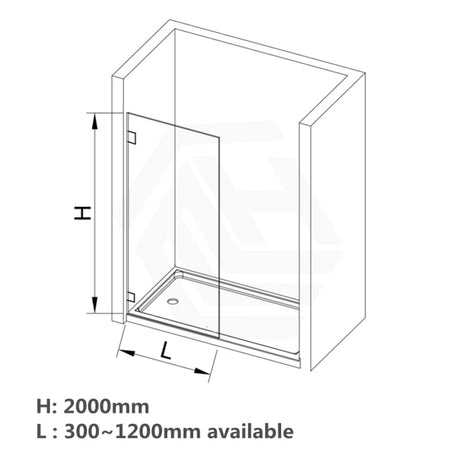
For the shower screen, a frameless walk-in panel with no door and no bottom track suits a hobless entry perfectly. The screen should have no threshold at the entry point. If you are adding a bath, you will need over bath shower screens, which must incorporate safety glazing compliant with AS/NZS 2208 (AS/NZS 2208:2023).
You should also seriously consider adding an ambulant toilet to any accessible bathroom. The NCC 2025 Livable Housing Design Standard requires a minimum clear floor area of 1200 mm × 900 mm (NCC 2025, ABCB Livable Housing Design Standard) from the front edge of the toilet pan, and a minimum clear width of 900 mm between opposing walls on either side of the pan. When you are already redesigning a bathroom around a hobless shower, it costs nothing to plan for these dimensions from the start—but it costs a great deal to accommodate them retrospectively.
A wall hung vanity keeps the full floor area clear, allowing a wheelchair user or someone with a walking frame unobstructed access under the basin. It also makes cleaning far easier, and a wall hung vanity looks considerably better in a contemporary bathroom.
A hobless shower is ultimately not just about the shower itself—it is a way of thinking about bathroom design. It is about creating something functional, safe, and fit for purpose for years to come, and the fixtures you specify around it should reflect that same thinking.
References
AS 3740:2021 Waterproofing of Domestic Wet Areas, Standards Australia
AS 4586:2013 Slip resistance classification of new pedestrian surface materials (incorporating Amendment No. 1:2017), Standards Australia
National Construction Code 2025, ABCB Housing Provisions, Part 10.2 Wet area waterproofing
AS 1428.1:2021 Design for access and mobility, Part 1: General requirements for access — New building work, Standards Australia
AS/NZS 2208:2023 Safety glazing materials in buildings (incorporating Amendment No. 2:2025), Standards Australia
National Construction Code 2025, ABCB Livable Housing Design Standard, Part 3 Internal doors and corridors and Part 4 Sanitary compartment