11 June, 2026
What is a Rimless Toilet: a Plain-english Aussie Guide
Learn what is a rimless toilet and how it differs from a rimmed pan. Our Aussie guide covers everything you need before buying.

Video Credit: Shaktishesh Interiors
Over the last year or so, you've probably noticed that the term 'rimless' is being added to toilet descriptions more and more often. It's more than just marketing hype – rimless and rimmed toilets are built differently and these differences are important for anyone shopping for a new toilet.
What Exactly Is a Rimless Toilet?
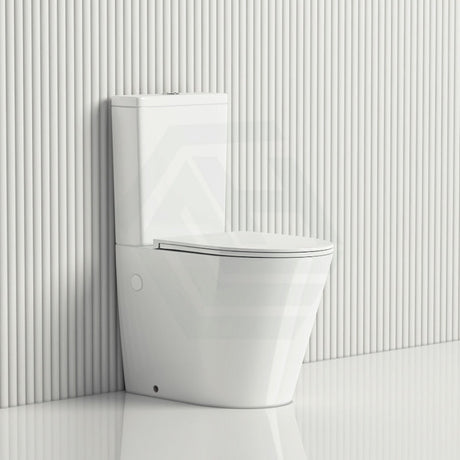
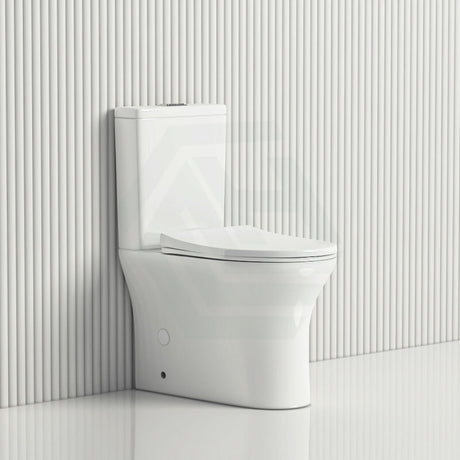
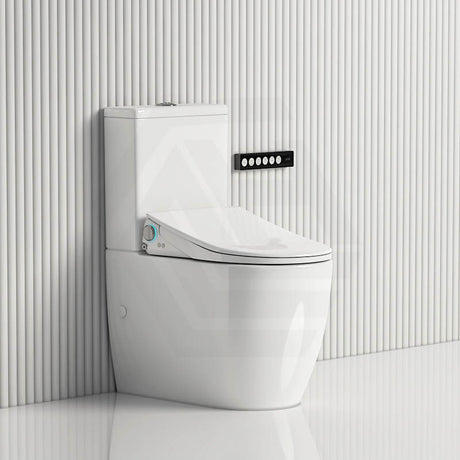
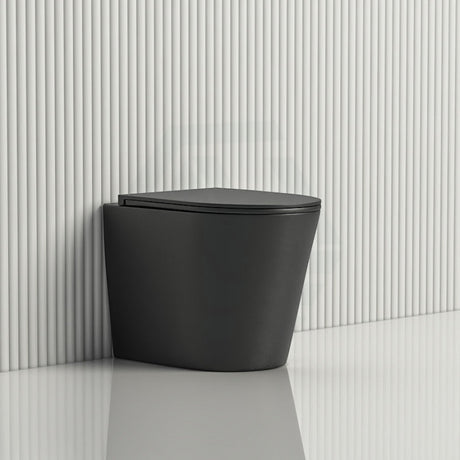
So, what is a rimless toilet? A rimless toilet is one that does not have a rim channel. A rimmed toilet has a rim on the top inner edge of the toilet bowl. Water enters the rim (sometimes irregularly) from the rim channel and then goes down into the bowl to make a flush. Rimless toilets have no rim.
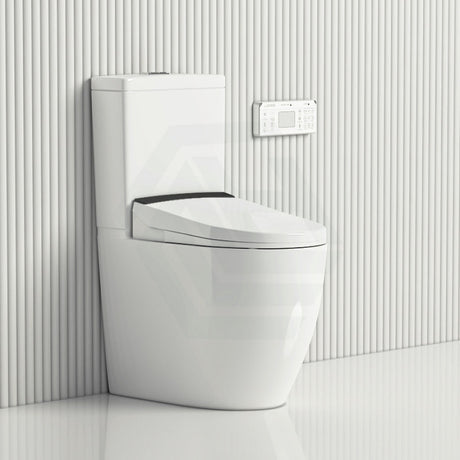
Rimless relates specifically to the pan and not the cistern, the seat, the flush plate, and so on. You may also see 'open rim', rimless pan, direct flush or tornado flush — all mean the same thing. The cistern, the flush buttons and the trap arrangement have no bearing on whether a toilet is 'rimless', as these relate to the pan. They are independent considerations.

How a Rimless Toilet Flush Works
Rimless toilets flush in a way that might surprise you.
Currently on the Australian market, there are two main types of flush system. The direct-flush (also known as 'single-jet') system uses one or two inlet ports at the top of the toilet bowl angled to direct water into the rimless bowl at high velocity to coat the whole surface. The other is the tornado, or vortex type, as used by Fienza in their Nano-Glaze range. Angled jets shoot water in a centrifugal motion around the bowl in a spiral down the toilet to coat the whole surface.
When rimless toilets are rated 4-star (AS/NZS 6400:2016), they flush at 4.5 litres full flush and 3 litres half flush, the same as a rimmed toilet of equivalent quality. The rimless design is not associated with a change in water efficiency. It is associated with water distribution, which directly relates to the hygiene of a toilet bowl.

Rimless vs Rimmed Toilets: A Practical Comparison
So how does a rimless toilet compare to a rimmed one in regular day-to-day operation?
There are some clear differences. Rimless toilet bowls are easier to clean. Rimmed toilets have a hidden rim channel — the parts you can't see or easily reach. Limescale, mould and bacteria all grow easily in the rim channel. Rimless toilets eliminate that channel entirely.
At entry level, you can get a rimless back-to-wall suite for as low as $185 up to around $400. Mid-range options from brands like Fienza and Kohler sit between $400 and $800, and premium suites reach $1,199 and beyond. Rimmed toilets are cheaper at the entry level, but the rimless feature is growing in acceptance as the cost becomes more competitive.
Rimless toilets are available with either an S-trap or a P-trap. Most Australian houses have an S-trap, where the pipe centre sits 140 to 165 mm from the finished wall. Have your licensed plumber measure the rough-in dimensions before you buy your toilet. A back-to-wall suite swap on an existing S-trap setout typically takes one to two hours for a licensed plumber to complete.

Cleaning, Hygiene, and Maintenance Benefits
The primary benefit of a rimless toilet over a rimmed toilet is in cleanliness.
With no rim, there is no place for bacterial and limescale build-up on the rim surface. A rimless toilet is easily brushed down with a toilet brush and a non-abrasive cleanser. While a toilet might look perfectly clean, there can be significant build-up of dirt and bacteria under the rim with a rimmed toilet. The lack of a rim eliminates this area of concern.
The ceramic pan is low maintenance, but the mechanical components — such as the flush and inlet valve components in the toilet cistern — will need servicing at around five to eight years, depending on water hardness. Most rimless toilet seats have a standard fixing hole spacing of 380 mm and come with a soft-close mechanism and are fairly easy to swap over. Changing a toilet seat is a DIY job; any plumbing work involving the flush valve and drain connections must be undertaken by a licensed plumber.
Often rimless pans will come with a nano-glaze or ultra-smooth glaze, which reduces the porosity of the surface even further, meaning there is even less chance of waste and bacteria attaching to the pan. It does not mean you can skip regular cleaning and maintenance.

Buying a Rimless Toilet in Australia: What to Look For
Some things to consider:
WaterMark certification — Every plumbing product sold and installed in Australia must be WaterMark certified. Your council and/or water authority will not accept a plumbing installation that is not WaterMark approved.
WELS registration — All toilets must be registered and labelled under the Water Efficiency Labelling and Standards (WELS) system. A 4-star rating is considered adequate for most households.
Rough-in dimensions — Measure your rough-in before purchasing your toilet. The standard Australian S-trap setout is 140 to 165 mm from the finished wall to the centre of the pipe.
Pan height — A standard pan is 400 mm from the floor. A comfort height pan is 450 mm, which suits taller users and people with limited mobility — and whichever height you choose, you'll also need to think about the clear floor space around it. The NCC 2025 Livable Housing Design Standard mandates 1,200 mm by 900 mm (NCC 2025, ABCB Livable Housing Design Standard) of circulation space in front of the pan.
Suite or separate — A suite comes with both a toilet cistern and the toilet pan. A wall-hung toilet will need the cistern concealed in the wall; Geberit in-wall cisterns are well suited to the Australian market and pair with a range of rimless commode options. Ensure the in-wall cistern is compatible with your chosen pan.
So when you wonder: what is a rimless toilet? The answer is a more hygienic toilet that is more easily maintained, and it is increasingly becoming more common around Australia.
References
AS/NZS 6400:2016 Water efficient products — Rating and labelling (incorporating Amendment No. 1:2022 and Amendment No. 2:2022), Standards Australia
AS/NZS 3500.2:2025 Plumbing and Drainage — Sanitary Plumbing and Drainage, Standards Australia
WaterMark Certification Scheme, Australian Building Codes Board
National Construction Code 2025, ABCB Livable Housing Design Standard, Part 3 Internal doors and corridors and Part 4 Sanitary compartment