19 June, 2026
WC Toilet Meaning: A Plain Aussie Explanation
Discover the wc toilet meaning and why Australians still use the water closet term on building plans and in modern bathroom design today!

Video Credit: Lamont Bros. Design & Construction
What Does WC Actually Stand For?
So, what does 'WC' actually mean? If you're staring at a blueprint and wondering whether this means a closet, a cupboard, or perhaps a wardrobe, you're definitely not the first!
For those not in the know, WC actually stands for water closet. This term was first used in the UK in the 19th century when it was actually a new invention. It was a special room in your home where people could go to flush a toilet using water — which was a big improvement compared to what they did before.
The "closet" bit referred to a small enclosed room — similar to the storage closets we use for things like blankets today. The water part was to differentiate from before, which was all about dry closets! The "water closet" term was the original inspiration for wc toilet meaning in Australia, and it continues to this day. If you've been reading about renovations, you've likely seen it used on building drawings, building signs, toilet fittings, and so on. And it's not a dead phrase used to describe the past either — it is still used widely in our building industry while in common English use, WC is no longer widely heard in everyday conversation.
For example, you will commonly see the term WC on architects' and building draughtsmen's floor plans, you will commonly see a WC sign on public toilets, in commercial buildings and on the odd imported European product. Understanding the wc toilet meaning — a small room with a toilet fixture which flushes with water — in the building industry context is important if you are reading through your building plans for a renovation, or shopping for your toilet online.

WC or Toilet — Are They Different?
The short answer is no.
In Australia today, WC and toilet refer to the same fixture. They also loosely refer to the same room. The difference is more of a contextual one than anything else.
As a general rule, if you are looking at building drawings you will see a WC marked, or if you are buying from the plumbing industry or reading building plans and documents. In Australia today the wc toilet meaning is commonly used, although not universally used by the trade, to explain the same toilet room. However, if you are looking at the retail trade — like in your hardware store — or on a product web page — you will see people refer to it as a toilet, not WC. For example, if you were to look up "WC" or "water closet" on an online web store for bathroom products, you would find far fewer results than if you searched for "toilet". The wc toilet meaning in the retail trade is more of a simple reference to the toilet suite. Understanding what this means is crucial for your search to get the right product.
Again, when you're reading through a building plan, it is vital that you understand the wc toilet meaning as a room containing a toilet. It may, in some cases, only be a toilet room with no basin. So it's good to know, as this may be a consideration in how you plan your new bathroom.

Types of WC Toilets Found in Australian Homes
Now that we have a common understanding of the different terms and wc toilet meaning, let's look at different types of WC toilets, also called toilet suites.
There are three main WC toilet types you will likely see when choosing a new toilet.
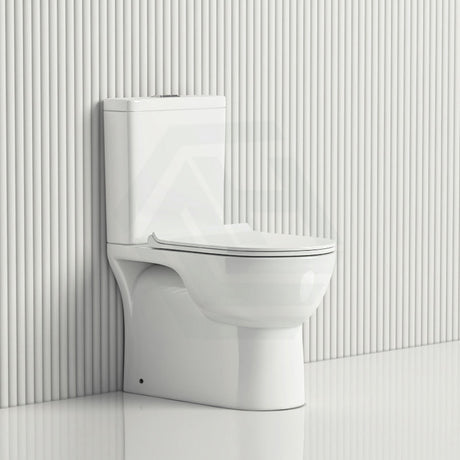
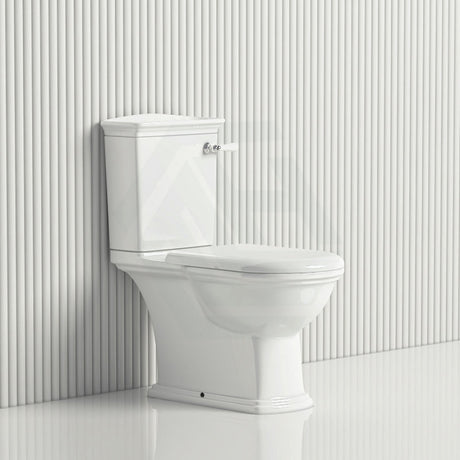
Close-coupled suites: This is the classic type of toilet suite. The toilet cistern (water tank) rests directly on the back of the pan, with it being a single freestanding unit. Generally, this is the most affordable type of toilet, with budget suites starting from around $185.
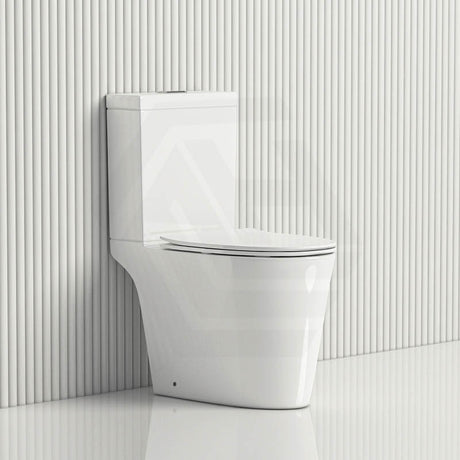
Back-to-wall toilets: This is the most common choice seen in today's Aussie bathroom — and for good reason. As the name suggests, it is a pan that fits directly against a wall — usually the toilet cistern is contained in a duct wall behind it, but sometimes it is built into the wall or cabinetry. The benefit is a much cleaner visual line. Prices typically sit in the $400–$800 range for a decent mid-range suite from brands like Fienza or Kohler, and can go as high as around $1,200 for premium designer pieces.
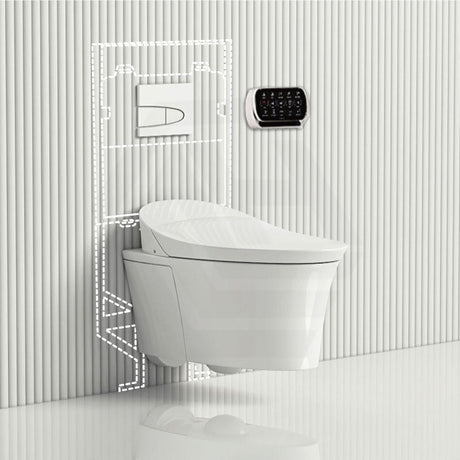
Wall-hung toilets: The most modern and design-led type of WC, wall-hung toilets have a pan that cantilevers off the wall, and the toilet cistern is completely hidden away inside the wall cavity. Geberit makes excellent in-wall cisterns, ranging from $165 to over $1,200 depending on configuration. Wall-hung toilets require a licensed plumber for installation. A pan alone from brands such as Poseidon or Lukka can range from around $300 to $934. For a floating, minimal style that photographs beautifully — see any episode of The Block — it is well worth it.
Rough-in dimensions matter here too. An S-trap has a setout of 100–120mm from the wall to the pipe centre; a P-trap sits at 185mm. Always confirm your existing setout before purchasing.

How a WC Toilet Works: Cistern, Pan, and Seat Explained
Every toilet suite, no matter the configuration, has three components. The toilet cistern, also referred to as the flush tank, holds the water for flushing. Inside, you will find the inlet valve, which replenishes the toilet cistern after every flush, the flush valve, through which water is discharged into the pan, the overflow pipe, and the push button. The toilet cistern is regulated by AS/NZS 3500.2:2025 (AS/NZS 3500.2:2025), which covers sanitary plumbing and drainage requirements, including how the pan connects to the drain line.
The pan is essentially the ceramic bowl itself. The majority of Australian suites are made of vitreous china for longevity and easy cleaning. Rimless pans have replaced the pan's inner rim — where bacteria tends to accumulate — as standard in quality suites.
The toilet seat is the seat and cover, attached on hinges. These days, most Australian toilet suites come standard with a soft-close UF (urea formaldehyde) slim seat — sanitary and much more pleasant than seats from ten years ago. Replacing your toilet seat is among the few tasks you can legally perform yourself in all Australian states.

Choosing the Right WC Toilet for Your Australian Bathroom
Once you are confident about the role of each component, purchasing a toilet becomes much simpler. First, know your trap type and setout — buying the wrong configuration will be a costly error. Second, check the water efficiency rating (WELS). A 4-star rated toilet (AS/NZS 6400:2016) uses 4.5 litres on a full flush and 3 litres on a half flush, which can translate to significant savings over time. Beyond water efficiency, there is another compliance box to tick.
Every toilet sold in Australia must carry WaterMark certification (WaterMark Certification Scheme) — a mandatory national requirement. If a product doesn't have a WaterMark label, it may not be accepted by your state's plumbing regulatory authority. Always check before purchasing.
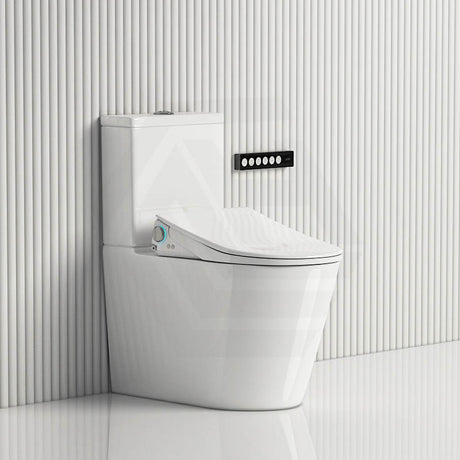
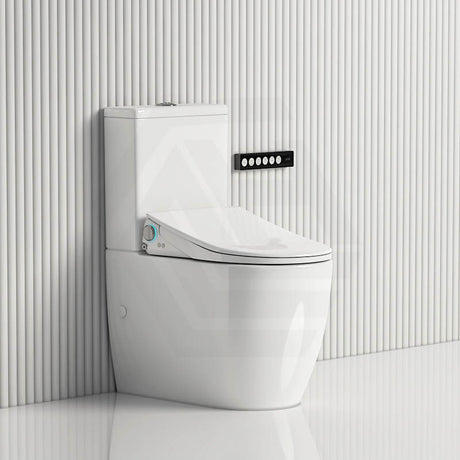
In terms of budget, a back-to-wall toilet suite starts from $185–$400 at the entry level. Mid-range suites — with rimless pans, quality flush mechanisms, and better aesthetics from brands like Fienza and Kohler — typically cost between $400 and $800. Premium suites from brands such as Poseidon and Macho run from $800–$1,200. Smart toilets with bidet and heated seat functions usually start from $1,619 and are a category unto themselves.
Finally, if you are building a new bathroom, note that the NCC 2025 Livable Housing Design Standard requires a minimum clear circulation space of 1,200mm by 900mm (NCC 2025, ABCB Livable Housing Design Standard) from the front edge of the pan, and a minimum 900mm clear width between opposing walls in a separate sanitary compartment. These spatial requirements are worth factoring in early — understanding the wc toilet meaning in this context extends beyond the fixture itself to the design of the room around it, and getting the dimensions right will make the space far more comfortable to live in.
References
AS/NZS 3500.2:2025 Plumbing and Drainage — Sanitary Plumbing and Drainage, Standards Australia
AS/NZS 6400:2016 Water efficient products — Rating and labelling (incorporating Amendment No. 1:2022 and Amendment No. 2:2022), Standards Australia
WaterMark Certification Scheme, Australian Building Codes Board
National Construction Code 2025, ABCB Livable Housing Design Standard, Part 3 Internal doors and corridors and Part 4 Sanitary compartment