02 July, 2026
Complete Guide to Japanese Soaking Tubs
Explore japanese soaking tubs — materials, sizing, and Australian installation costs explained. Plan your bathroom renovation with confidence.

Imagine stepping into your bathroom and sinking shoulder-deep into warm water — not lying flat, but sitting upright, fully enveloped. That's the experience an ofuro offers, and it's unlike anything a standard Australian bathtub delivers. So, what exactly sets these tubs apart? Compact, deep, and totally enveloping — they measure just 900 mm to 1200 mm in length but reach a depth of 600 mm to 750 mm, holding 300 to 500 litres per fill. This guide covers everything you need to know — materials, sizing, installation requirements, and real costs — so you can decide whether one belongs in your home.
Video Credit: The Art of Craft
What Is a Japanese Soaking Tub?
Forget the type of bath where you lie back on a pillow; this is the kind of bath where you sit upright with your knees up and your shoulders underwater. That's exactly what japanese soaking tubs are made for. Known in Japan as an ofuro, japanese soaking tubs don't really work like Australian bathtubs. Australian bathtubs range in length from 1500 mm to 1700 mm, but have a relatively low depth.
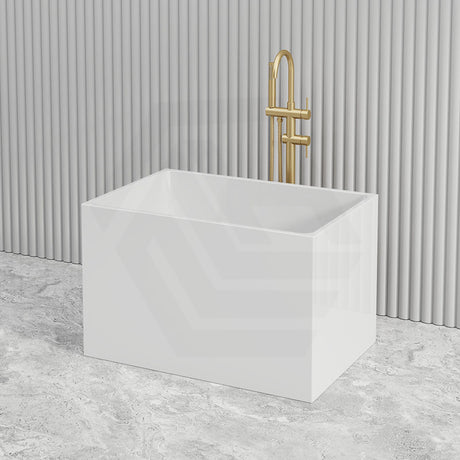
With japanese soaking tubs, depth is the big differentiator. A japanese soaking tub is shorter, about 900 mm to 1200 mm in length, but has much greater depth, around 600 mm to 750 mm. It also helps if your bathroom space is small and not necessarily rectangular. Because of this depth, japanese soaking tubs hold much more water — typically 300 to 500 litres per fill — compared with around 150 to 250 litres for an Australian bathtub. You'll need to account for the capacity of your hot water system. Compact, deep, and totally enveloping. That's what you get in a japanese soaking tub.

Materials, Sizes, and Specifications
So you've decided on the size of your japanese soaking tub. Next you'll have to decide on the material it is made from. Each material offers different prices, pros, and cons.
| Material | Price Range (Tub Only) | Full Capacity Load | Maintenance Level |
|---|---|---|---|
| Fibreglass-reinforced acrylic | $800 - $1,500 | 300 - 400 kg | Low — wipe down as needed |
| Stone resin | $2,000 - $4,500 | 400 - 500 kg | Medium — descale every few months |
| Hinoki timber | $3,500 - $8,000 | 350 - 450 kg | High — regular oiling required |
| Stainless steel | $2,500 - $6,000 | 350 - 450 kg | Low — minimal upkeep |
Fragrant, beautifully textured, and steeped in tradition — hinoki timber is the classic choice, though you'll need to oil it regularly or it'll crack and go mouldy. Fibreglass-reinforced acrylic is what you'll find in most Australian homes. Budget-wise it wins hands down — entry-level units kick off at around $800 to $1,500 — and it's light enough to move and easy to wipe down. Expect to pay somewhere in the $2,000 to $4,500 range for stone resin. Solid and smooth underhand, it does weigh a fair bit — and plan on descaling it every couple of months. Of the four materials, stainless steel takes the most punishment and asks the least of you in upkeep. Heat disappears fast through the walls, and that cold, surgical look can feel jarring in a bathroom that's meant to be warm and inviting.
People forget about weight — fill one of these tubs up and you're dealing with a seriously heavy load. Stone resin is the worst offender — at full capacity you've got 400 to 500 kg pressing down on your floor. Timber-framed homes and upstairs bathrooms are particularly vulnerable — sort out your structural capacity before you go anywhere near a japanese soaking tub purchase.

Practical Considerations and Installation Requirements
Happy with the material and size? Right — now figure out whether your bathroom is actually up to the job. Floor load capacity — that's where you start, full stop — and upstairs bathrooms have to cope with a japanese soaking tub at full weight. Before you spend a cent, have a builder or structural engineer cast an eye over the floor joists — they'll know straight away whether reinforcement is on the cards. Skip it and you're cutting corners on safety — this one's non-negotiable. Waste fittings, supply lines, overflow — every bit of it needs a licensed plumber, no matter which Australian state or territory you're in.
The tub surround must be waterproofed by a licensed waterproofer — compliance with AS 3740:2021 and the National Construction Code 2025 is mandatory, and bath-adjacent walls must be water resistant to at least 150 mm above the vessel. Built-in tubs are a particular case — waterproofing goes in first, then the tub, never the other way around. Hot water at bathroom outlets must be capped at 50°C under AS/NZS 3500.4:2025 — fit a tempering valve, especially given how much water these tubs hold.

Costs, Budgeting and What to Expect
Understanding what the job involves will make budgeting for your japanese bath much easier. Here are the costs for an average japanese bathtub installation in Australia.
The tub itself ranges from around $800 to $1,500 for entry-level acrylic, $2,000 to $4,500 for stone resin, and $3,500 to $8,000 for a premium hinoki timber japanese soaking tub. A mid-range japanese soaking tub sits at $2,000 to $3,500 before installation.
• Licensed plumber labour to install your japanese bath: $800 to $2,000
• Structural reinforcement, if required by engineer: $1,500 to $4,000
• Waterproofing the wet area around the tub: $500 to $1,500
• Hot water system upgrade (if required): $1,200 to $3,500
You should also account for ongoing hot water running costs and whether a new drain is needed if the waste position differs from your existing one.

Choosing the Right Japanese Soaking Tub for Your Bathroom
Now you've got costs covered, how do you choose the best japanese bathtub for you?
Where a 1700 mm standard tub won't fit, a japanese bathtub in the 900 mm to 1100 mm length range often will — though you'll still need decent clearance on every side for safe entry and exit. Bigger bathrooms suit a freestanding setup, the japanese bathtub sitting front and centre as the focal point. Tight bathrooms call for a built-in or drop-in tub — framed out, tiled, and structurally supported on every side.
WaterMark certification is a must — don't buy a japanese soaking tub without it. Acrylic suits a tighter budget with minimal upkeep; stone resin sits at the premium end; hinoki timber looks stunning but demands ongoing maintenance. Your practical requirements should drive the decision — looks alone aren't a good enough reason to choose a japanese bathtub.
References
State and territory plumbing licensing authorities (Building and Plumbing Commission Victoria; Building Commission NSW / NSW Fair Trading; Queensland Building and Construction Commission; Plumbers Licensing Board Western Australia (administered by Building and Energy); Consumer, Building and Occupational Services Tasmania; Access Canberra ACT; Office of the Technical Regulator / Consumer and Business Services South Australia; Plumbers and Drainers Licensing Board Northern Territory)
AS 3740:2021 Waterproofing of Domestic Wet Areas, Standards Australia
National Construction Code 2025, ABCB Housing Provisions, Part 10.2 Wet area waterproofing
AS/NZS 3500.4:2025 Plumbing and Drainage — Heated Water Services, Standards Australia