25 June, 2026
What is Cistern? An Aussie Homeowner's Reference
Discover what is cistern, how it stores and releases water, and which type suits your Australian bathroom best — read the full guide now!

Stood in a bathroom showroom staring blankly at the word 'cistern'? Yeah, you're in good company. Plumbers toss the word around constantly, yet nobody ever stops to explain what it actually means. So let me fix that.
At its core, what is cistern if not just a water-storage tank — nothing more. One job, that's it: deliver a controlled rush of water to the toilet bowl. Press the button and the stored water drops all at once in a single controlled rush — that's what clears the bowl. Australian standards set a dual-flush cistern at 4.5 litres for a full flush and 3 litres for a half flush — the 4-star WELS benchmark that most new toilets are designed around. Knowing what's actually going on inside your toilet cistern matters — especially when you're mid-reno, or it's 11 pm on a Sunday and something's gone wrong.
Video Credit: BuildersSA
What Does a Cistern Actually Do?
Positioned above or behind the toilet pan, the cistern stores enough water that a sudden release creates the hydraulic force required for a proper flush. Take away that stored volume and you'd be left with a useless trickle. Volume, timing, pressure — the cistern governs all three, so it has a direct bearing on water efficiency and hygiene alike.
Here in Australia, cistern compliance is something worth getting your head around too. Before a cistern can legally go in, it must hold both WaterMark certification and WELS registration — no exceptions. Those aren't nice-to-haves; they're mandatory national requirements. A product that lacks them has no place in your bathroom.
With the basics covered, it's worth looking at the different configurations on offer — your choice will shape everything from bathroom layout through to plumbing costs.

Toilet Cistern Types You'll Find in Australia
The Australian market has three main configurations to know about.
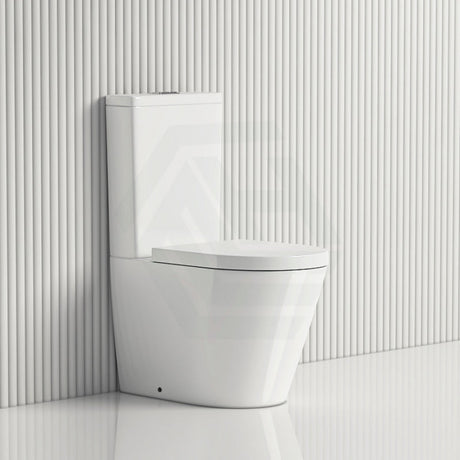
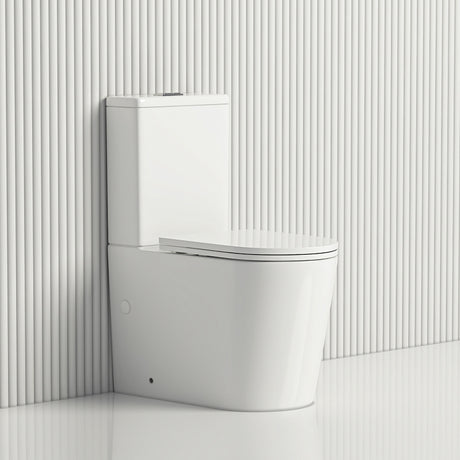
Close-coupled — the tank mounts straight onto the top of the pan. It's the go-to choice for most Aussies — complete toilet suites start from around $185 AUD and it's hard to beat for value. Installation is simple and servicing it later is no drama.
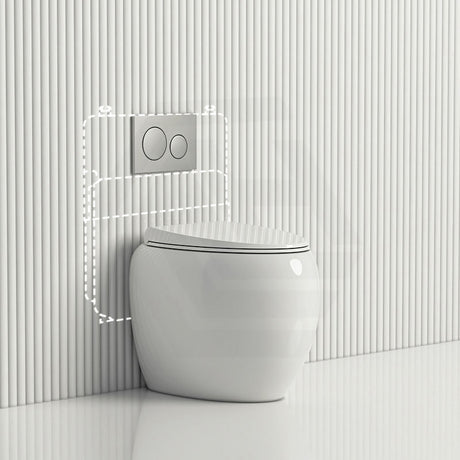
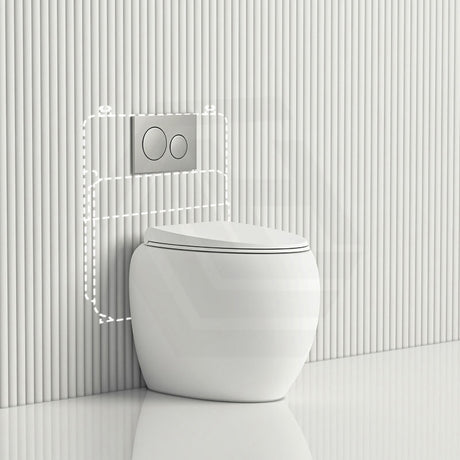
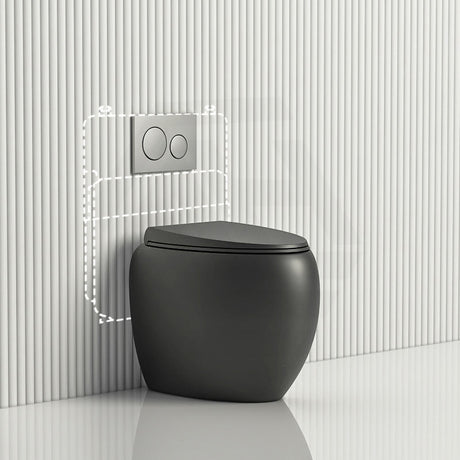
Back-to-wall — the cistern hides inside a wall cavity or vanity unit; all you see is the push button. You get a tidier aesthetic without the full structural commitment that an in wall cistern demands.
In-wall — the frame is built right into the wall structure, which typically calls for a 100–120 mm frame depth. Wall-hung pans pair naturally with these, and they're a favourite in contemporary renos. When it comes to in-wall systems, Geberit and R&T set the standard. Depending on the system, expect to pay anywhere from around $165 up to well over $1,200 AUD for an in-wall cistern setup.
For period-style bathrooms, heritage high-level cisterns — perched well above the pan on a pipe — are still around, though you won't see them much in new builds.
Before a cistern can be sold in Australia, it must be WELS registered and carry the correct label. That's not just red tape — it's your assurance that the flush volumes have been independently verified.
Whatever cistern type you end up with, the core internal mechanism is the same across all of them — so getting to know it means you can maintain any toilet cistern and catch problems before they escalate.

Inside a Cistern: The Key Components Explained
You will find the same basic parts in every cistern, no matter how it operates: the inlet valve (or fill valve), flush valve, float, and overflow tube. The inlet valve opens to let water enter the cistern when it is empty and shuts off once it is full. The flush valve releases that water into the pan when you activate the flush. The float monitors the water level and shuts the inlet valve off when the cistern reaches its designated fill level. The overflow tube is designed to catch any excess water should the float fail to shut the inlet valve off at the correct point — in this scenario, the water flows down into the pan, not onto the bathroom floor.
All toilet cistern components need to carry WaterMark certification to comply with Australian plumbing regulations. Unapproved parts imported from offshore are very common, and installing them without WaterMark approval is predictably problematic: a faulty cistern is the usual result.
Each of the internal toilet cistern components can also malfunction. The most common cistern problems are the cistern refilling when not in use (worn flush valve seal), slow refill (partial blockage in the inlet valve), or a weak flush. Each symptom can be tracked to a specific part, and every part can be replaced individually.

How to Choose a Cistern for Your Bathroom
If you are still asking what is cistern type suits your bathroom best, the answer comes down to your pan choice and renovation scope. Choose an in wall cistern for wall-hung pans or a close-coupled cistern for close-coupled pans. Always confirm that the cistern and pan are compatible by reading the manufacturer's specs for the toilet suite. Close-coupled is the right cistern type for most bathroom renovations — they are cheaper and easier to install and service, and spare parts are more readily available. If you have undertaken a full bathroom strip-out and would like a less bulky cistern, consider an in wall cistern. In an existing bathroom, installing an in wall cistern can be more expensive and complex than many people think, as a tradie will need to tile in and around the new cistern to match the existing tiles.
You also need to check that the WELS rating of the cistern suits your needs. A 4-star WELS toilet cistern is standard on a new build and delivers a 4.5L full flush and 3L half flush. Confirm that the operating pressure range of your toilet suite is suitable for the water pressure at your home — typically 150–850 kPa.
Regarding costs, a new toilet suite starts at around $185 (close-coupled). An in wall cistern only starts at around $400, while a full in-wall suite ranges from around $543 up to $1,200 AUD depending on brand and model.

Installation, Maintenance and Common Problems
Only a licensed plumber can connect or disconnect a cistern's water supply line. Check your state or territory requirements for more information. A licensed plumber must also provide a certificate of compliance on completion of your bathroom renovation. Labour costs depend on your bathroom's location and the complexity of the job, and can range from $150–$300 AUD.
Replacing an internal toilet cistern component does not always require a plumber. In most Australian states, DIY replacement of parts such as the inlet valve, flush valve, and float is permissible — but always check your state and territory requirements first, and turn off the water supply before commencing any work.
The most common toilet problems are phantom flushes (worn flush valve seal), slow refill (partial blockage in the inlet valve), and water pooling beneath the toilet (worn cistern-pan gasket or a cracked cistern). The first two can be diagnosed and addressed without a plumber in most cases. A cracked cistern, however, will require a licensed plumber to replace the unit.
All cistern installation work must adhere to AS/NZS 3500.2:2025 (sanitary plumbing and drainage). Your plumber will know this standard, but it is always worth knowing if you are managing your own bathroom renovation.
References
AS/NZS 6400:2016 Water efficient products — Rating and labelling (incorporating Amendment No. 1:2022 and Amendment No. 2:2022), Standards Australia
WaterMark Certification Scheme, Australian Building Codes Board
State and territory plumbing licensing authorities (Building and Plumbing Commission Victoria; Building Commission NSW / NSW Fair Trading; Queensland Building and Construction Commission; Plumbers Licensing Board Western Australia (administered by Building and Energy); Consumer, Building and Occupational Services Tasmania; Access Canberra ACT; Office of the Technical Regulator / Consumer and Business Services South Australia; Plumbers and Drainers Licensing Board Northern Territory)
AS/NZS 3500.2:2025 Plumbing and Drainage — Sanitary Plumbing and Drainage, Standards Australia