14 September, 2026
What Is a Compost Toilet? How They Work in Australia
Wondering what is compost toilet technology? Learn how composting toilets work and what Australian regulations apply to your property.

Imagine stepping into a bathroom that uses no flush water at all — no cistern, no pipes, just nature doing the work. Composting toilets are waterless toilets that do not require any flush water to function, instead relying on oxygen and bacteria to break organic waste down into humus. They come in two main forms — compact self-contained units and larger split systems — with self-contained units ranging from around $1,000 to $3,500 for a quality system. So, if you are curious about whether one could work for your property, read on — this guide covers exactly how they function, how they compare to conventional toilets, and what Australian regulations you need to know!
Video Credit: Creativity RV
What Is a Compost Toilet?
Composting toilets are waterless toilets that do not require any flush water to function. They work on the principle that organic waste left in the presence of oxygen and bacteria will decompose into humus, a nutrient-rich material that can be used as compost.
### How Compost Toilets Work
A composting toilet is made of two components: a bowl for the user to sit on and an airtight chamber underneath. The waste falls into the chamber where bacteria decompose it naturally. The chamber is usually fitted with a small exhaust pipe that vents out any odour and excess moisture through the roof of the building. At the base of the composting unit is a small door through which the humus can be removed. Some composting toilets also separate urine, which prevents excessive moisture levels in the chamber, which could stop the bacteria from working effectively, and also makes the urine available as a liquid fertiliser.
Compost toilets use natural processes to biologically reduce waste, but they require some user input to function effectively. For example, you must add a carbon-rich material like wood shavings, sawdust, or coconut coir into the chamber after each use. The waste also needs to be periodically agitated to aid the decomposition process, which may or may not be integrated into the composting toilet.
There are two common types of composting toilet:
- Self-contained systems that are compact and fit within the space of a standard toilet - Split (or central) systems which usually comprise of a pedestal and seat in the bathroom and a large external container that composts the waste, either in the yard or under the building
Self-contained composting toilets are usually either 240V or 12V, or no electricity is required. These can work well in a caravan or off-grid cabin, and are sometimes used as a secondary toilet in a tiny home or other dwelling. Split-system toilets are more popular for full-time residential use, because of their increased capacity and less frequent servicing.
There's a large market for composting toilets in Australia, with self-contained units ranging from around $1,000 to $3,500 for a quality system, while larger split systems can cost $3,000 to $7,000, or more, plus a cost to build the sub-floor installation.

Compost Toilets vs Conventional Toilets: Practical Comparison
Composting toilets are popular options for off-grid properties. They can save thousands of litres of water per year, and offer a level of self-reliance that a conventional toilet can never match.
| Toilet Type | Upfront Cost (AUD) | Water Use Per Flush | Maintenance Level |
|---|---|---|---|
| Self-contained composting | $1,000 - $3,500 | 0 L | Regular (carbon additive, agitation) |
| Split-system composting | $3,000 - $7,000+ | 0 L | Less frequent servicing than self-contained |
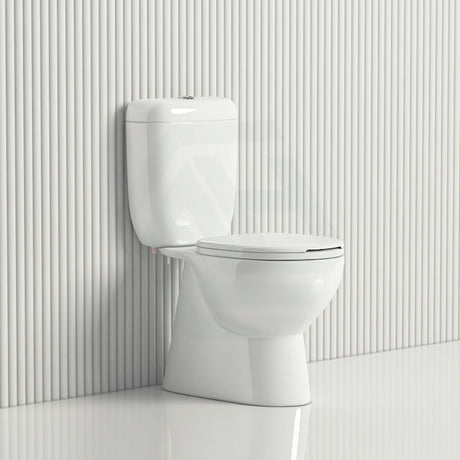
| Conventional cistern (4-star WELS) | $185 - $5,950 | 3 - 4.5 L | Minimal (occasional bowl and cistern clean) |
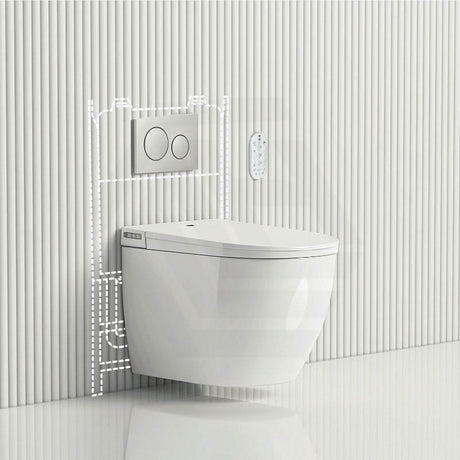
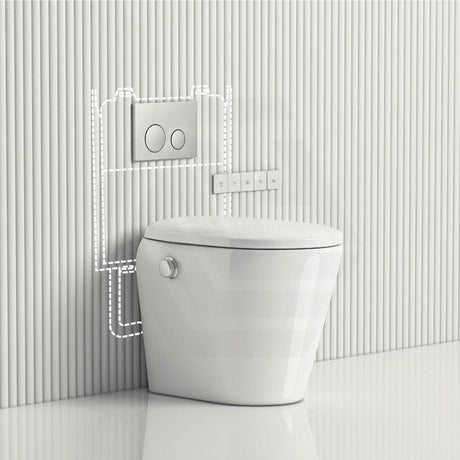
| High-tech / smart water closet | Up to $6,205 | 3 - 4.5 L | Minimal (occasional bowl and cistern clean) |
Let's put this into context. A typical family of four, flushing ten times per day, will save approximately 33 litres of water daily if they replace their conventional 4-star WELS water closet — which uses 3 L on half flush and 4.5 L on a full flush, averaging 3.3 L per flush (AS/NZS 6400:2016) — with a composting toilet.
The upfront cost of a composting toilet is higher than a conventional water closet, and composting toilets need more attention and maintenance to keep them running efficiently.
However, many find that the additional work is justified. Many prefer to compost their waste, and know that they are saving precious water and reducing the amount of waste that ends up in our sewerage systems.
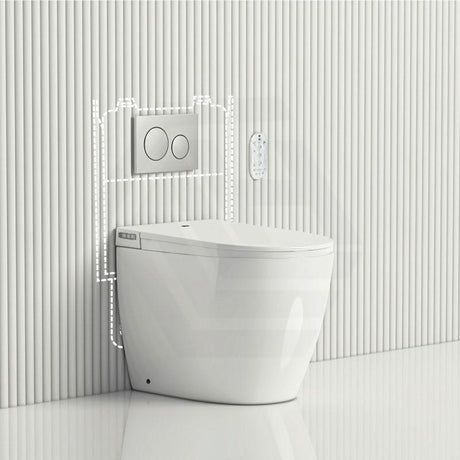
In comparison, cistern toilet suites have an upfront cost of around $185 and $5,950 from brands like Poseidon or Fienza, and require minimal upkeep beyond the odd bowl and cistern clean. However, they can't match composting toilets when it comes to self-sufficiency and conservation of natural resources. At the other end of the spectrum, some top-end designer or high-tech models, including smart water closet options, can cost up to $6,205.

Australian Regulations and Installation Requirements
When choosing a composting toilet, it's important to pick one that is suited to your particular circumstances. You can choose a composting toilet that is compliant with Australian standard AS/NZS 1546.2:2008, which will meet the NCC 2025 requirement for sanitation.
In addition, the NCC 2025 requires a sanitary compartment exhaust with a flow rate of at least 25 L/s (NCC 2025, ABCB Housing Provisions, Part 10.8). Check with your local council to make sure your composting toilet is approved for use in your area.
It's also important to check who can install the system. Some aspects require a licensed plumber for connection to the drainage system — it's against the law in Australia to do your own plumbing — and any such connections must meet the relevant Australian standard. These connections should be made according to AS/NZS 3500.2:2025 (AS/NZS 3500.2:2025).
Even so, not needing a sewerage connection doesn't mean composting toilets are free from regulation or approval requirements. Many councils still require development approval and building permits before installation of a composting toilet, even on rural properties.
To understand what is compost toilet compliance in your state, always consult your local council and a licensed plumber before proceeding with installation.
Homeowners often ask what is compost toilet approval involves — the answer varies by council, but generally includes submitting the product's AS/NZS 1546.2:2008 certification alongside your development application.
---
Wondering what is compost toilet technology and whether it suits your home? The answer depends on your location, household size, and how your local council classifies on-site waste treatment. A self-contained unit with a standard toilet pan profile can suit off-grid builds, while a split system with a separate composting chamber better serves permanent family homes. Either way, a cistern toilet drawing mains water remains the benchmark for urban convenience — but for water savings and self-sufficiency, a composting system is hard to beat. For households connected to mains water, a water closet is still the most practical everyday choice.
References
State and territory plumbing licensing authorities (Building and Plumbing Commission Victoria; Building Commission NSW / NSW Fair Trading; Queensland Building and Construction Commission; Plumbers Licensing Board Western Australia (administered by Building and Energy); Consumer, Building and Occupational Services Tasmania; Access Canberra ACT; Office of the Technical Regulator / Consumer and Business Services South Australia; Plumbers and Drainers Licensing Board Northern Territory)
AS/NZS 3500.2:2025 Plumbing and Drainage — Sanitary Plumbing and Drainage, Standards Australia
National Construction Code 2025, ABCB Housing Provisions, Part 10.8 Condensation management
AS/NZS 6400:2016 Water efficient products — Rating and labelling (incorporating Amendment No. 1:2022 and Amendment No. 2:2022), Standards Australia