14 September, 2026
Types of Push Button Toilet Flush: An Australian Guide
Explore the types of push button toilet flush used in Australian bathrooms, from dual flush to in-wall cistern plates, and find the right fit for yours.

Choosing the right flush button might seem like a minor detail — but it's one of those decisions that quietly shapes how your bathroom looks and functions every single day. Push button toilet flush systems in Australia generally fall into three configurations: top mount, front mount, and in-wall cistern options, each suited to different bathroom styles and cistern types. Dual flush is now the clear standard, with a full flush of 4.5 L and a reduced flush of 3 L — averaging just 3.3 L per flush and typically earning a 4-star WELS rating. This guide walks through every configuration so you can choose with confidence.
Video Credit: Decorify
What Is a Push Button Toilet Flush?
A flush valve within the cistern is the mechanism that controls the amount of water released into the toilet pan. The flush valve will open when the flush button is pushed and then close again when the flush button is released. It's that simple.
Push button systems are cleaner-looking, more reliable, and far better suited to the sleek, contemporary bathrooms Australians have come to love. One thing to always check before purchasing: any flush component sold in Australia must carry WaterMark certification (WaterMark Certification Scheme). Non-certified products may not be accepted by local plumbing authorities, so it's not a detail worth skipping.

Single Flush vs Dual Flush Push Buttons
When you go to push the button, you'll either see two buttons on the same plate, or only a single button. The former belongs to a dual flush toilet, and the latter to a single flush toilet.
Single flush buttons activate one fixed volume, typically somewhere between 6 L and 9 L per flush. They're simple, often cheaper upfront, and still found in older homes and some commercial settings. In Australia, all toilets must not exceed a maximum average flush volume of 5.5 L per flush.
Dual flush buttons offer two actuators: a full flush (typically 4.5 L (AS/NZS 6400:2016)) and a reduced flush (typically 3 L). Under the WELS scheme, average flush volume is calculated as one full flush plus four reduced flushes, divided by five. A toilet delivering a 4.5 L full flush and a 3 L reduced flush averages just 3.3 L—typically earning a 4-star WELS rating. Dual flush is now the standard in new builds under NCC and BASIX requirements, and the water savings over a year are genuinely significant for a family household.
If you're renovating an older bathroom with a single flush cistern, upgrading the button alone won't change the underlying flush volume—you'll need to look at the cistern itself to unlock those water savings.

Types of Push Button Toilet Flush by Configuration
Once you've settled on single or dual flush, the next decision is physical configuration—where the button sits, what it's made of, and how it mounts to your specific cistern.
When planning a bathroom renovation or needing to replace an existing flush button, the button can be top mounted or front mounted. There are also more advanced sensor-activated flush options available.
### Top Mount Toilet Flush Button
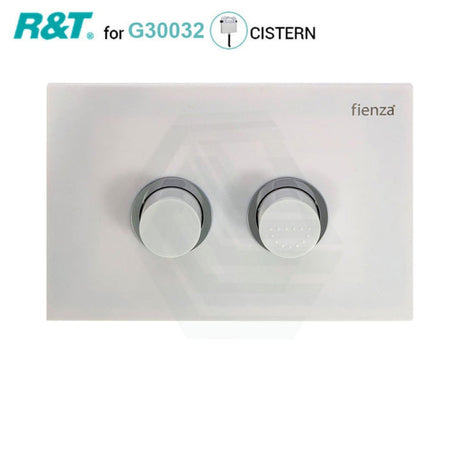
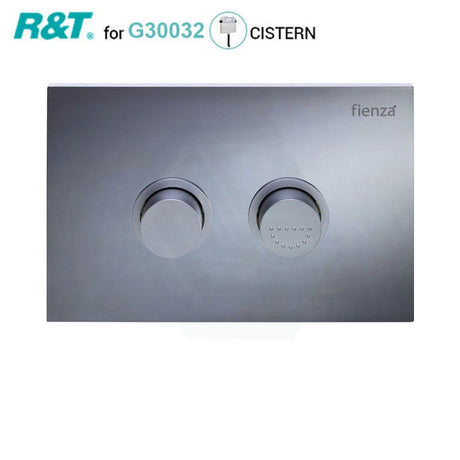
Top mounted flush buttons are the most commonly found type of push button toilet flush mechanism in Australia, usually found in toilets with exposed cisterns where the button is positioned on top of the cistern.
If you're looking to replace a standard top mounted toilet flush button, prices for toilet flush button replacements start from around $24 at the more accessible end of the market. You'll find a wide range of styles available that can match most finishes, including matt black, chrome, brushed gold, and brushed nickel—all designed to coordinate with tapware.
Standard dual flush button plates typically measure around 70 mm x 38 mm, while single buttons run closer to 38 mm in diameter, though sizing does vary by brand and cistern model.
The most common replacement issue you'll come across is where the thread size of the button doesn't match the flush valve in your cistern. Always confirm your replacement button is suited to your existing cistern before purchasing.
### Front Mount Toilet Flush Button – Close Coupled System
Front mounted flush buttons are the other common option. They're used in close-coupled system toilets where the cistern sits behind or is hidden in a cover or panel, with the button exposed on the front.

In-Wall Cistern Push Button Systems
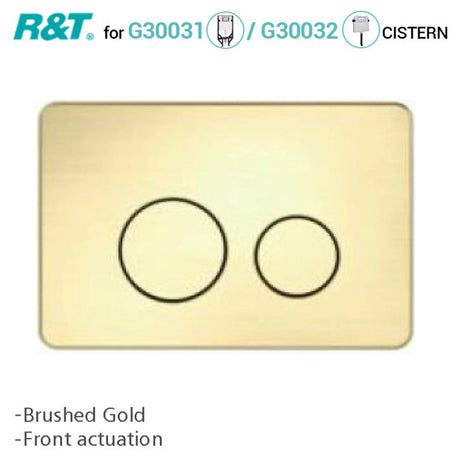
If you opt for a concealed tank, this will include an in wall cistern system. This is where the entire cistern and internal components are concealed within a toilet frame, and the toilet flush button is the only part exposed on the tiled surface.
In-wall systems are commonly found in modern, contemporary bathrooms. Geberit and R&T are two of the most popular brands that manufacture in-wall flush buttons and cisterns in Australia.
These in wall cistern systems have two main parts: the cistern body built into the wall, and the flush button fixed to the tiled surface. In-wall cistern bodies cost between $165 and $1,283 to supply, depending on the brand, style, and model. Flush buttons are sold separately and cost anywhere from $89 to $978.
The flush plates come in two standard sizes: 180 mm or 240 mm. Most frames are designed to accommodate both sizes, but it's important to confirm compatibility when choosing your flush button. The in wall cistern also comes with a built-in access panel to make it easy to access internal parts without disturbing wall tiles.
It's against the law in all states and territories in Australia to DIY plumbing work. Any work involving cistern internals or connecting a new in wall cistern to water supply and waste pipes requires a licensed plumber, who must provide the relevant compliance certificate.

Touchless Toilet Flush (Sensor-Activated)
Instead of the traditional types of push button toilet flush, a touchless toilet flush uses sensor-activated technology for a more contemporary and hygienic option. Units are fitted on top of the cistern and work by sensing the proximity of your hand, activating the flush when your hand comes anywhere from 10 cm to 30 cm away.
Depending on the sensor, they use either infrared or capacitive sensor technology. These units cost anywhere from $150 and $500 in Australia and run on AAA or AA batteries or can be hardwired to mains power. If mains powered, a licensed electrician must carry out the connection.
All Australian-made or imported sanitaryware must comply with Australian Standards and obtain WaterMark Certification Scheme approval before a licensed plumber can install them.
References
WaterMark Certification Scheme, Australian Building Codes Board
AS/NZS 6400:2016 Water efficient products — Rating and labelling (incorporating Amendment No. 1:2022 and Amendment No. 2:2022), Standards Australia
State and territory plumbing licensing authorities (Building and Plumbing Commission Victoria; Building Commission NSW / NSW Fair Trading; Queensland Building and Construction Commission; Plumbers Licensing Board Western Australia (administered by Building and Energy); Consumer, Building and Occupational Services Tasmania; Access Canberra ACT; Office of the Technical Regulator / Consumer and Business Services South Australia; Plumbers and Drainers Licensing Board Northern Territory)
AS/NZS 3500.2:2025 Plumbing and Drainage — Sanitary Plumbing and Drainage, Standards Australia