31 August, 2026
Council Approval for a Second Toilet: What Australia Requires
Council approval for a second toilet is needed across Australia. Understand permits, licensed plumbers, and AS/NZS 3500.2 standards before you renovate.

Adding a second toilet to your home sounds straightforward — until you discover that plumbing regulations, permits, and inspections are all standing between you and that extra convenience. The critical issue is the new sanitary plumbing connection: any new sanitary plumbing fixture connection to the sanitary drainage system will almost certainly trigger a permit requirement, regardless of which state or territory you are in. A licensed plumber must lodge that permit before work begins, with fees typically ranging from $100 to $400, and all installations must comply with AS/NZS 3500.2:2025 and carry WaterMark certification. Understanding these requirements upfront saves both time and costly rework.
Video Credit: Lamont Bros. Design & Construction
When Does a Second Toilet Require Council Approval in Australia?
To answer this question we first need to clarify if you are replacing an existing toilet or if you are installing a second one. A replacement toilet at the same location using the same water and waste connections is usually considered minor works or maintenance in most Australian states and territories and will not need council approval.
If you are adding a second toilet anywhere in the house then the answer is different. Council approval for a second toilet will almost certainly be needed if the work includes a new sanitary plumbing fixture connection to the sanitary drainage system, or includes a new drain, or involves structural alteration. Whether you are converting a linen cupboard to a powder room or adding a toilet to an ensuite it is the new sanitary plumbing connection that is the critical issue.
It is also where the differences between states and territories come into play. In Victoria, New South Wales and Queensland a plumbing permit needs to be lodged by a licensed plumber before any work is done on a new plumbing fixture connection. The same applies in Western Australia and South Australia under the plumbing licensing authorities for those states. In Tasmania, the ACT and Northern Territory the details may vary but the principle is the same — any new sanitary plumbing work requires approval. Your local council or local licensed plumber is the best place to find out if you require a permit.

National Construction Code and Plumbing Standards That Apply
Once you know if you need council approval for second toilet work you then need to know which standards apply to your project to gain approval. Each state and territory has its own building code but plumbing and drainage is mostly nationally controlled.
The key document is the National Construction Code Volume Three containing the Plumbing Code of Australia. The Plumbing Code of Australia incorporates the Australian and New Zealand Standard for Plumbing and Drainage, AS/NZS 3500. The standard relevant to your second toilet installation will be AS/NZS 3500.2:2025 — Sanitary plumbing and drainage. This standard covers toilet pan requirements, graded drain requirements and vent pipe diameters. All connections to graded drains must be connected via a 45° Y junction, not an 88° sweep junction.
Every toilet suite and cistern installed in Australia must be WaterMark certified — a national product certification scheme administered by the Australian Building Codes Board that verifies the fitness-for-purpose of plumbing products. Local plumbing regulators can reject installation of products that lack WaterMark certification. WELS (Water Efficiency Labelling and Standards) compliance is also required. A 4-star toilet suite uses 4.5 litres on a full flush and 3 litres on a half flush — standard for most mid-range suites these days.
The NCC Livable Housing Design Standard dictates another consideration. A separate sanitary compartment must have a clear width of not less than 900 mm between the finished wall surfaces on either side of the pan, and a circulation space of at least 1,200 mm by 900 mm must be provided from the front edge of the toilet pan. This is not a recommendation; it is a requirement that will be checked during inspections.

The Approval Process: Permits, Certifiers, and Timelines
Understanding the standards will help you gauge the scale of the project, which determines the type of permit you will apply for and the tradespeople you will engage.
First, hire a licensed plumber. You have no option — all states and territories require plumbing work in a bathroom or sanitary compartment to be done by a licensed plumber, who will then issue a certificate of compliance (though the terminology varies by jurisdiction). Your plumber will submit the plumbing permit application to your local authority, which may be the local council or an approved private certifier depending on your state.
Permit fees for straightforward residential plumbing work typically range from $100 to $400, with the licensed plumber's labour running at approximately $80 to $120 per hour depending on complexity and location. For a typical second toilet with readily accessible drainage, plan for 4 to 8 hours of licensed plumber time plus permit costs. Your plumber will arrange any necessary inspections prior to wall closures. A simple residential job — no structural challenges, with access to the existing stack — should go through approval and inspection in 2 to 6 weeks.

Choosing a New Toilet
Now that you understand the approval process, you can decide on your toilet. No matter what you choose, it must work with the rough-in position and drainage configuration that your plumber will certify.
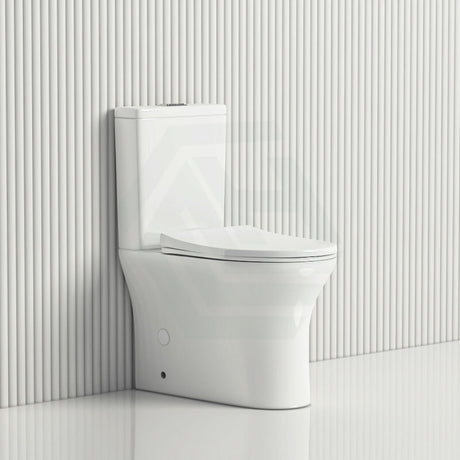
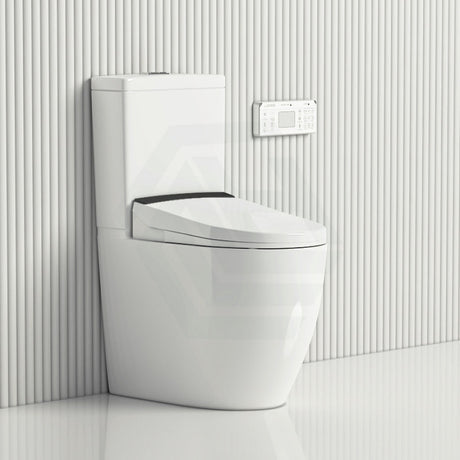
Before making a purchase, your plumber needs to confirm the rough-in position. A p trap toilet features a wall outlet with a 185 mm setout from the wall to the pipe centre, and is used when floor drainage is not feasible, for example in upper floor bathrooms or a ground floor extension on a slab with limited digging space. A back to wall toilet suite hides the cistern within a wall cabinet or custom-built unit, giving a more streamlined appearance. Most models feature either an S-trap (100–120 mm setout from the wall) or P-trap outlet. Brands such as Poseidon, Fienza, and Kohler offer WaterMark-certified back to wall toilet suite options. These range from around $185 for a standard toilet suite to $1,199 for the top of the range rimless option. A rimless flushing system is now standard on the entire Fienza and Poseidon ranges. It removes the rim channel found on old toilet suites, providing a much more hygienic solution that is easier to clean. Any toilet suite you buy from a recognised Australian supplier must be WaterMark certified and registered to the Water Efficiency Labelling and Standards (WELS) scheme.

Second Toilet Installation Issues
Selecting the right toilet is just one part of the equation. There are several technical factors including drain fall, ventilation, and accessibility that determine whether council approval for second toilet work gets granted.
The biggest hurdle for installing a second toilet is inadequate drain fall. Drainage falls need to comply with AS/NZS 3500, which states that there needs to be a minimum fall of 1:60 for a graded drain. This can be hard to achieve over long drain runs going back to the existing stack, especially in a single-storey house built on a slab. Your plumber should advise whether sufficient fall is possible before you choose your preferred location. Obtaining council approval for a second toilet in these situations often depends on your plumber demonstrating that adequate fall can be achieved.
If the toilet is located near an existing stack, an in wall toilet, where the cistern is concealed within a framed wall, might give you a better chance of achieving acceptable fall as the pan can be positioned closer to the stack without the extra depth of a cistern projecting from the wall. Geberit in-wall cisterns are the benchmark product in this area, but R&T offer a solid alternative. In-wall toilet suite packages start at $543 and range up to $1,284, depending on the pan and frame.
Another factor that often gets overlooked is ventilation. Most sanitary compartments must be ventilated mechanically, so your plumber (and a licensed electrician if an exhaust fan is needed) needs to factor ventilation into the scope of work. When seeking council approval for a second toilet, confirming that ventilation requirements are met is an essential step. Make sure any fittings you buy are WaterMark certified before installation.
References
AS/NZS 3500.2:2025 Plumbing and Drainage — Sanitary Plumbing and Drainage, Standards Australia
National Construction Code 2025, ABCB Livable Housing Design Standard, Part 3 Internal doors and corridors and Part 4 Sanitary compartment
WaterMark Certification Scheme, Australian Building Codes Board
State and territory plumbing licensing authorities (Building and Plumbing Commission Victoria; Building Commission NSW / NSW Fair Trading; Queensland Building and Construction Commission; Plumbers Licensing Board Western Australia (administered by Building and Energy); Consumer, Building and Occupational Services Tasmania; Access Canberra ACT; Office of the Technical Regulator / Consumer and Business Services South Australia; Plumbers and Drainers Licensing Board Northern Territory)