04 June, 2026
Toilet Ideas for Australian Bathrooms
Discover the best toilet ideas for Australian bathrooms. Get expert tips on WaterMark certified toilets and styles to suit any renovation.

Video Credit: Design. Build. Style.
Your bathroom is one of the most intimate areas in your house. But when it comes to renovating, the toilet is often an afterthought, and it's one of the most challenging things to get right if you've received the wrong product. Whether you're simply updating a tired ensuite or you're planning an entire bathroom revamp, it pays to get the toilet spot on right from the outset.
Why Toilet Choice Matters in Australian Bathrooms
What may surprise some is that not all the toilets available globally can be legally installed in Australia. Every toilet for sale locally must be WaterMark certified: a compulsory national product certification to make sure they are in compliance with Australian standards for plumbing and drainage installation. If you buy something that doesn't have the WaterMark, no matter how wonderful it looks, your licensed plumber may be in contravention of the law by fitting it.
Water efficiency is also an important thing to consider. The Australian WELS (Water Efficiency Labelling and Standards) scheme uses a star-rating classification for water efficiency and it's well worth choosing a 4-star rated product — which has a full flush of 4.5 litres and a half flush of 3 litres — over the older single-flush systems which could consume as much as 9 litres of water with every flush. The savings are great in both regards, for your bank balance and for the natural world.
After you've considered compliance and water efficiency, another thing to consider is how each style of toilet on the Australian market operates and how the plumbing set-out is configured.

Popular Toilet Styles and How They Work
The most prevalent styles of toilets for Australian homes are close-coupled suites (the cistern is placed directly onto the pan), back-to-wall (the cistern is contained in a wall or vanity unit) and wall-hung pan (where the toilet pan itself is connected to the wall with the cistern concealed behind tiled casing). There are freestanding toilets, but these are very uncommon in Australian bathrooms.
Another crucial thing to consider is your plumbing connection type. Floor outlets are the most common in Australia, with the vast majority of homes using the S-trap style configuration, which has a setout of 100–120mm measured from the wall to the pipe centre. There's also the P-trap, where the toilet outlet runs to a wall with a 185mm setout, and is usually used where a floor drain is not accessible. A very frequent and costly error in bathroom renovations is getting this detail incorrect while ordering.

Key Specs and Sizing to Know Before You Buy
Pull out your tape measure and make a note of your rough-in distance — the measurement from wall to setout pipe — and how far the pan itself will extend from the wall before you go browsing toilet ideas online. You'll also need to consider the seat height, with standard seats coming in at around 400mm or comfort-height ones being closer to 450mm, which many people (mostly seniors) find much easier to sit on.
If you're building a new home, the National Construction Code stipulates that Class 1a dwellings with construction starting after October 2023 must have a minimum 900mm by 1200mm clear area in front of the toilet under the Livable Housing Design criteria. As this applies to all new builds, you'll want to account for it in your layout, particularly before you start laying the tiles.
Now that you have the key measurements, let's take a look at the toilet ideas that are most popular in Australian renovations.

Choosing the Right Toilet for Your Space and Budget
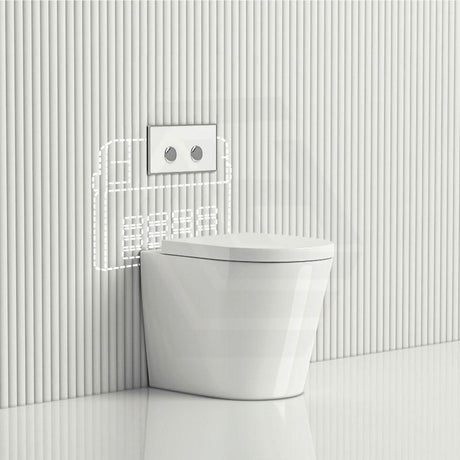
So what's the best toilet for your bathroom? A back to wall toilet is the most commonly upgraded style in renovations for a reason. The cistern is hidden behind the wall (or in a purpose-made cistern cover) to allow for a sleek, smooth surface that's simpler to clean than a standard close-coupled toilet suite. Prices for these toilets span from as little as $185 to $1,199 for premium brands such as Fienza and Kohler.
A floating toilet (also known as a wall-hung pan) takes the clean-line concept a step further: the base of the pan doesn't touch the floor, so it's easy to mop underneath, which looks very impressive in a small bathroom. These wall-hung pans require an in-wall frame and a concealed cistern system, with Geberit being the go-to reference for concealed cistern systems. Wall-hung pans cost from $303–$934, with the cistern unit coming in at $165–$1,283, plus there will be plumber labour costs to factor into the budget.
As they suit different layouts and budgets, a back to wall toilet and a wall-hung pan aren't really competing products — the construction of your bathroom walls is a large factor in which type you'll use. A wall-hung configuration can also save 150–200mm of floor depth compared to a floor-mounted suite, which is worth considering in tighter spaces.
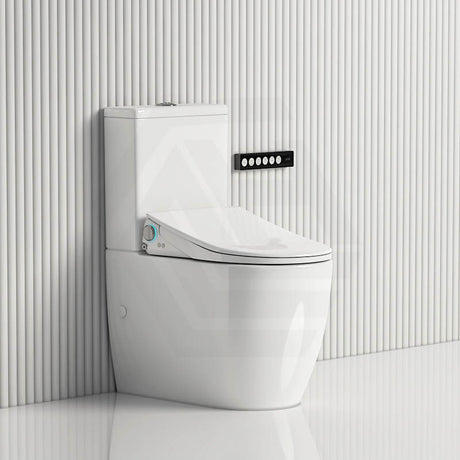
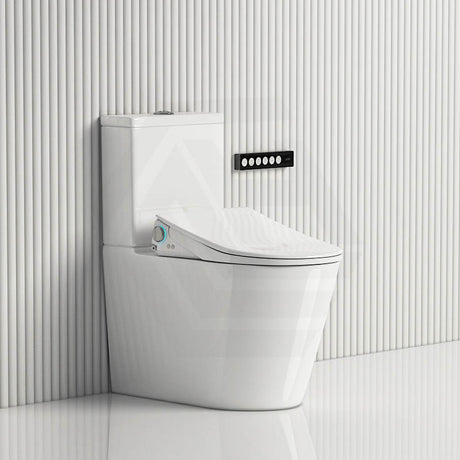
For a family bathroom, cleanability and durability are important features; a rimless back-to-wall suite in the $400–$800 mid-range is a popular option in many Australian homes. If the budget allows, there's also a smart toilet option, which starts from $1,619. These suites provide a host of useful features such as a heated seat, integrated bidet spray with air dryer, auto flush, and night lighting. It's a technology tier that applies across all different styles, making it one of the most versatile toilet ideas for Australian homes.
Either way, check that any toilet suite or pan is WaterMark-certified before making your purchase. In every state, any work done on pipework must be completed by a licensed plumber — the only thing you should be replacing yourself is your toilet seat.
References
AS/NZS 3500.2 Plumbing and Drainage — Sanitary Plumbing and Drainage, Standards Australia
National Construction Code 2022, ABCB Housing Provisions, Part 12.2 Livable Housing
WaterMark Certification Scheme, Australian Building Codes Board
State plumbing licensing legislation (VBA Victoria; Fair Trading NSW; QBCC Queensland; Building Practitioners Board WA; CBOS Tasmania; ACTPLA ACT; Building & Energy SA; ABPB NT)