05 June, 2026
Complete Guide to Minimalist Bathroom
Learn the key rules of minimalist bathroom design — colour, hidden plumbing and open floor space. A practical guide for Australian homes.

Video Credit: Marin
What Makes a Bathroom Truly Minimalist
To begin with, let's clear up a misconception: a minimalist bathroom is not necessarily one that lacks colour or features due to cost-cutting, or simply lacks furniture. In essence, it's a curated space where everything has a purpose. Everything included in the design has been thoughtfully and deliberately chosen and, conversely, nothing has been included that does not belong within the original design brief.
When I create minimalist bathroom designs, my aim is always to stick to these guidelines: stick to two or three colours, hide plumbing and cabinet carcasses, use as few fittings as possible and ensure you have open floor space. This last rule is often overlooked, but open floor space is essential to any design. Whether it's the free floor area around your wall hung vanity, or the continuous expanse of tiles running up a wall, these are all deliberate inclusions and are intended to give the design a calm, relaxing atmosphere.
Clean lines are paramount: junctions are seamless; grout lines are uniform in width and depth; niches are flush with the wall and recessed level from the surrounding wall. This all contributes to a design that allows your gaze to flow easily and unobstructed, without having it constantly interrupted by a wall of clutter and fixtures.

Materials and Finishes for a Minimalist Bathroom
Having created the design, you then need to decide on the materials and finishes — the things that help create a minimalist look.
Large-format porcelain tiles are the mainstay in most minimalist bathrooms. A 600×600 mm tile size will work fine, but choosing to go larger to a 600×1200 mm format has fewer grout lines and more continuous flow — particularly in bathrooms under 6 m² in size. The most common finishes you'll see are those that mimic concrete and stone in pale, mid to light grey and off-white colours. These are the most calming as they give a neutral tone to the space without being clinical. Tile prices vary considerably depending on size, finish, and origin, from as low as $6 to as high as $698 per tile for certain imported products — know your budget and set a limit before you decide.
For the flooring, I always recommend using a matte or honed finish — although polished tiles look wonderful, they can be very slippery when wet. Floor tiles must have a minimum P3 slip-resistance rating, per AS 4586:2013. That said, you can use polished or gloss finishes on the walls as their reflective qualities add depth and light to the room without the safety risk that polished floor tiles present.
Waterproofing is another non-negotiable part of a minimalist bathroom — and it has to be done before tiling. The shower walls need to be waterproofed up to a minimum of 1800 mm above the floor substrate, and the shower floor — and any hob or step-down — also needs to be waterproofed, all in line with the Australian standard that governs this work. Ask your tiler to refer to AS 3740:2021 (AS 3740:2021) as their guide for waterproofing compliance — if they don't know it, don't use them.
Your grout colour can be crucial too. If the grout colour is similar to the tiles, the grid effect is diminished, making the tiles appear to be one single sheet. Even a slightly darker tone of grout from your tiles can be too distracting.

Layout, Sizing and Storage Considerations
Having selected your materials is one thing. Working out how best to arrange them within the room's footprint — incorporating a sensible level of storage while still maintaining clean, simple lines — is another important consideration in a minimalist bathroom.
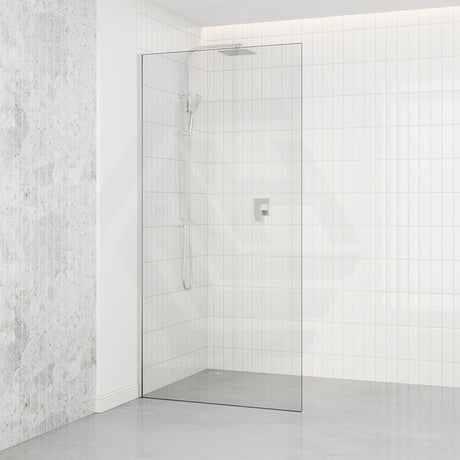
The best way to approach the bathroom layout is to resolve clearances before ordering anything. Your design must allow a minimum circulation space of 1200 mm by 900 mm from the front edge of the toilet pan, in line with the NCC Livable Housing Design Standard. The clear doorway width to the sanitary compartment should be a minimum of 820 mm. Shower recesses of 900×900 mm are feasible but 1200×900 mm is preferable. To maintain an open, clear view, a single fixed frameless screen panel without a door is appropriate.
One of the common shortcomings of minimalist bathroom design is a lack of storage. To make sure that storage doesn't detract from the clean aesthetic, opt for built-in architectural storage such as recessed niches, recessed cabinets (e.g. medicine cupboards) or drawers within the under-vanity unit — everything out of sight. Any of these recessed architectural storage features should be incorporated before tiling begins, at the wall framing stage. Attempting to add them later would involve demolishing existing tiling.

Key Fixtures and Fittings for a Minimalist Bathroom
Once the bathroom layout and design drawings have been determined, it will be time to decide on the right fixtures and fittings. Remember, all wall-hung fixtures, cisterns, and bathing products have compliance requirements and need to carry product certification.
Arguably one of the most important pieces in any minimalist bathroom is the wall hung vanity. These are typically positioned 850–900 mm from the finished floor level, projecting 460–500 mm from the wall face. They must be secured to a framed stud or steel fixing frame — you cannot simply hang them on plasterboard. Lukka and CETO both offer ranges of clean-line floating cabinetry priced between $50 and $2,828. Aulic wall-hung cabinetry is constructed from premium plywood and is well suited to wet areas.
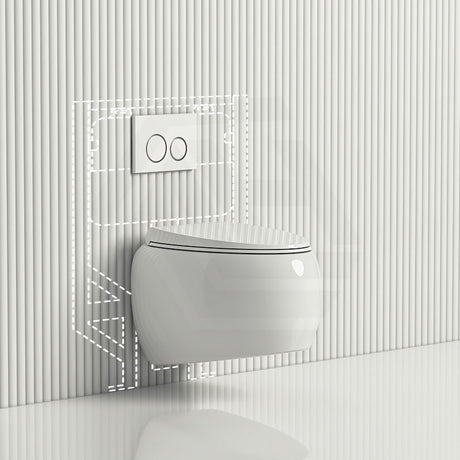
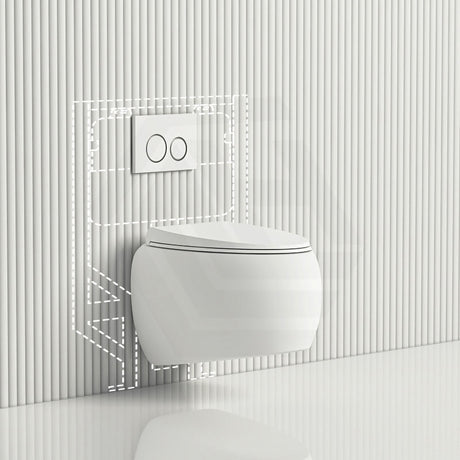
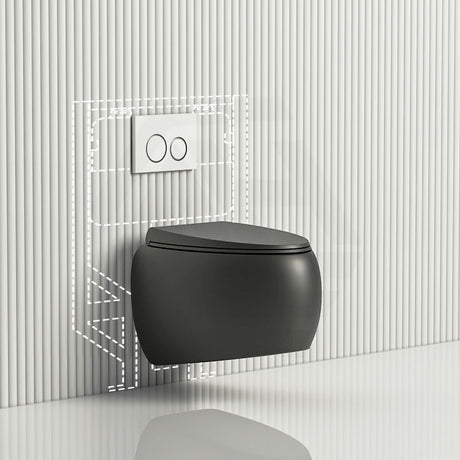
The floating toilet is the other major player in a minimalist bathroom design. The wall-hung pan with concealed cistern saves both floor space and visual clutter — it reclaims 150–200 mm of floor space compared to an equivalent floor-mounted suite, and the cistern is hidden entirely within the wall. The cistern frame must be installed by a licensed plumber as part of the rough-in works. Once the walls and floor are tiled, all that is visible is the flush plate. Fienza offer wall-hung pan and cistern combinations ranging from $543–$1,284. All plumbing products must be WaterMark certified and installed by a licensed plumber for the relevant state or territory.
Wall-mounted tapware allows for a completely uncluttered benchtop. The tapware body is installed during rough-in works and the decorative dress kit is fitted once tiling is complete. Matte black remains a popular choice for a minimalist bathroom, but brushed nickel or gunmetal can also work well with warmer tile palettes.
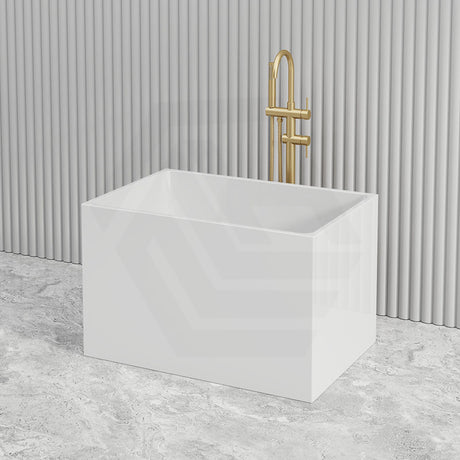
The japanese soaking tub has become a common feature in minimalist bathroom design. Typically the tub measures 1200–1500 mm long and 600–700 mm deep. It occupies less floor space than a conventional freestanding bath while allowing you to sit upright while soaking. Where a japanese soaking tub is proposed, the structural engineer and builder should check the floor structure to confirm it can support the weight of water — this must be addressed before the slab is cast or the timber frame built.
A few common pitfalls are worth noting. Wall-mounted storage niches must be agreed upon with the builder before studs and framing are in place — once tiling has commenced, niches cannot be easily added. Similarly, the size and location of the exhaust fan must be discussed with the builder before ceiling framing, with reference to AS 1668.2. Tapware should be specified with a matte or brushed finish; polished chrome generally shows water spots and fingermarks. Most minimalist bathroom renovations run eight to twelve weeks from demolition to final fit-off, so allow a four to six week lead time for wall-hung cisterns and imported large-format tiles when placing orders. When selecting grout colour, ask your tiler to hold actual grout samples against the tile itself rather than comparing to a colour card — tiles read very differently at scale. The clean, tranquil aesthetic of a minimalist bathroom must be planned carefully from design through to construction. You cannot achieve it simply by choosing the most expensive products.
References
AS 4586:2013 Slip resistance classification of new pedestrian surface materials (incorporating Amendment No. 1:2017), Standards Australia
National Construction Code 2025, ABCB Housing Provisions, Part 10.2 Wet area waterproofing
AS 3740:2021 Waterproofing of Domestic Wet Areas, Standards Australia
National Construction Code 2025, ABCB Livable Housing Design Standard, Part 3 Internal doors and corridors and Part 4 Sanitary compartment