

06 May, 2026
Bathroom Dimensions for Compact Baths: Corner, Round and Square Tub Layouts
Bathroom dimensions for compact baths: corner, round and square tub layouts with clearances and sizing tips. Smart solutions for fitting a bath into small Australian bathrooms.

Corner Bath Dimensions: Sizes, Fit Considerations and Clearances
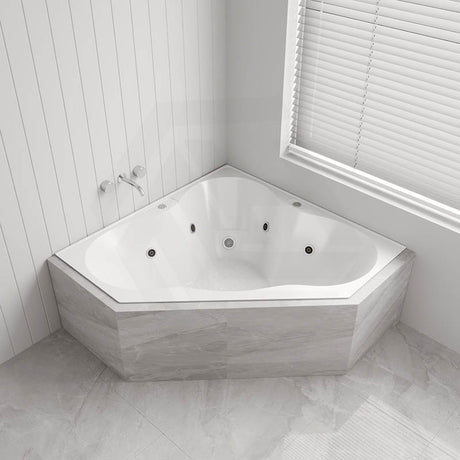
Corner baths usually have a triangular or pentagonal base shape to fit into that corner. Their bathtub sizes vary from approximately 1200×1200 mm up to 1500×1500 mm. This 1500×1500 mm shape is the standard most often installed because it is big enough to comfortably sit in, but small enough for a corner.
However, just because the corner has a diagonal shape entering at an angle does not mean the space it takes up is any less on the floor than an adjacent wall design. The wall-to-wall clearance needs to allow enough space to get into it comfortably. Allowing a minimum of 600 mm clearance from the bath rim to any other object or fixture nearby is a sensible working figure. Keep in mind that corner baths are also heavy when filled, especially the acrylic shapes. This could mean your floor has to be assessed prior to installation and your licensed plumber will be checking the waste matches the position of your rough-in first. If you are installing a new doorway leading to your bathroom under NCC 2022 (ABCB Housing Provisions, Part 12.2), livable housing standards demand a clear opening of no less than 820 mm (NCC 2022, ABCB Housing Provisions, Part 12.2) — worth checking if the doorway is part of the renovation scope.
Corner spa baths come with jets and have a lovely look, but you will require both a licensed plumber and a licensed electrician to wire up the jet pump but keep in mind it is not a DIY project.
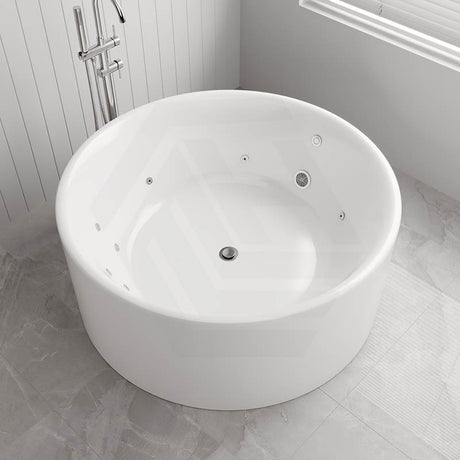
Unlike corner designs which fit tight against walls to reduce footprint, round baths have a circular freestanding form that requires clearance around the full outer rim, which results in very different spatial trade-offs.

Round Bath Dimensions: Practical Trade-Offs and Space Requirements
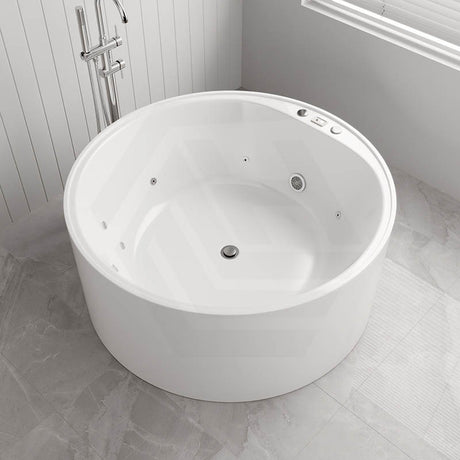
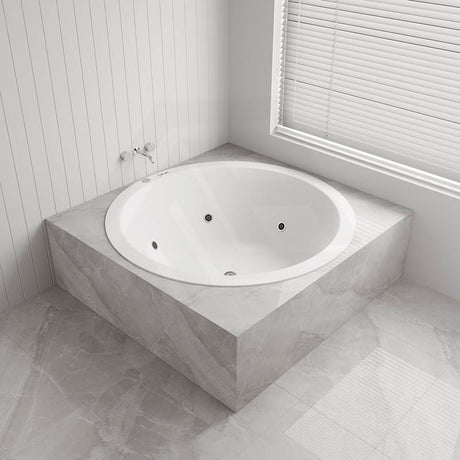
Round freestanding baths are typically offered in bathtub sizes spanning 1200 mm to 1500 mm in diameter. They are stunning, and I really like the way a circular bath looks like a piece of art and not just something used to get clean. They are however space hungry.
To allow comfortable bathing access, cleaning access and general movement, a minimum 600 mm clearance is recommended on all sides of the bath. So that 1400 mm diameter bath effectively requires a minimum floor zone of 2600 mm across once clearance is factored in. In a tight bathroom, that is probably the key detail.
Another detail with round baths is that the waste is often offset from the centre, so the licensed plumber needs to confirm where to position the rough-in drain before the round bath is ordered. Round baths also hold a deep soak, so the weight when filled with water is relatively higher — if renovating an older home, this is worth discussing with your structural engineer.
If a round bath requires too much floor space to sacrifice, a square tub offers ample soaking comfort while remaining compact and wall-friendly.

Square Tub Dimensions: Specs, Layouts and Installation Notes
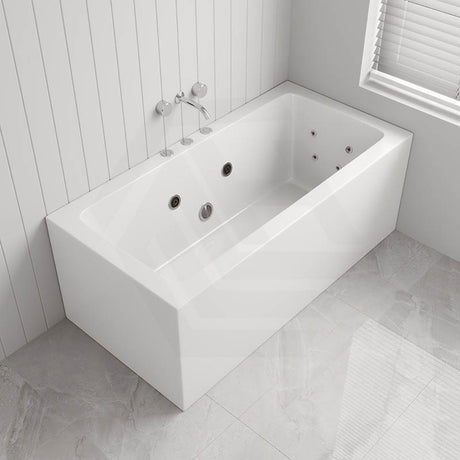
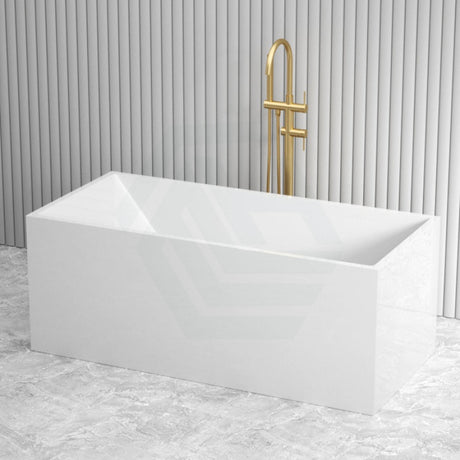
Square tubs are everywhere right now — and honestly, the popularity is well earned. Simple geometry, a solid soaking-space-to-floor-area ratio, and they work just as well freestanding as they do tucked into an alcove.
Square tub bathtub sizes kick off at around 900×900 mm which should be snug against the body when you're soaking — and run all the way up to 1500×1500 mm. Around 1400 mm is where the sweet spot sits — compact enough for most Australian bathrooms yet roomy enough for a decent soak.
This shape suits alcove installs well which means that the wall end carries with no strict clearance requirements. Tiling the remaining sides keeps waterproofing fairly straightforward, though minimum standards still apply. Walls adjacent to the bath must be waterproofed to at least 150 mm (NCC 2022, ABCB Housing Provisions, Part 10.2) above the bath rim — a requirement set out under (AS 3740:2021). Before a single tile goes down, your licensed waterproofer must confirm compliance — cure time alone runs 24 to 48 hours, so budget a realistic three to four days before the bathroom is back in service after an alcove bath install. Back-to-wall configuration? Waterproofing has to be fully done before a square tub goes into position.
On square tubs, the waste sits either centralised or offset toward one end — there's no universal standard. Check with your supplier before you place the order.
Bathtub dimensions and install requirements across all three shapes are now on the table — time to see how they line up with your actual bathroom layout.

Matching the Right Compact Bath Size to Your Bathroom Layout
Under 4 m² of total floor area? A corner or square bath is still very much on the cards. Freestanding round baths demand a generous buffer of open floor on every side — they belong in larger rooms.
In a room measuring 2400×1800 mm or thereabouts, working within small bathroom dimensions, a square bath somewhere between 1200 mm and 1400 mm tucked into an alcove is usually the sharpest trade-off between bathing comfort and floor space. Most adults get a workable bathing length from a square-format 1400 bath, and the footprint won't swallow the room.
The ideal corner for a corner bath is a dead spot — two walls meeting with no other purpose — and a 1500×1500 mm unit turns that wasted area into something worth having. Across corner, round and square tubs, bathtub sizes overlap heavily — all three are available across 1200–1500 mm — so wall configuration and waste rough-in position will drive your decision far more than size.
Budget is another factor worth considering. Drop-in and corner options come in from around $1,000, whereas freestanding square and round baths tend to push well past $2,000. Both Broadway and Poseidon cover corner, square and round bath categories — run a comparison across price brackets before you commit. Corner spa bath on your list? The jet pump's electrical work must meet zone requirements under AS/NZS 3000:2018 — factor that into your budget.
Smallest isn't always right for tight bathroom dimensions — the winner is whichever bath has size, clearances, and waste rough-in all lining up with your particular layout.
References
National Construction Code 2022, ABCB Housing Provisions, Part 12.2 Livable Housing
AS 3740:2021 Waterproofing of Domestic Wet Areas, Standards Australia
National Construction Code 2022, ABCB Housing Provisions, Part 10.2 Wet Areas
AS/NZS 3000:2018 Electrical Installations (Wiring Rules), Standards Australia