30 June, 2026
Complete Guide to Bathroom Measurements
Get bathroom measurements right before you renovate. Covers standard dimensions, clearance zones, and fixture sizing for Australian bathrooms.

One wrong measurement and your entire renovation unravels — it really is that simple. Every millimetre counts and you must measure first, because the consequences of skipping this step range from fixtures that do not work together, to uncomfortable clearances, to genuine budget blowouts when products need replacing. In my experience, most problems trace back to a handful of critical dimensions: the bare minimum floor area for a full bathroom is 1500 mm × 2100 mm, vanity depths sit at a consistent 450 mm, and clearance zones in front of the toilet must reach 1200 mm by 900 mm. Get those right and the rest follows.
Video Credit: Interiorz
Why Bathroom Measurements Matter Before You Buy or Build
Failing to measure your bathroom is often the most expensive renovation mistake homeowners will make. It's not uncommon for people to purchase a bathroom vanity, only for it to arrive and not clear the door swing by 50 mm. It's also common to have toilets installed in a bathroom where the distance to the wall is uncomfortable to the point of not allowing someone to sit properly.
Not what you want to deal with. The consequence is either returning products that can incur restocking fees, rebooking your tradie, and/or having to completely re-plan the bathroom. When it comes to bathroom measurements, every millimetre counts and you must measure first.
There are three types of consequences that can come from poor planning: fixtures that do not work together; lack of clearance making for an uncomfortable living experience; and budget blowouts when a new product is required because the original one cannot fit. All are easily avoidable if the right method of measuring is undertaken.

Standard Bathroom Dimensions and Clearance Zones
There's a genuine stack of standards and regulations that govern Australian bathrooms — you can't just wing it. New builds and major renovations? The National Construction Code applies, full stop.
The bare minimum floor area for a full bathroom is 1500 mm × 2100 mm — but most Australian homes land at 1800 mm × 2400 mm, and honestly, that extra room matters more than people expect. Below 1500 mm in length, the space starts to feel genuinely cramped. Powder rooms are the tightest of the lot — a toilet-and-basin-only setup can get away with 900 mm × 1200 mm, but only if the layout's been properly worked out. That 900 mm width and 1200 mm depth leave almost zero wriggle room.
People underestimate clearance and access more than almost anything else. That clear circulation zone in front of the toilet pan — 1200 mm by 900 mm (NCC 2025, ABCB Livable Housing Design Standard) — is a hard requirement, and the finished walls flanking the toilet can't close in tighter than 900 mm between them. The 1200 mm depth in particular catches people off guard. Internal bathroom doorways? The clear opening can't drop below 820 mm — that's what the standard locks in.
Plenty of renovators convince themselves the standards are someone else's problem. Wrong — and even in cases where the standards technically don't bite, these dimensions are still the smartest minimums to work to.

Vanity, Toilet, and Bath Sizing Specs
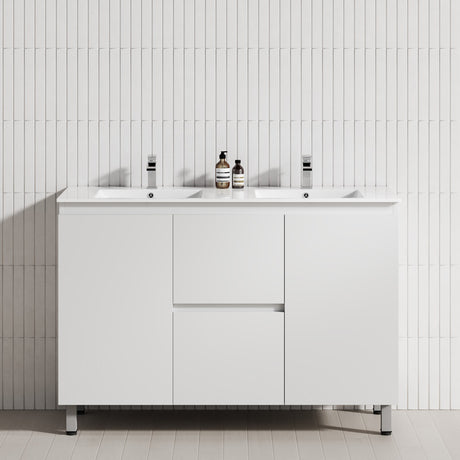
Australian vanities span a width range of 600 mm to 1800 mm — depth is a consistent 450 mm across most units, with benchtop height sitting at roughly 860 mm. For a double vanity, 1200 mm is really the floor — go narrower and two people sharing it will feel the pinch fast.
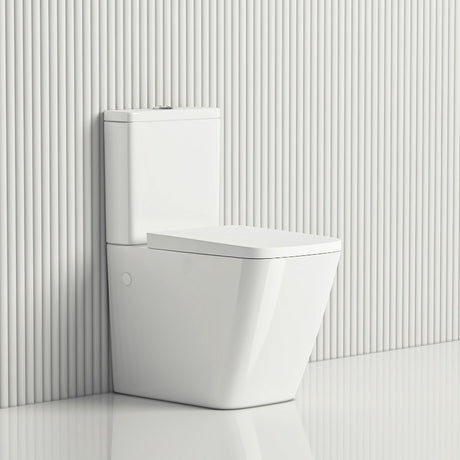
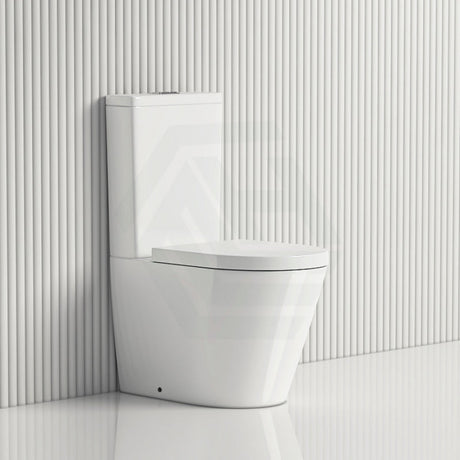
Back to wall and close-coupled suites typically project 680 mm to 780 mm out from the wall, and their width runs 360 mm to 400 mm. The fixtures themselves are only part of it — the surfaces around them carry their own code obligations. Worth flagging: the wall beside a bath must be water resistant for at least 150 mm above the vessel — that's a firm mandate under (NCC 2025, ABCB Housing Provisions, Part 10.2). Make sure your tiler and waterproofer both know the code says water resistance here — not full waterproofing. It's a distinction that trips tradespeople up.
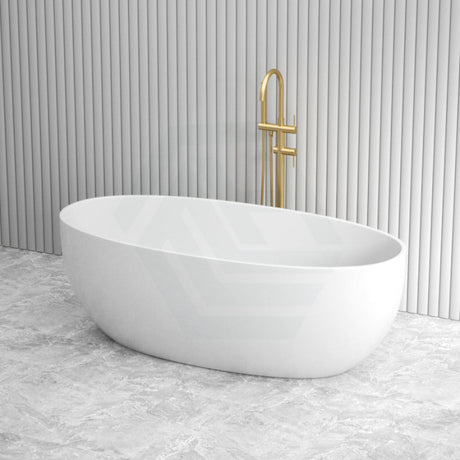
Length-wise, baths run from 1500 mm to 1800 mm; width comes in at 700 mm to 800 mm. From what I've seen, 1500 mm is where comfort starts for an adult — I'd hold that line no matter how tight the floor plan gets.

Measuring for Key Bathroom Fixtures
Here's where the measuring gets hands-on. Each fixture type demands its own approach — mix them up and mistakes are almost guaranteed.
For a wall hung vanity, the measurements you can't skip are: wall cavity width, stud positions for the structural fix, waste outlet location, and floor-to-finished-wall height. Wall hung vanities need solid blocking in the frame — confirm that with your builder or plasterer well before anything gets ordered.
For a back to wall toilet, the critical measurement is the S-trap or P-trap setout — get that right first. S-trap setout? That's 100–120 mm from wall to pipe centre. P-trap works differently — it's 185 mm measured up from the floor to the pipe centre. Stuff up the setout and the pan simply won't land over the outlet — shifting the waste means calling a licensed plumber back, which costs time and money.
A freestanding bath needs three things confirmed: floor area dimensions, waste outlet position, and whether the subfloor can genuinely carry the load. Filled with water, a freestanding bath can weigh around 300 kg — never assume the floor can handle that, particularly on an upper storey or a timber subfloor. Glazing and slip resistance are two areas where Australian standards give no ground — ignore them at your peril.
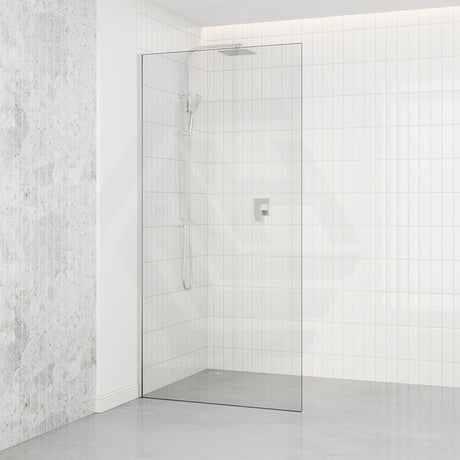
Frameless and partly framed shower screen glass has a hard floor: at least 6 mm (AS/NZS 2208:2023) toughened safety glass, with zero exceptions under AS/NZS 2208:2023. Wet area floor tiles? They need a P3 (AS 4586:2013) slip resistance rating — AS 4586:2013 is clear on that.

Bathroom Measurement Mistakes Worth Knowing About
Forgetting the door swing — that arc chews through at least 300–400 mm of your floor space. Get the door arc on your floor plan first — then sort out where the fixtures go. In a tight layout, a sliding or cavity door can hand back 300–400 mm of usable floor space — that's worth serious consideration.
Ignoring tiles — each tiled surface adds 10–15 mm. In a small bathroom tiled to all four walls, that is a loss of 20–30 mm of internal dimension in both directions, which can determine whether a fixture fits or not.
Ordering before verifying rough-in — this often gets missed when buying a toilet suite. Check the existing trap setout before ordering.
Taking accurate bathroom measurements for every fixture before anything is ordered will save you time, money, and more than a few headaches.
References
National Construction Code 2025, ABCB Livable Housing Design Standard, Part 3 Internal doors and corridors and Part 4 Sanitary compartment
National Construction Code 2025, ABCB Housing Provisions, Part 10.2 Wet area waterproofing
AS/NZS 2208:2023 Safety glazing materials in buildings (incorporating Amendment No. 2:2025), Standards Australia
AS 4586:2013 Slip resistance classification of new pedestrian surface materials (incorporating Amendment No. 1:2017), Standards Australia