03 June, 2026
Toilet Renovation Ideas for Australian Bathrooms
Discover practical toilet renovation ideas for Aussie homes. Save water with WELS-rated suites and modernise your bathroom today.

Video Credit: Great Home Ideas
Here's What a Toilet Reno Actually Does for Your Bathroom
Picture this: you walk into your bathroom one morning. The whole thing just works. Clean, quiet, reliable — that's the flush. Sharp, modern — the suite actually looks the part. Every pull of that old, tired cistern? Water straight down the drain — not anymore. A toilet reno is exactly that — and let's be honest, most Aussie households are well overdue.
Pre-2000 bathrooms? Odds are the cistern's still chewing through up to 11 litres per flush. What about a current WELS-rated suite, though? That figure falls to 4.5 litres on a full flush and 3 litres on a half flush — a big drop. Across a full year, that gap adds up to thousands of litres — and your water bill will show it. When a suite predates the WELS scheme, the numbers speak for themselves — no sales pitch needed.
Flush performance is another area where older suites fall well short of a modern unit. Weak flush, rim staining that won't shift, a cistern that crawls to refill — your suite's under far more strain than it should be. Swap it out for a new suite and all three problems go — plus the property gets a genuine bump in value.

Layout, Space, and Compliance: Sort These Before You Start
Your first task when planning your toilet renovation should be to sort the space and layout. Before you purchase a suite you need to measure your rough-in — the distance from the finished wall to the centre of your floor waste outlet. For most Australian homes the rough-in measures somewhere between 140mm and 180mm for an S-trap setout. If you have a P-trap setout, your rough-in sits at 185mm from the wall. Choosing a suite that does not match your existing setout is one of the most common — and costly — mistakes.
Clearance matters too. Under the National Construction Code 2022 livable housing provisions, new toilet installations in Class 1a dwellings should allow a 900mm × 1200mm (NCC 2022, ABCB Housing Provisions, Part 12.2) clear zone in front of the pan, with doorways providing at least an 820mm clear opening. Even if your renovation is not subject to these as mandatory requirements, they represent excellent practice worth following.
A non-negotiable point: all toilet installation work in Australia must be carried out by a licensed plumber. This includes connecting to the waste pipe and water supply. Your plumber must issue a compliance certificate upon completion, and the fixture must carry WaterMark approval before any licensed tradesperson will legally install it. Sanitary plumbing and drainage connections are governed by AS/NZS 3500.2, which specifies drain grading, pan connections, and vent piping requirements.
Budget roughly $80 to $120 per hour for licensed plumbing labour, on top of your fixture costs. Build that in from the start. With your space measured and compliance requirements mapped out, you can now match those constraints to the toilet configurations that will actually fit and function in your bathroom.

Toilet Styles and Configurations to Consider
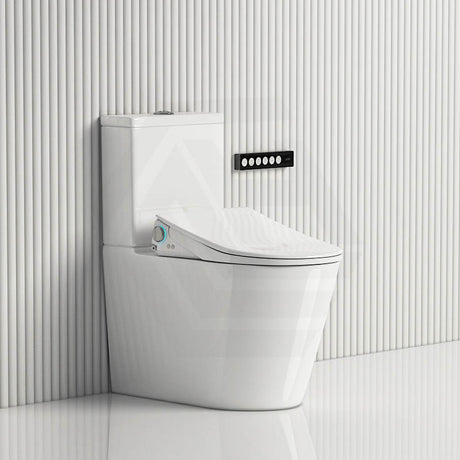
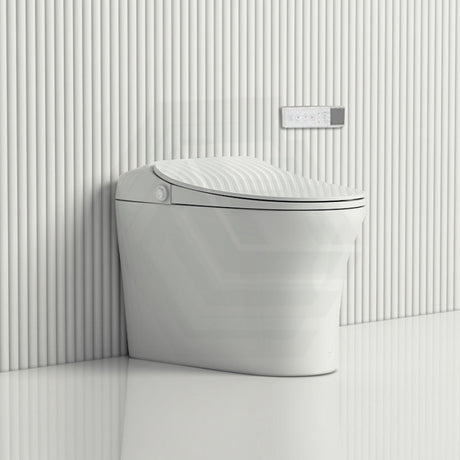
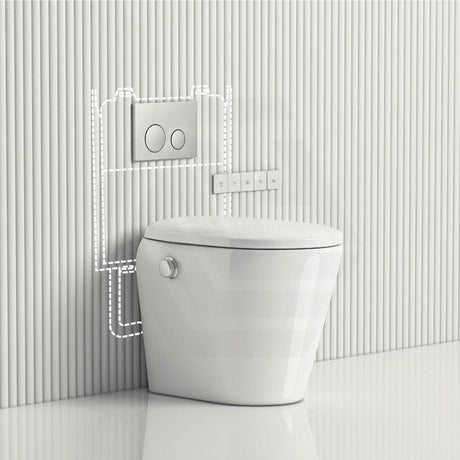
There are four main configurations to consider in Australia: close-coupled, back to wall toilet suites, wall-hung, and freestanding. Which you choose will depend on the type and size of your bathroom, as well as other factors.
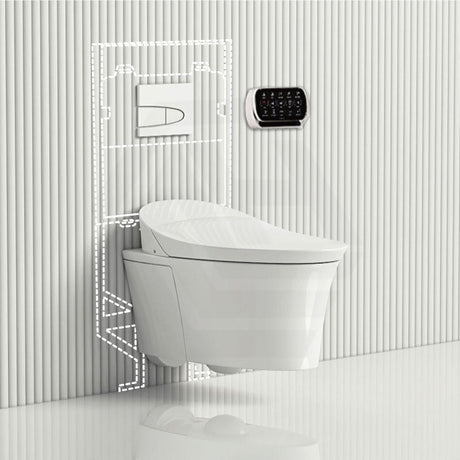
In close-coupled suites, the cistern sits directly on top of the pan. It is the most familiar configuration and the most straightforward to install, suiting larger or older-format bathrooms where wall framing is not an option. The cistern is concealed within a wall cavity or cabinet for a back to wall toilet suite, and these are available in the $185 to $1,199 price range depending on brand and specification. For those who want a truly clean look, a floating toilet — or wall-hung pan — gives the illusion of floating above the ground, but requires a concealed in-wall cistern system such as those from Geberit, priced from $165 to $1,283, built into a structural frame. Wall-hung configurations save 150 to 200mm of floor space compared to floor-mounted options, which is particularly valuable in a city apartment renovation. Note that a wall-hung pan requires the wall structure to be strong enough to support the weight of the pan, so check with your licensed plumber.

Choosing the Right Toilet Suite for Your Bathroom
Here's where personal preference starts to matter. With no rim channel on the inside, a rimless pan is far easier to clean — and you'll find them standard on most mid to high-end suites. That's why Fienza fits their rimless pans with a Tornado flush and a Nano-Glaze coating. You can still track down a rimmed toilet at the budget end of the market, though they're getting harder to come by.
For a clean, streamlined look, a back-to-wall suite from Poseidon or Fienza — priced between $185 and $800 — is hard to beat for value. Soft-close seats come standard on most mid-range suites these days. Wall-hung toilets look fantastic, but the framing and in-wall plumbing push costs up — pans alone run between $303 and $934.
All toilet suites must carry WaterMark approval prior to installation and must feature a dual-flush cistern delivering 4.5L and 3L per flush as required by AS/NZS 6400. Before purchasing, verify that your floor waste outlet is compatible with your chosen S-trap or P-trap configuration.

Smart Toilet Upgrades and Water Savings
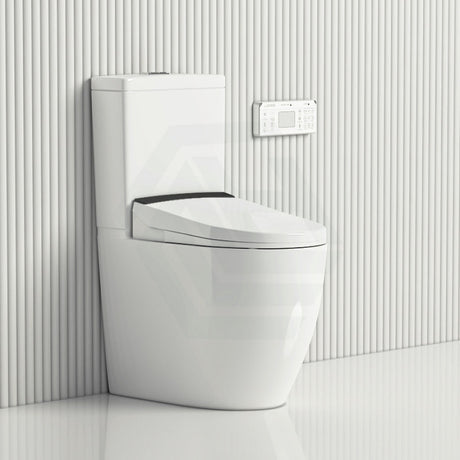
Once you have found a suite you like, consider whether smart upgrades are worth the investment. A smart toilet combines features such as an auto-open lid, heated seat, warm water bidet wash, auto flush, and night light in a single unit. Smart toilet suites start at $1,619 and range up to $6,205 — a significant investment that warrants early planning. If you prefer not to replace the entire suite, a smart toilet seat cover can be retrofitted, with prices running from $80 to $1,846. A smart toilet seat cover that is not hardwired may be installed by a homeowner — check your state or territory requirements before you commence.
On water savings: a WELS 4-star rated suite using 4.5 litres on a full flush, compared to an older cistern using 11 litres, could save a household of four around 40,000 litres per year. Depending on water pricing in your state or territory, a mid-range suite may pay for itself within a few years.
Take the correct measurements first, engage a licensed plumber, and choose the suite that suits your lifestyle — your bathroom and your water bill will both benefit from well-considered toilet renovation ideas.
References
National Construction Code 2022, ABCB Housing Provisions, Part 12.2 Livable Housing
State plumbing licensing legislation (VBA Victoria; Fair Trading NSW; QBCC Queensland; Building Practitioners Board WA; CBOS Tasmania; ACTPLA ACT; Building & Energy SA; ABPB NT)
AS/NZS 3500.2 Plumbing and Drainage — Sanitary Plumbing and Drainage, Standards Australia
WaterMark Certification Scheme, Australian Building Codes Board