12 June, 2026
Complete Guide to Can You Renovate a Bathroom Yourself
Can you renovate a bathroom yourself? This Australian guide explains exactly what's legal to DIY and when to call a licensed tradie.

Video Credit: NikandLivDIY
The answer is yes — but with a major caveat. Not all of it. I spent several years working as a licensed plumber before taking on my current position as a renovation writer, and I've witnessed the consequences of well-meaning DIYers making massive blunders. From flooded vanity cupboards and waterproofing failures that leave them out of pocket to insurance claims rejected because DIY work violated a licence requirement.
Can you renovate a bathroom yourself? Yes again. The point here is you have to know exactly what aspects of that bathroom renovation task fall within your legal right and capacity as a DIY renovator, rather than a licensed tradesperson.
What DIY Bathroom Renovation Actually Involves
A bathroom renovation in its most general sense is made up of cosmetic elements and structural or wet-area work. It's the second of these that requires a trade licence; the first does not.
Cosmetic work includes: painting walls and ceilings; replacing a toilet seat; hanging accessories, towel rails and wall hooks; re-sealing grout; and assembling flat-pack vanity units or shelves. This work falls within the scope of legal DIY, and doesn't require a trade licence in any Australian state or territory.
Structural and wet-area work refers to: re-routing of waste or water lines; waterproofing floor and shower walls; installation of new basins or toilets; hardwiring of electrical work, such as lights and heated towel rails; and tiling over new substrates.
As you'll see in the next section, the aforementioned work carries strict legal requirements and safety rules. Some of it cannot legally be attempted as DIY. Other parts are required by law to be executed and signed off by a licensed tradesperson.
So if you're talking about a refresh-level renovation — where you change the paint and cosmetic fixtures — it is something you can do DIY-style. If you're talking about a full gut-and-rebuild, it isn't.

Which Tasks You Can Legally Do Yourself in Australia
Plenty of homeowners stumble right here — you'd be surprised how often the rules get misread. Honestly? The rules aren't that complicated.
Every state and territory in Australia requires a licensed plumber for all plumbing work — water supply lines, waste lines, the lot. Think new basins, tapware connections, toilet suites — even a showerhead swap counts if the water supply line has to come off. Your plumber must hand over a compliance certificate when the job wraps up.
Waterproofing gets the same treatment in most states — tight restrictions across the board. Shower walls demand waterproofing up to at least 1800mm above the floor substrate — the full floor area needs complete coverage too. No licence? Stay well away from it. Waterproofing failures? I've watched them become the most expensive reno disasters you can imagine — and your home insurance cover usually vanishes right along with them.
All bathroom electrical work goes to a licensed electrician — full stop, no exceptions. Exhaust fans, heated towel rails, hardwired LED mirrors, bathroom lighting — every bit of it falls under that rule. Victoria, Queensland, and New South Wales each have slight variations — check your state or territory's specific requirements before electrical work kicks off.
Legally on the DIY list: wall and ceiling paint, accessory mounting, a toilet seat swap, flat-pack furniture assembly, silicone sealant, and grout cleaning or re-sealing.

Your DIY Bathroom Renovation Plan: Budget, Scope and Timeline
With a solid grasp of what you can legally take on yourself, putting together a realistic plan gets a lot easier — including working out where a licensed tradesperson needs to fit into the budget.
For a cosmetic refresh, a single weekend will do it. Strip it back to the studs, though, and you're looking at two to four weeks — that's the realistic picture. Order matters here — tiles can't go down until waterproofing is finished and inspected, and wall linings can't go up until the plumbing rough-in is done. Get the sequence wrong and you're ripping out work you literally just completed.
Budget reno? Products alone will cost you somewhere around $650 to $1,400. Add licensed labour into the mix and — scope and location depending — the total can hit anywhere from $9,000 to $35,000.
The planning mistake I keep seeing? People wildly underestimate what waterproofing and tiling are going to cost them. How long your reno holds up? That comes down to those two elements more than anything.

Key Fixtures: Choosing and Fitting Them Yourself
With a budget and sequence agreed, the next step is pinning down which fixtures you'll be purchasing and installing.
Swapping out a toilet seat is one of the easiest tasks. There's no plumbing work involved. Measure your toilet pan before you shop, as Australian pans come in standard and back-to-wall configurations, plus a variety of wall-hung shapes.
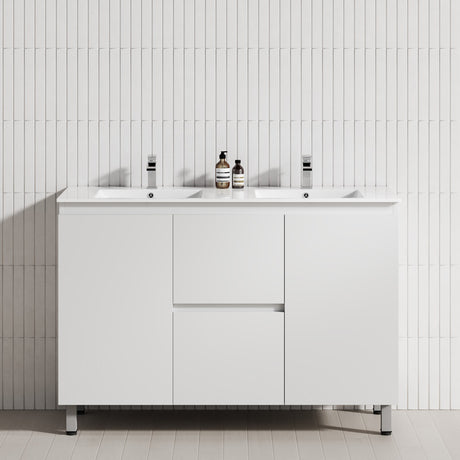
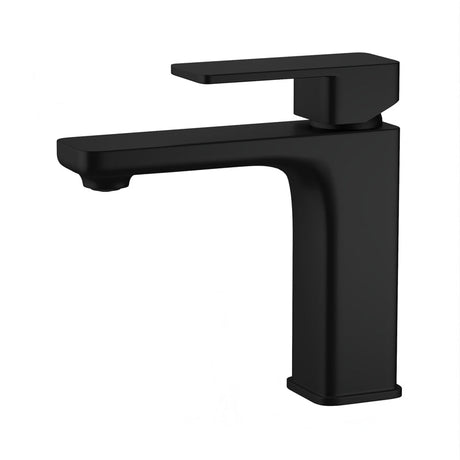
The vanity requires more forethought. Assembling a flat-pack vanity is legitimate DIY work, but connecting the basin, waste, and mixer to the water supply must be done by a licensed plumber. Note that vanities often don't include a basin mixer or pop-up waste, so account for these in your budget. For wall-hung vanities, confirm your wall has the correct framing to support the weight. Choose a PVC cabinet construction over MDF — MDF is not water-resistant and will fail in a wet area over time.
The exhaust fan must deliver a minimum of 25 L/s for a bathroom. This is licensed electrical work — engage a licensed electrician regardless of what anyone tells you.
Once installations are complete, ensure isolation valves are accessible, apply silicone around each wall join, and wait 24 hours before testing for leaks.

Installing Your Own Storage Solutions and Finishing Touches
Once you've completed the key installations, your focus can shift to storage and finishing touches — work well within the ability of any competent DIYer.
Installing tall bathroom cabinets is generally achievable for most competent DIYers, though the method depends on wall type. Use 20 to 30 kg-rated wall anchors for plasterboard, a tile drill and appropriate plug for tiled walls, or a masonry drill and plug for masonry walls.
Mirror cabinets, shelving, towel rails, and toilet roll holders all fall into this category: straightforward work with excellent results.
For wet areas, use a semi-gloss or gloss paint finish — both handle moisture well and clean easily. If you use epoxy grout rather than cement-based grout, you'll get superior performance; it won't stain or discolour, and will retain its colour in the shower zone for ten to twenty years. Epoxy grout is harder to apply, but worth the extra effort.
These final touches are where can you renovate a bathroom yourself truly becomes a resounding yes — and are the jobs that make the difference between a DIY success and a letdown.
References
State and territory plumbing licensing authorities (Building and Plumbing Commission Victoria; Building Commission NSW / NSW Fair Trading; Queensland Building and Construction Commission; Plumbers Licensing Board Western Australia (administered by Building and Energy); Consumer, Building and Occupational Services Tasmania; Access Canberra ACT; Office of the Technical Regulator / Consumer and Business Services South Australia; Plumbers and Drainers Licensing Board Northern Territory)
National Construction Code 2025, ABCB Housing Provisions, Part 10.2 Wet area waterproofing
AS/NZS 3000:2018 Electrical Installations (Wiring Rules) (incorporating Amendment 3:2023), Standards Australia
National Construction Code 2025, ABCB Housing Provisions, Part 10.8 Condensation management