24 June, 2026
When Was the Toilet Invented
Discover when was the toilet invented, from ancient Indus Valley drains to Victorian flush systems and today's smart bathroom innovations!

Confess it: the question probably feels a bit crazy to ask at a gathering. You don't really just go out and ask "when was the toilet invented?" unless you're standing in front of a wall-hung toilet pan with a concealed cistern somewhere in a bathroom showroom, and then you need to figure out where we've got to today. The answer is in some ways earlier than you might have thought, but it is also later — so the whole history is a lot more exciting to read.
Video Credit: The Hidden History Project
The Ancient Origins of Human Sanitation
Well, you have to first of all understand that we have been thinking of how human waste and sewage can be managed for thousands of years. If you've ever heard about the Indus Valley civilisation (in today's Pakistan and northwest India) then you may well be aware that in this very ancient civilisation — as early as 2500 BCE — there were brick drains that connected to drains in the street, and every individual house had its own toilet cubicle. This is not a mistake. 4,500 years ago, the planners and architects in the city of Mohenjo-daro were dealing with the equivalent of a bathroom renovation commission that would make any modern bathroom fitter proud.
The Romans went even one better. The Cloaca Maxima drained all the way down to the Tiber River from the 6th century BCE, and Rome had public toilets — stone benches with holes in which to sit, and running water below — which people used as social gathering places. The Greek cities, too, had drainage networks, also using gravity, channelling and water, and a modern plumber wouldn't have too many complaints to raise about them. They used stone, clay or brick as their key raw materials, but as to the principles, they were exactly the same as for the drainage system that underlies your modern bathroom: get that human waste out of human sight and out of human life as fast as you can.

The Medieval and Early Modern Toilet Timeline
But, tragically, in the Middle Ages, what the Romans knew about plumbing was at best largely forgotten, and at worst ignored. There were garderobes in the castles — essentially built into the thickness of the wall, a stone chute in which the waste then fell into a moat or a cesspit below. There was an indoor toilet called a chamber pot, and this was just taken out and emptied in the streets, and that sounds about as miserable as it gets.
In the 16th century, wealthy people still had cesspits — large underground spaces which had to be emptied periodically by a nightsoil man. This is where indoor plumbing reappeared again, mainly in the palaces of princes or aristocrats. It had been a long and very smelly journey from the relative sophistication of Rome.

Who Invented the Flush Toilet and When
It wasn't until the latter half of the 16th century that we find a specific inventor who was thinking specifically about how to move waste using water. The English poet and godson of Queen Elizabeth I, Sir John Harington, designed a water closet in 1596 that incorporated a valve system to drain water from a cistern and flush out the contents of the pan. It was quite a novel invention for its time, but Harington's water closet never caught on — only two were ever made.
The breakthrough in toilet design didn't happen until 1775, when Scottish watchmaker Alexander Cumming was granted a patent for the S-bend, a pipe design that retained water within the pan itself to create a water trap that prevented sewer gases from seeping back into the bathroom. Although Victorian-era plumber and toilet manufacturer Thomas Crapper is often credited with the invention of the flush toilet (he did not invent it), it is due to his involvement in the refinement of the siphonic flush method and the manufacturing of toilets in his London-based factory that helped cement the modern flush toilet's popularity in the 1880s. Was Crapper important? Yes. Did he invent the toilet? No.

How Toilet Technology Evolved in the 19th and 20th Centuries
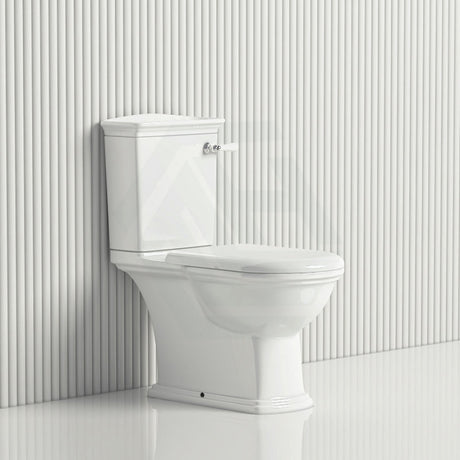
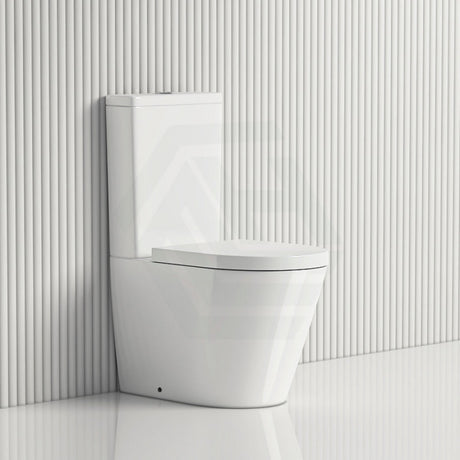
Although these early patents were important to the toilet's evolution, it wasn't until toilets began being mass produced from ceramic materials in the 1880s that widespread adoption became a reality. Vitreous china — highly durable, non-porous and easy to clean — became the norm, and the recognisable cistern and bowl design started to become more standardised by the beginning of the 20th century.
Earlier toilet models used single-flush technology, requiring 11 to 13 litres per flush. Today's dual-flush systems allow the user to choose between a full flush of 4.5 litres and a half flush of 3 litres, with high-performing models capable of achieving a WELS 4-star rating.

Modern Toilet Innovations Available Today
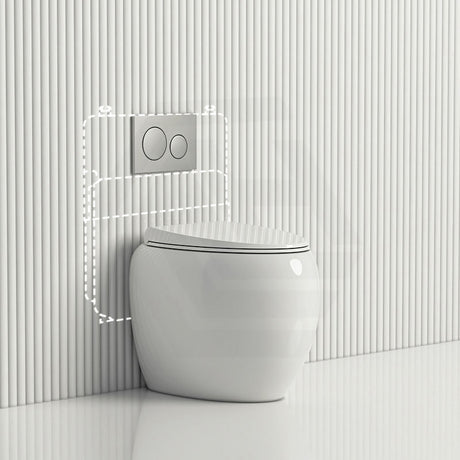
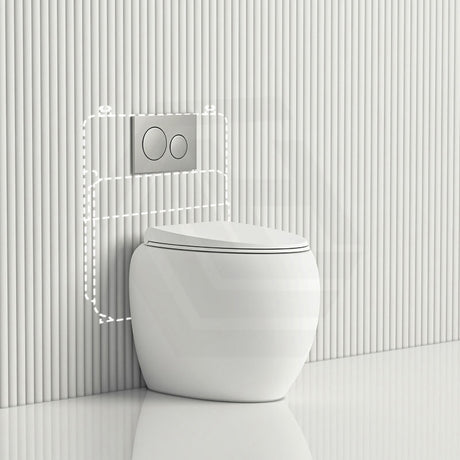
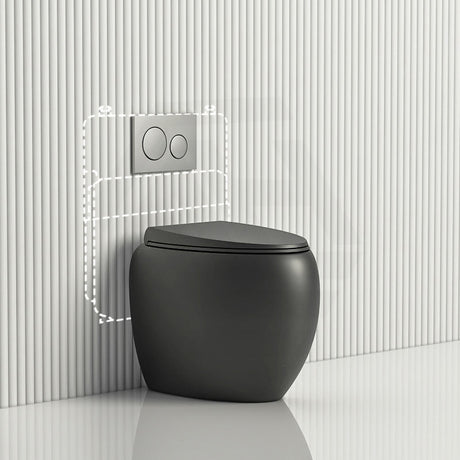
Although the siphonic flush has been a standard since the 19th century, there have been quite a few technological toilet innovations in the years since. One such innovation that has become a mainstay in Australian bathrooms over the past decade is the in wall cistern, in which the cistern is concealed behind the flush button and integrated directly into a cavity within the wall. Geberit is the industry-standard reference brand for concealed in-wall cistern frames, with other manufacturers offering concealed cistern and frame systems ranging from $165 to $1,283 AUD. Models from Fienza and Poseidon, for instance, can accommodate wall depths of both 160 mm and 200 mm, so be sure to have the wall depth checked by a plumber before making your final decision.
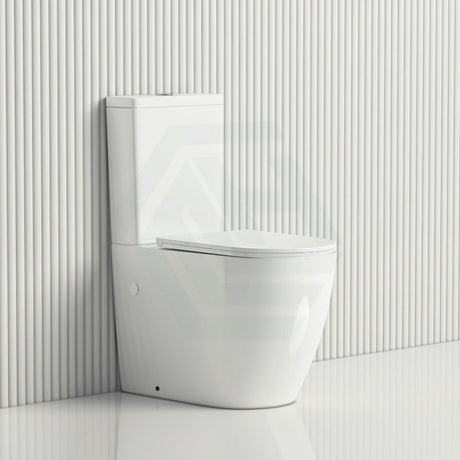
Another innovation worth mentioning is the development of the rimless commode. Traditional rimmed pan toilets have a concealed rim running around the top of the pan that can harbour stains, bacteria and other dirt, as cleaning the interior of the rim can prove particularly difficult. A rimless commode has no interior rim, instead directing the flush across the interior of the pan so that an even spread of water covers the entire bowl surface. RAK Ceramics and Kohler now stock a range of rimless models, which are quickly becoming the most popular toilet choice in Australian bathrooms.
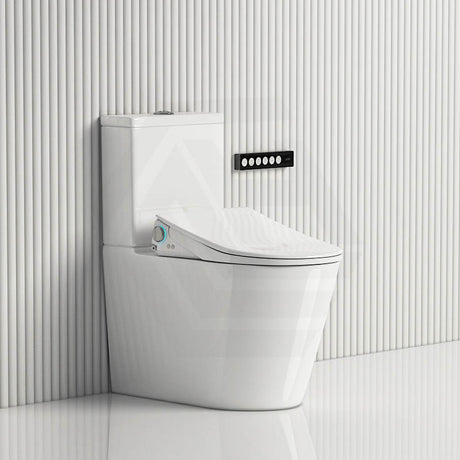
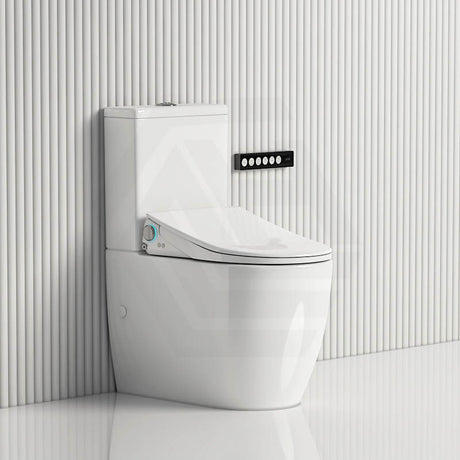
Wall-hung toilets (priced from $303 AUD) are designed to integrate directly with concealed in-wall cisterns, producing a bowl that appears to float above the floor for a lighter aesthetic while also being easier to clean. Smart toilets start at $1,619 AUD and feature heated seats, inbuilt bidets, warm air dryers and auto-flush functions. Understanding when was the toilet invented helps appreciate how far these innovations have come — as with all plumbing-related items sold in Australia, every flush toilet is required to have WaterMark approval and a WELS rating — there are no exceptions.
References
WaterMark Certification Scheme, Australian Building Codes Board
AS/NZS 6400:2016 Water efficient products — Rating and labelling (incorporating Amendment No. 1:2022 and Amendment No. 2:2022), Standards Australia