

13 April, 2026
Bathtub Sizes: A Complete Guide to Standard Dimensions in Australia
Australian bathtub sizes guide: standard alcove (1700mm), compact (1200–1400mm), freestanding and soaking tub dimensions. Essential measurements, clearance tips and costs to choose the right bathtub.

Now, I know buying your new bathtub might sound like the exciting part of your bathroom renovation. While yes, it can be fun, and there are plenty of choices out there, the question you should really be asking before you head out to purchase is not: which bathtub is the prettiest? The most important question is this: will it actually fit in my bathroom? I'm sure you have fallen in love with a particular bathtub size and you are tempted to purchase it because you can't wait to soak in it, and it will be absolutely gorgeous in your new bathroom. If this is the case for you, just make sure you consider whether or not the dimensions of this bathtub will actually fit in your space before you purchase. In this guide I'll give you a brief outline of the most common bathtub sizes and dimensions you can find in Australia, including alcove, compact, freestanding, corner and soaking tubs.
The Standard Bathtub: Dimensions, Capacity and What They Really Mean
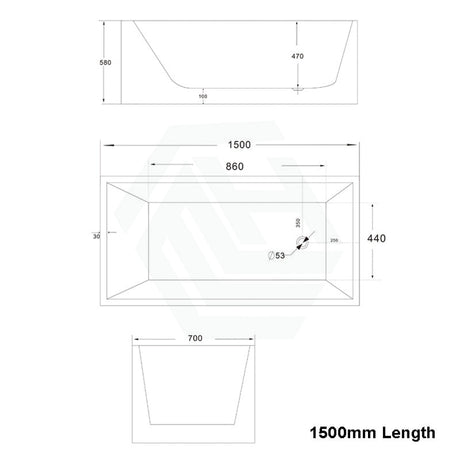
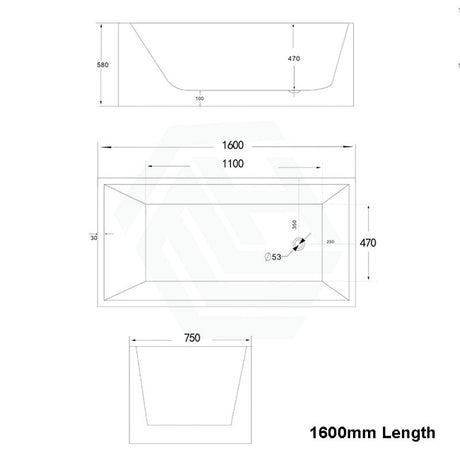
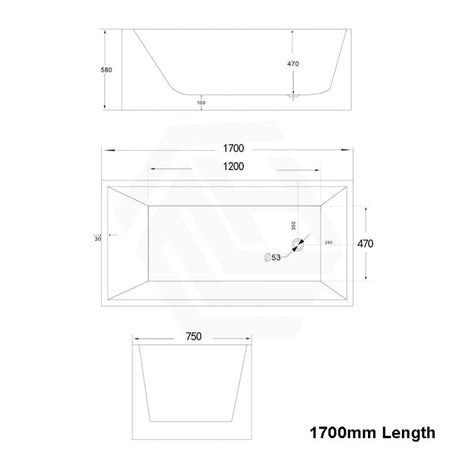
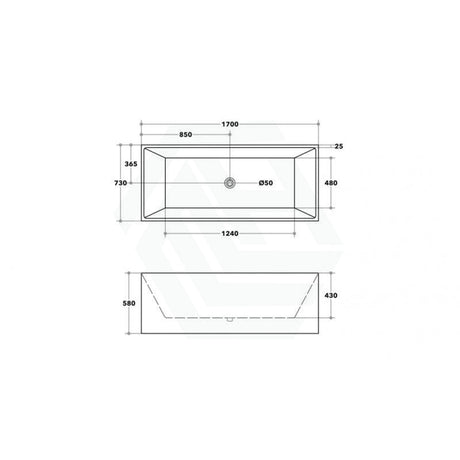
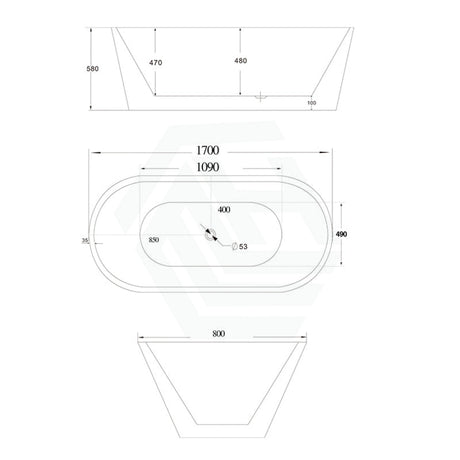
The standard alcove bathtub in Australia is typically 1,700mm long, 750mm wide, and 400 to 500mm deep, with a capacity of around 150 to 180 litres when filled up to a reasonable water line for bathing.
Now, these measurements I've just outlined are the external measurements of the bath. The internal bathing space will obviously be slightly smaller and usually around 50mm or smaller on every side than the external bathtub dimensions I've described. Therefore, if a bath is advertised as being 1,700mm long, there will be closer to 1,550mm to 1,600mm for actual bathing length inside that bathtub.
The depth of a tub depends on what you are bathing in it for. If you are soaking for example, you need a depth of approximately 400mm from the top of the rim to the bottom of the tub. Standard alcove bathtub depth (rim height) is typically 550 to 600mm from the floor, and this is important to keep in mind if you are buying a tub for an elderly family member or children as some tubs are quite low to the ground and are difficult to enter or exit for those with limited mobility.
Most Australian houses built from the 1970s onwards were built with a standard 1,700mm alcove bath. So if you are replacing an existing bathtub with a new one, this 1,700mm length bath should be able to fit into the alcove without making any plumbing changes and should cost you a lot less.

Beyond Standard: Compact, Freestanding and Specialty Bath Sizes
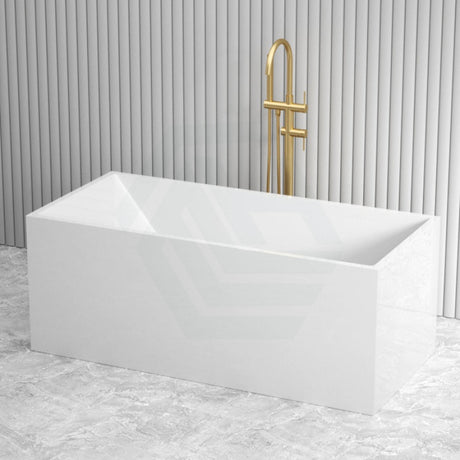
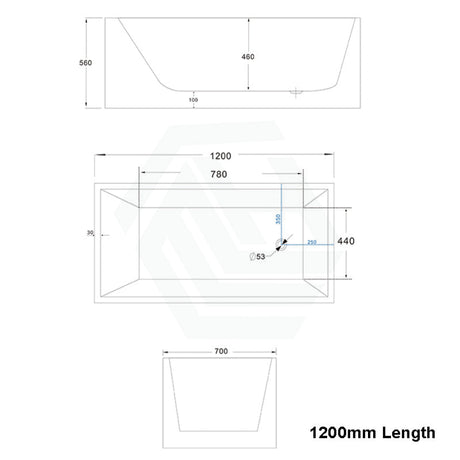
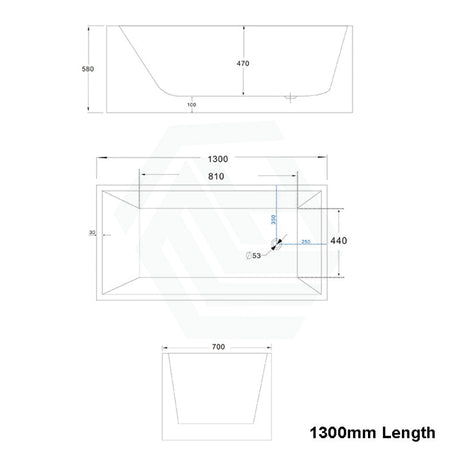
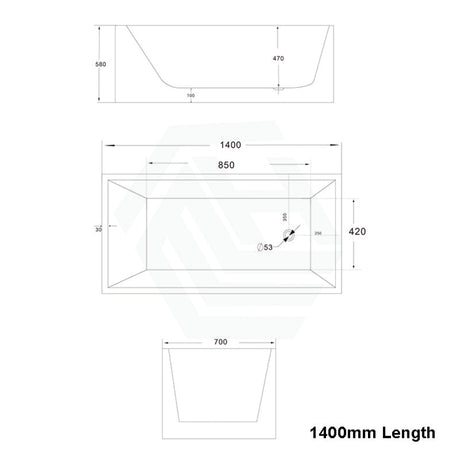
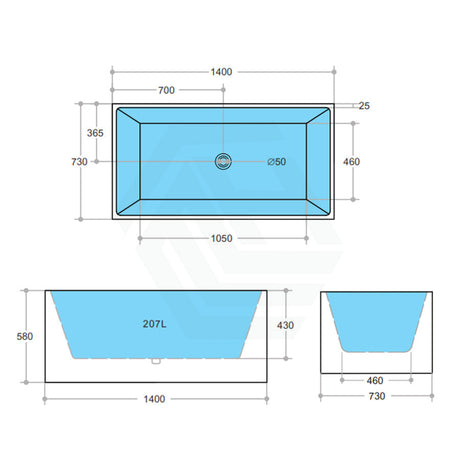
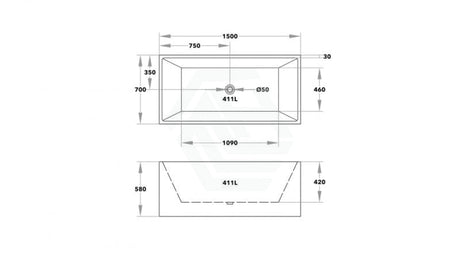
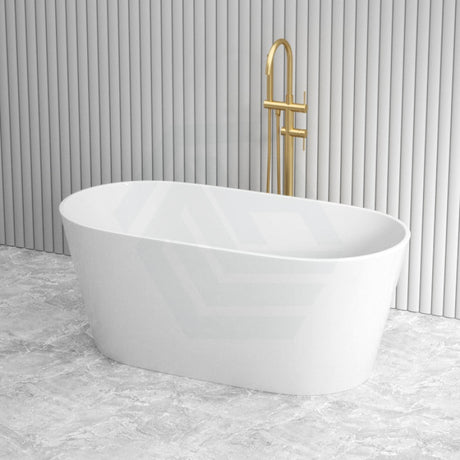
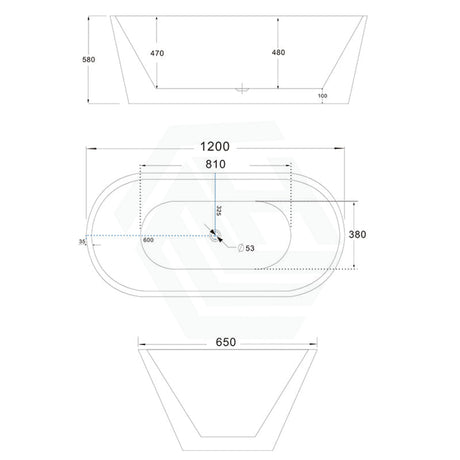
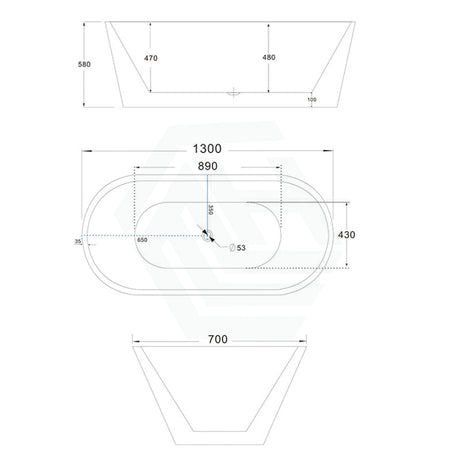
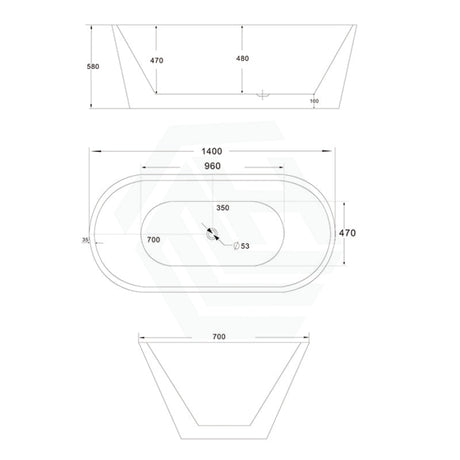
Compact baths, like the name suggests, are smaller alcove, corner or freestanding baths typically with a bath length range from 1,200 to 1,400mm and capacity of 100 to 120 litres. These are designed for smaller bathrooms (under 4 square metres), and are often considered the smallest bath tub options available for residential use. In tighter layouts, small corner bath tubs can be a practical alternative, making better use of unused corner space without crowding the room. The downside? You won't be able to stretch out and relax fully, and these are mostly sit-up baths.
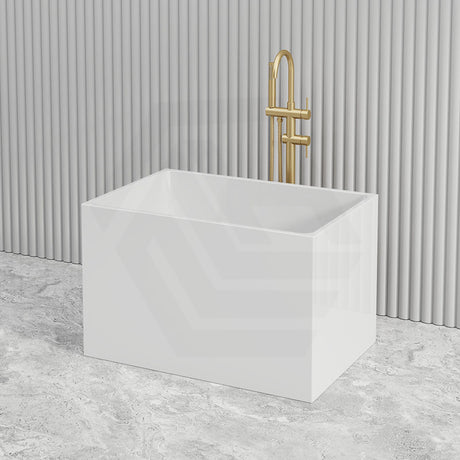
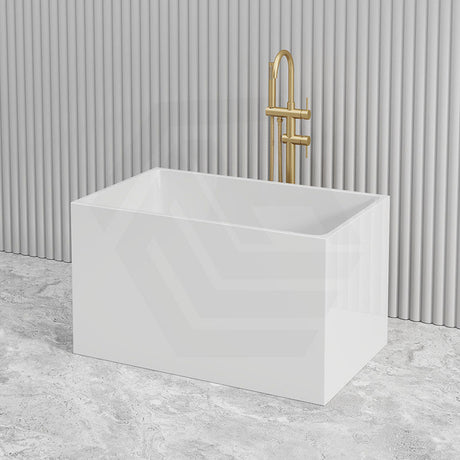
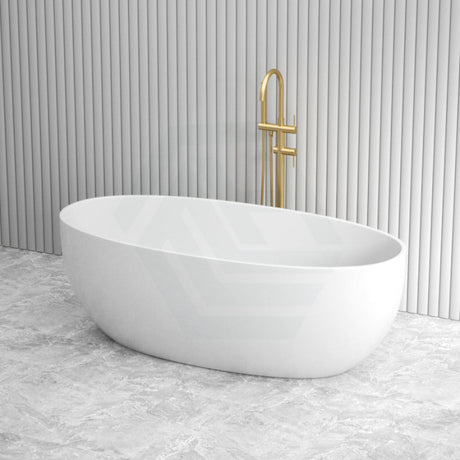
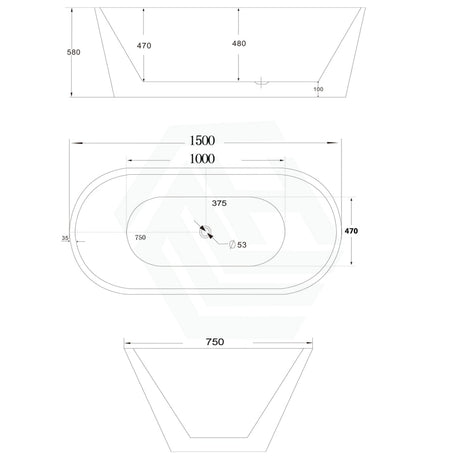
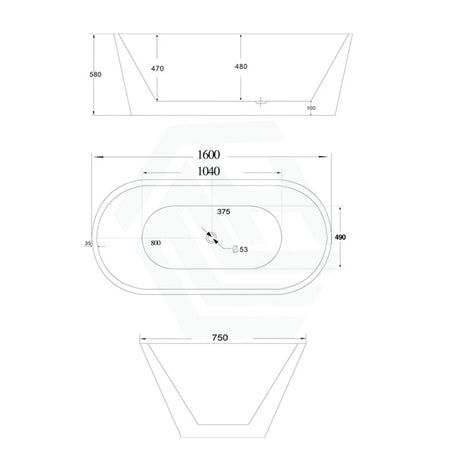
Freestanding bathtubs come in all shapes, colours, and sizes. Round baths usually have dimensions between 1,500mm and 1,800mm in diameter and have a capacity from 200 litres upwards. Oval freestanding baths tend to be longer, around 1,600 to 1,900mm in length. Freestanding bathtubs require a lot of clearance space around them, so think hard if you really have enough floor space for this type of tub, especially to allow for easy access and cleaning.
Soaking bathtubs and spa baths are deep baths (minimum 900mm deep) with a capacity from 300 litres upwards, so you are going to need an upgraded hot water system and the time to fill up this much water. A bath with this capacity means you will be adding in approximately 300 kilograms of water, and you will need to ensure your floors can support this amount of weight.
Corner bathtubs are alcove bathtubs which fit into a corner and should be no smaller than 1,400mm by 1,400mm. Again, this doesn't mean you have a 1,400mm by 1,400mm bathing area inside the tub and the actual bathing area will be a little less.

How to Measure Your Bathroom Space for a Bathtub Fit
Firstly, ensure you have a tape measure and don't eyeball it when measuring your alcove or floor space.
Measure the length of the room for alcove tubs from wall to wall or just the available floor space if you plan to have the bathtub freestanding. Measure the width. Also measure the height of your room ceiling because many freestanding bathtubs are relatively tall and you don't want to have inadequate ventilation above the bath area.
If possible, ensure you leave adequate space to open your bathroom door without the bath area obstructing this space. Most bathroom doors require a clearance space of about 900mm when swinging open.
Check what is there already, like existing pipes or vents, windows, and so on. If you choose to have a window directly above a bath, this will not only affect the size and position of your bath but might also stop you from positioning a spout above your bath, so you'll need to think of other tap positions if this is the case.
Measure the current space if it's a replacement, specifically the length, width, depth, and the distance from the walls to the tap holes. Existing bathtub dimensions act as a baseline for your plumber so they don't end up moving pipes and tiles significantly.

So, What Size Bath Actually Fits Your Space and Budget?
Bathrooms less than 2.5 metres in length need compact baths of between 1,200mm and 1,400mm. At this size, a typical acrylic bath starts from around $800 to $1,200.
A standard-sized bathroom fits the 1,700mm bath, which will set you back roughly $1,000 to $2,000 for a good quality one.
If you have a dream space, an acrylic freestanding bath is between $1,500 and $2,500 while a stone composite version is $3,000 to $4,500. These are great options if you're after large bathtubs. Remember to double check your room size. You'll want to leave at least 100mm clearance from the wall to the bath to allow space for cleaning and plumbing access.
A useful calculation is price per litre. A standard sized 150-litre bath at $1,200 is around $8 per litre. A large 300-litre bath with soaking capability at $3,500 is about $11.67 per litre.

Australian Building Codes and Clearance Requirements You Must Know
This isn't the glamorous part, but it's stuff that can be costly to fix.
The Australian Building Code mandates a minimum of 600mm clearance from the edge of the bath to the nearest wall or fixture. Clearances for bathroom doors should be at least 500mm. The bathroom should be at least 1,200mm wide.
State plumbing codes generally require at least 50mm clearance around the plumbing access points. If the plumber cannot easily access the wastewater or tap water pipes, you will find yourself paying to undo and redo things later down the track.
These measurements influence what bathtub sizes Australia homeowners can install in any given situation. While a 1,700mm bath in a 1,800mm long space can be installed on paper, if you take into account the minimum wall clearance and standard bath size Australia requirements, it may be a close fit.
The clearance calculation is particularly important for large bathroom tubs. With anything oversized — bath tubs large enough to be a centrepiece — you will want your builder to check that the flooring is sturdy enough to take the weight.