

29 April, 2026
Accessible Bathroom Design: A Comprehensive Australian Guide
Accessible bathroom design guide Australia: AS 1428.1 and NCC requirements, grab rail specs, hobless showers and compliant layouts. Essential tips for wheelchair-friendly and ambulant bathrooms.

What Makes a Bathroom Truly Accessible Under Australian Standards
In my many years of carrying out bathroom modifications, I have come to know that the term 'accessible' is very loosely used. However, Australian building standards state very clear and specific requirements as to what is needed in an 'accessible bathroom'. Get these specifications wrong, and the cost of fixing them later can reach into the thousands.
Since October 2023, the National Construction Code has required that all new Class 1a dwellings must include Livable Housing design provisions. This means that all new dwellings require at least one bathroom with a hobless, step-free shower entry, a clear door opening width of 820 mm minimum (NCC 2022, ABCB Housing Provisions, Part 12.2), and reinforced walls to allow for the addition of grab rails at a later stage. These are mandatory requirements for new constructions.
For renovations, it comes down to whether it is for NDIS-funded modifications or if it is a private renovation for your own personal comfort. NDIS-funded projects must be compliant with AS 1428.1 Design for Access and Mobility. Private renovations for personal comfort are not mandatory to meet AS 1428.1 standards, however, in my professional opinion, I highly suggest that you do comply at the time of construction so you don't have to do it later.
Any accessible bathroom needs to be designed around a core principle: can a person with reduced mobility safely and independently use all the bathroom functions? If the answer is no, the design needs work.

Accessible vs Ambulant: Understanding the Two Key Classifications
This is where the most confusion usually comes in, and I am seeing even tradespeople get confused by it. AS 1428.1 defines two distinct types of accessible bathroom.
An accessible bathroom is one for wheelchair users. This is the most comprehensive bathroom design and will have a minimum room size of 2300 mm × 2800 mm with a full 1500 mm turning circle clear of all fixtures. The turning circle is crucial — it is the space a standard wheelchair needs to rotate 360 degrees. All fixtures, grab rails, and clearances in an accessible bathroom are dimensioned around wheelchair approach, transfer, and operation.
An ambulant bathroom is for people who can walk but have limited mobility — think walking frames, crutches, or age-related balance issues. Ambulant bathrooms require less space because the user does not need a full 1500 mm turning circle. Grab rails are still required, and lever-handle tapware is standard, but the overall footprint is more compact.
The practical takeaway: if you are building or renovating for someone who uses a wheelchair, you need the full accessible specification. If the user walks with aids, ambulant may be sufficient. If you are not sure, design to accessible — you can always use extra space, but you cannot easily add it later.

Toilet, Shower and Basin Dimensions for Compliant Design
It is very important that you get these dimensions correct. I have seen bathrooms fail compliance simply because the toilet was just 30 mm off from the wall. These are the key measurements.
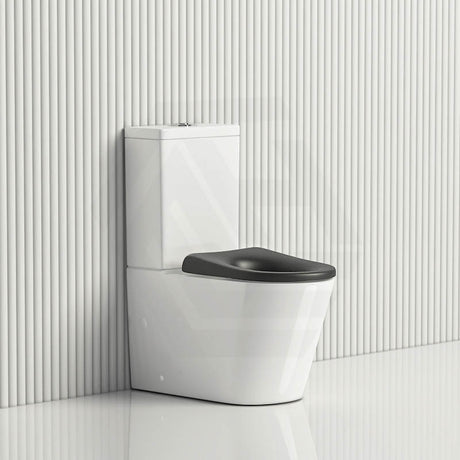
A typical height for an accessible toilet seat is 450 mm to 460 mm, compared to a standard toilet at 400 mm to 430 mm. The National Construction Code specifies a clear zone of 900 mm wide × 1200 mm long in front of the toilet (NCC 2022, ABCB Housing Provisions, Part 12.2), and the centreline of the toilet must sit at 450 mm from the nearest side wall to accommodate grab rails on both sides. Accessible toilet dimensions under AS 1428.1 require even more clearance behind and beside the pan. Disabled toilet dimensions follow the same standard but may have additional requirements depending on the facility type.
For an ambulant toilet, the spatial requirements are reduced. Ambulant toilet dimensions typically allow a narrower cubicle, however grab rails on at least one side are still necessary.
The roll-in shower is the centrepiece of any accessible bathroom. Its minimum dimensions under AS 1428.1 are 1160 mm × 1000 mm with a hobless entry — no step, no lip greater than 5 mm. A fold-down shower seat at 460 mm height is standard.
The standard height for a wheelchair-accessible basin is 800 mm to the rim, with at least 700 mm of knee clearance underneath and a minimum approach zone of 800 mm wide. Lever-handle mixers are mandatory — round knobs do not meet AS 1428.1.

Grab Rails, Non-Slip Surfaces and Essential Safety Features
Of all the must-haves, grab rails are the most vital safety component in an accessible bathroom. AS 1428.1 states the grab rail diameter must be 32 mm to 40 mm, with 35 mm to 50 mm clearance between the rail and the wall surface. Any diameter below 32 mm is not grippable. Anything larger than 40 mm is difficult to use for people with arthritic hands.
The NCC mandates that bathroom walls in new dwellings must be reinforced for future grab rail installation (NCC 2022, ABCB Housing Provisions, Part 12.2). If you are renovating an older home, ensure that your wall framing can handle the load — a grab rail needs to support at least 110 kg of force. Timber blocking between studs is one of the standard methods.
Non-slip flooring is non-negotiable. Tiles rated P3 or higher under AS 4586 offer a decent balance between grip and cleanability. Go to P4 or P5 and you get better traction, but soap and grime get lodged easily in the texture — something to consider for aged care settings where daily cleaning may not always happen.
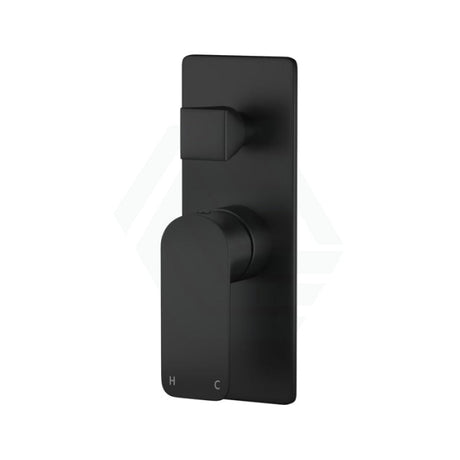
Other essentials include lever-handle tapware on all fixtures, a maximum hot water delivery temperature of 45 degrees Celsius at accessible outlets, contrasting colour strips on glass panels and step edges, and emergency call systems in commercial accessible bathrooms. For families, considering kiddies toilets in a secondary bathroom can help the home cater for all ages and abilities.

Designing an Accessible Bathroom That Still Looks Great
This is often where people stall, as many believe accessible must mean institutional — white tiles, stainless steel rails, hospital aesthetics. It does not have to be that way.
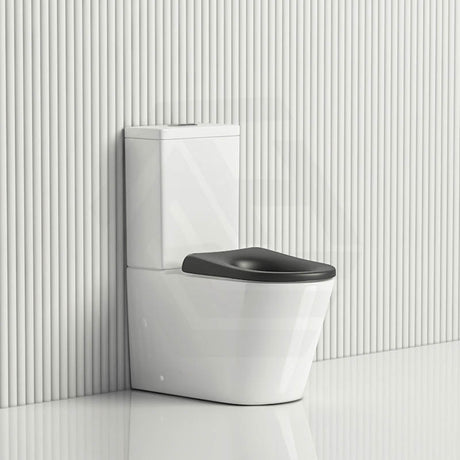
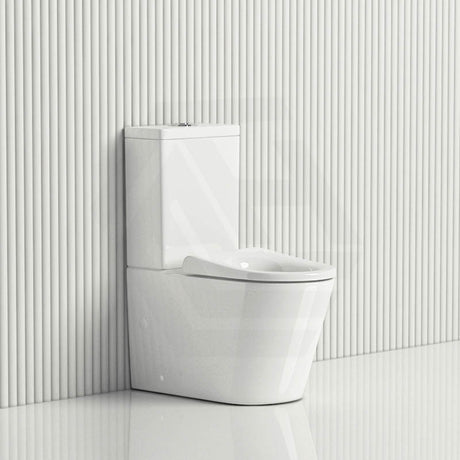
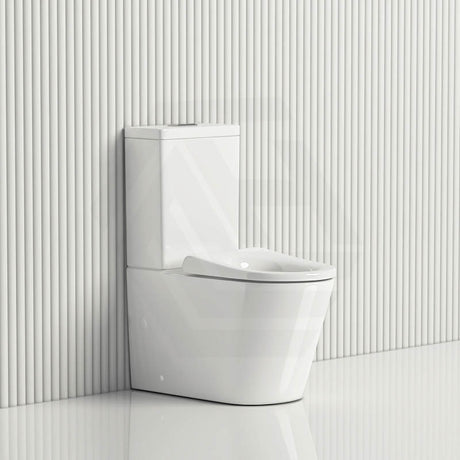
Modern designer grab rails come in matt black, brushed nickel, and brushed gold finishes that double as towel rails. A disabled toilet does not have to look clinical — back to wall suites from Fienza and Poseidon come in sleek, contemporary designs with comfort-height seating built in, starting from $185.
Concealed floor wastes and linear drains cater to the hobless shower requirement while giving you clean sight lines. Large-format tiles in neutral tones mean less grouting and the space appears bigger, while a bath vanity corner unit increases storage in smaller accessible bathrooms without encroaching on wheelchair clearance zones.
The trick is to have the compliance requirements written into the design brief from the outset, not as an afterthought. When accessibility is part of the design, it disappears into the aesthetics. When it is bolted on, everyone notices.
I believe every bathroom, whether new or renovated, should have accessibility taken into consideration. The house that has 30-year-olds in it now will have 70-year-olds in it four decades from now.
References
National Construction Code 2022, ABCB Housing Provisions, Part 12.2 Livable Housing