24 June, 2026
How to Clean Toilet Stains
Find out how to clean toilet stains — from orange limescale rings to grey-green growth — and get your bowl looking spotless again!

Let's be honest: if it's Saturday morning, you don't really want to be spending your day on the toilet cleaning off an orange ring that's been there longer than you can remember, or a grey-green stain that refuses to move. If you regard these as a minor cosmetic issue that a splash of bleach can easily remove, you'll probably be looking at another week's worth of cleaning before the problem goes away. So, if you really want to know how to get rid of toilet stains, here's a guide on how to clean toilet stains properly.
Video Credit: Clean That Up
Why Toilet Stains Form (and What You're Actually Dealing With)
Australian toilets get hit by three quite different stain types — and what works on one can be useless on another. Lump them all together and you'll probably scrub for nothing.
Adelaide, Perth, and big stretches of regional Queensland have notoriously hard tap water, so limescale is by far the stain locals deal with most. When hard water evaporates off vitreous china, the calcium and magnesium it carried stay put — layer after layer, that's your limescale. See that chalky white or beige ring sitting at the waterline? Pure elbow grease won't shift it — a scrub brush alone is basically pointless.
Rust is another possible stain and the orange streak usually running down the bowl is most probably a result of iron present in the water supply or ageing metal fittings inside the cistern that have started to corrode. The iron oxidises on contact with water and deposits itself on the porcelain. Although it may look unsightly, rust is fairly easy to remove.
The third type of stain is mould and it may appear in different colours, ranging from black to pink. Mould prefers a moist area such as the underside of the rim, particularly in bathrooms that don't get much ventilation. Pink mould is actually a type of bacteria called Serratia marcescens and is relatively harmless, although it is unsightly. Black mould is much less benign and needs removing immediately.
So once you've established which stain has attacked your toilet bowl, it's time to arm yourself with your arsenal.

Tools and Cleaning Products You'll Need
Get rubber gloves for your hands, and a stiff toilet brush and pumice stone ($5–$8 at your local hardware store) if it's an exceptionally thick limescale ring you want to clean off. Put on safety glasses too, particularly if you're working with any acidic cleaners.
There are three or four main cleaning products, depending on the nature of the stain, that you'll need. White vinegar ($3–$5 per litre) is a good, mild cleanser and so is bicarbonate of soda ($2–$4 for a standard box), particularly when used together. Citric acid powder ($4–$10, available in the baking aisle or at health food stores) is very effective on limescale and does not have the chemical pungent smell associated with some commercial cleaning products. Diluted bleach may be used on mould on the vitreous china of the toilet bowl. Never mix bleach with any kind of acid — the chemical reaction produces chlorine gas, which poses a serious risk to your health. For rust, an oxalic-acid-based rust remover (available at hardware stores) is your best option.

Step-by-Step: How to Clean Toilet Stains
Turn off the water at the wall valve, then flush so the bowl empties as much as it can — otherwise your cleaning products get watered down straight away. Pour your cleaner generously around the bowl — white vinegar or citric acid solution needs a minimum of 30 to 60 minutes to cut through mineral scale, while diluted bleach only needs around 10 minutes to tackle organic stains.
Let the bowl soak and use that time to wipe down the exterior porcelain, the base, and around the push button with a damp cloth and a mild cleaner. Next, run the toilet brush along the inside edge under the rim in small circles, making sure you get into every little nook. Go easy on the pressure — scratch the vitreous china and you'll end up with a surface that's a nightmare to keep clean. Restore the water supply and flush the bowl.
Heavy limescale rings on the bowl: Mix citric acid and water into a paste and spread it directly over the ring. Give it two to three hours to work, then tackle any leftover mineral deposits with a wet pumice stone. Keep the pumice stone wet the whole time — a dry stone will scratch the porcelain. Flush to finish.
Rust stains inside the bowl: Spread an oxalic-acid-based rust remover over the stains, leave it for 20–30 minutes, then work it around with an old cloth. Flush.
Mould or black spots under the rim: Grab an old toothbrush, dip it in diluted bleach (one part bleach to ten parts water), and scrub directly under the rim. Leave it for 10 minutes, then flush the bowl clean.
Harsh cleansers and bleach have no place on your toilet seat. Most toilet seats are plastic — polypropylene or urea formaldehyde — and bleach turns them yellow while slowly breaking down the material. Stick to a mild bathroom spray or a bit of diluted vinegar on the seat. When the seat is badly stained or the hinge area's had it, a replacement starts at around $7 — and fitting a new one is far less hassle than fighting a permanent stain.
A bowl that stays heavily stained or won't flush clean despite regular scrubbing could point to a plumbing problem — a leaking inlet valve or a cracked pan, for instance. Get a licensed plumber in rather than having a go at the repair yourself.

Upkeep and Upgrades
A quick weekly scrub — toilet brush, mild cleaner, about three minutes — is all it takes to stop heavy staining from getting a foothold. Go a bit deeper once a month — seat, exterior, and under the rim — and those brutal deep-clean sessions become a thing of the past. At a routine level, this kind of regular attention is the easiest way to keep toilet stains under control.
Those tablet-style toilet cistern cleaners are handy, though some carry chemicals that quietly eat away at rubber seals inside the cistern — especially the rubber flapper type. Read the label before you drop one in.
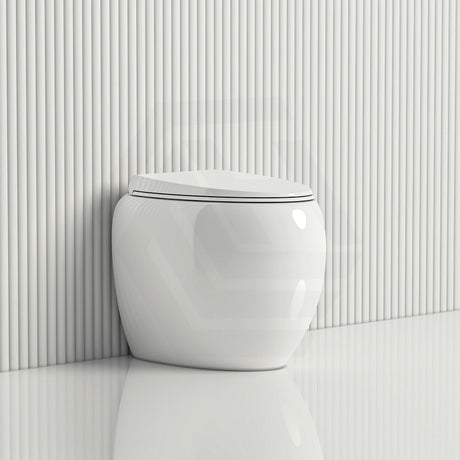
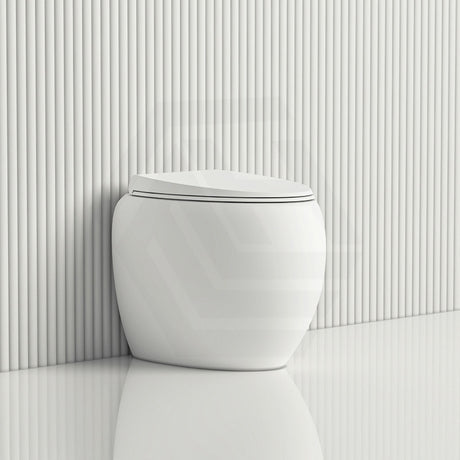
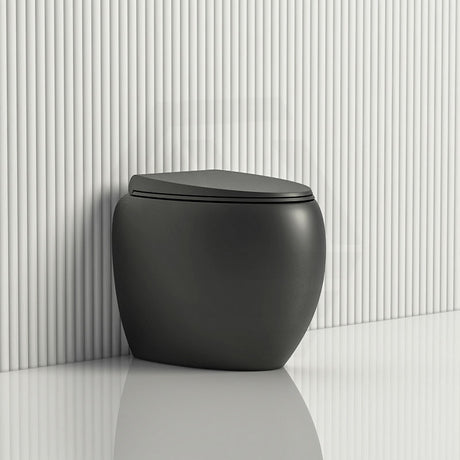
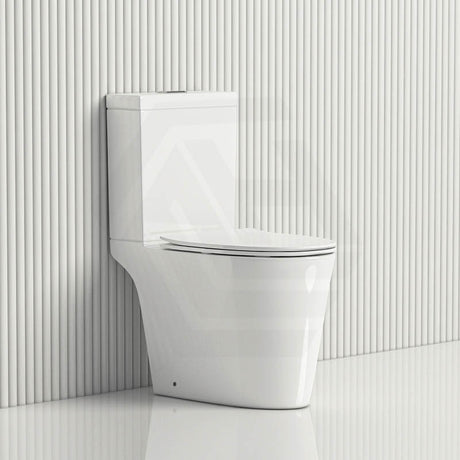
A rimless commode is worth a look if you want a real hygiene step-up — the under-rim channel is gone entirely, so bacteria, mould, and limescale have nowhere hidden to build up. All Fienza rimless suites come with a Nano-Glaze coating that helps push mineral deposits away. The back-to-wall rimless range from Poseidon holds a WELS 4-star rating — full flush sits at 4.5L and the half flush at 3L — so there's plenty of force to clear the bowl after a clean. Most mid-range rimless suites land somewhere in the $400–$800 range — if you're scrubbing stubborn stains every fortnight, that's a pretty compelling reason to make the switch.