

15 June, 2026
Cistern Meaning: a Plain-English Aussie Guide
Confused by the cistern meaning? This plain-English Aussie guide explains exactly what a cistern is and how it works in your toilet.

Video Credit: Got2Learn
Have you ever wandered through a bathroom showroom, feeling a little befuddled by the word "cistern"? You're certainly not the only person who's ever felt like that, with that being one of those plumbing terms that gets thrown around a lot, but never really explained. I was a plumber by trade before I became a renovation writer and I have had the word cistern mentioned in nearly every bathroom conversation I've had, and I'll tell you that you'd be well served to really understand what it means when you see the word.
What Does Cistern Mean?
The cistern meaning in plain old Aussie English is really very simple. It is a sealed container for water that provides water to a toilet pan when the flushing mechanism is activated. Simple. Cistern is derived from the Latin word cisterna which means a water reservoir, but really what it refers to here in this bathroom plumbing context is a water container that is fixed directly to the back of a toilet or behind the wall and attached directly to that toilet by a set of pipes that feed into the pan.
In most plumbing and hardware shops you will see the cistern meaning referred to as the complete toilet cistern unit including the body, the lid and everything that is inside the cistern body that controls both the flushing and the filling. When someone refers to a toilet cistern, they are talking about that specific container not the actual toilet pan. So it is important to be aware of that distinction especially when you are ordering parts or getting quotes to renovate the bathroom.

How a Toilet Cistern Works
Every time you press the toilet flush button, your toilet cistern will empty and then refill, which is really two different phases in the one flushing action.
By depressing the flush button, the flush valve within the cistern opens and the water stored in the cistern is released into the toilet bowl. Depending on what you have set the cistern for, that could be either 4.5 litres for a full flush or 3 litres for a half flush. Either way, a 4-star WELS rating is the Australian standard for a modern toilet cistern under AS/NZS 6400:2016.
With the cistern having flushed its water into the toilet bowl, the cistern empties down to a specific level, which triggers the inlet water valve to open and let more water from the cold water supply enter the cistern. When a certain water level is reached, the float rises and pushes the inlet valve shut.
Dual flush cisterns are essentially the norm these days. A single flush cistern is virtually obsolete. And there is nothing better in my opinion than having the option of a 3 litre half-flush on your toilet cistern to reduce the amount of water being used and subsequently keep those water bills in check. The amount of water you use really adds up over a year, and it can have a significant effect on household water usage especially when there are more people living in the household.

Types of Toilet Cisterns Available in Australia
In the main, they all work the same way. When you press a flush button, a mechanism empties the water into the toilet bowl and then a fill valve re-fills the cistern. But where a toilet cistern is actually installed and what that implies for the design of your bathroom and also the budget is a totally different beast.
In Australia, you essentially have three choices.
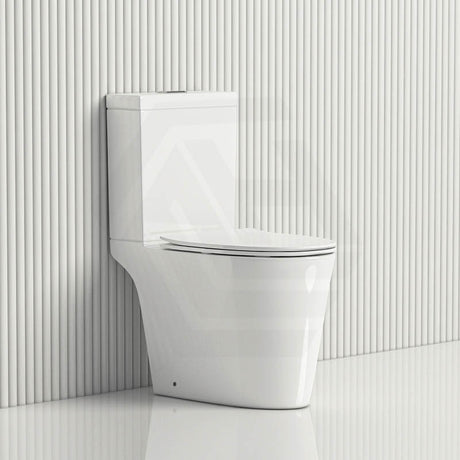
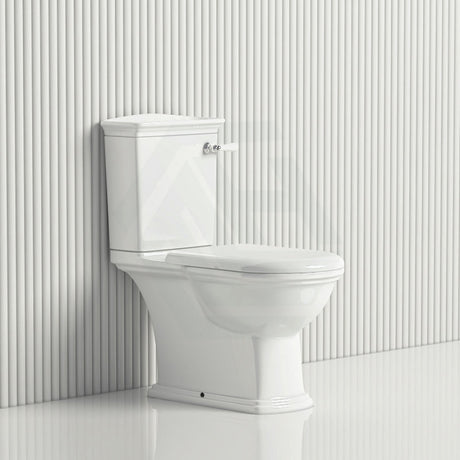
The most common choice of toilet cistern in Australian bathrooms is a close-coupled cistern. This is simply a cistern that is mounted directly onto the toilet pan. These are the easiest to service, the least expensive and are very commonly seen in Australian bathrooms. Back to wall toilet suites with an exposed close-coupled cistern start from around $185 AUD and that's going to be your budget choice, which is perfectly functional. When you lift the cistern lid, you have instant and easy access to whatever plumbing you need to work inside the cistern itself, if needed.
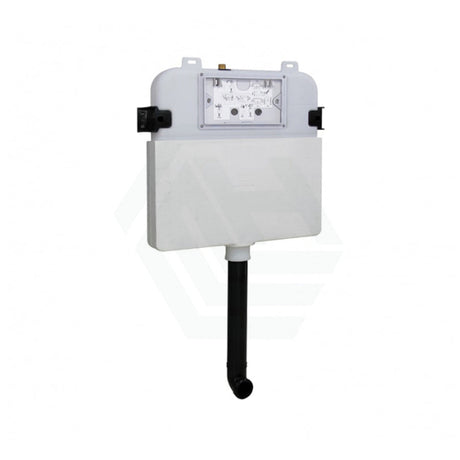
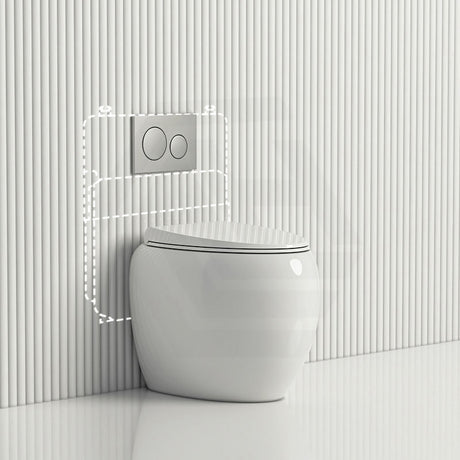
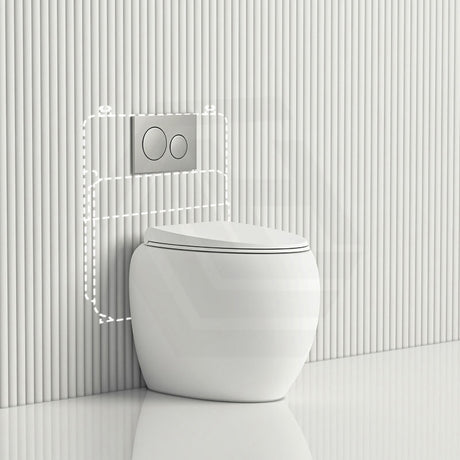
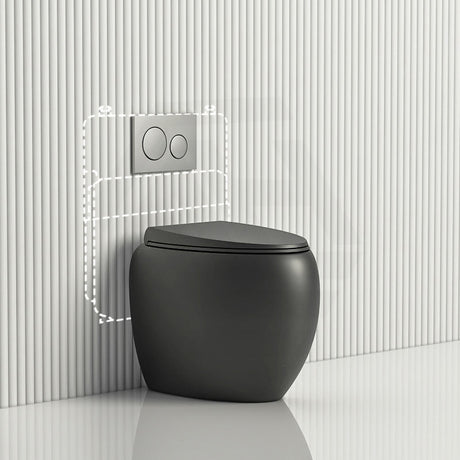
The second cisterns choice is an in-wall cistern, often referred to as a concealed cistern. This is a cistern that is mounted and hidden inside the wall cavity and you access everything inside from the tiled flush panel. You need to be aware that an in-wall cistern will require a wall cavity depth of approximately 100–120 mm. Geberit is the industry benchmark for this style, and R&T offers a solid mid-range alternative. In-wall cisterns range from approximately $165 to $1,283 AUD for the cistern frame alone. In-wall cisterns are the only option if you are buying a wall hung toilet pan — there really is no other way to go.
And then you have an option that's basically somewhere in between those previous two. The toilet cistern is housed in a furniture unit or vanity cabinet against the wall, offering a cleaner look than a fully exposed suite without the structural commitment of going in-wall. I think the in-wall option is definitely something to explore if you are undertaking a full reno. But trying to install one on top of existing tiles is a different matter — a more expensive matter.

Toilet Cistern Components Explained
Regardless of the cistern style you use in your bathroom, they each share the same essential toilet cistern components. Knowing what each piece does will also help when you need to fix or replace a broken part. The key components are:
The inlet valve (fill valve), which opens and lets water flow from the supply line into the cistern.
The flush valve, which opens and allows water to flow from the cistern into the pan when the toilet is flushed.
The float, which rises and falls with the water level to open and close the inlet valve.
The overflow tube, which acts as a failsafe in the event the float fails.
The push button or actuator plate, which is the only part a user interacts with directly — on in-wall cisterns this is the tiled panel flush button.
Cistern parts to replace range from a minimum of $7 up to around $250 AUD. The cost will depend on which cistern brand you use and which particular parts you need. Common failure parts are a worn inlet valve seal — which means the cistern will run continuously — or a worn flush valve — which means the cistern is not flushing properly or is leaking slowly into the pan. Both of these can be identified before you are in dire need of a whole toilet cistern replacement.
Note: Replacing parts within cisterns that involves connecting or disconnecting the water supply is licensed plumbing work in every Australian state. Adjusting the height of the float is fine for a DIY-er, but anything beyond that requires a licensed plumber.

Choosing and Installing the Right Cistern
By now you should have a reasonable idea of how cistern parts fit and work together. Armed with this knowledge you can choose the right cistern for the job — one that is compliant with Australian standards and matches your particular rough-in requirements. Understanding the full cistern meaning also helps you communicate clearly with your plumber and avoid costly mistakes.
Any cistern sold in Australia needs to meet two mandatory requirements. First, it needs to be WaterMark certified — every plumbing product must carry WaterMark certification. Without it, a cistern may be deemed non-compliant by local plumbers and authorities. Second, it must be registered with WELS and labelled before sale under AS/NZS 6400:2016. Make sure any toilet cistern you buy carries at least a 4-star WELS rating.
In terms of fitting, the main thing you need to know is the rough-in measurement of your toilet pan. Standard Australian floor-outlet pans have an S-trap setout of 100–120 mm from wall to pipe centre. If you go for an in-wall cistern, confirm the depth of your wall cavity before buying the frame.
All cisterns must be installed by a licensed plumber in every Australian state and territory, and a licensed plumber must certify compliance upon completion. I've said it before and I will say it again — if someone quotes you a cheaper price to do this job without a licence, don't use them. All plumbing connections need to meet sanitary plumbing requirements which only a licensed plumber can certify.
My advice is to get a quality cistern fitted correctly the first time, rather than dealing with a leaking cistern or a non-compliant installation two years down the track.
References
AS/NZS 6400:2016 Water efficient products — Rating and labelling (incorporating Amendment No. 1:2022 and Amendment No. 2:2022), Standards Australia
WaterMark Certification Scheme, Australian Building Codes Board
State and territory plumbing licensing authorities (Building and Plumbing Commission Victoria; Building Commission NSW / NSW Fair Trading; Queensland Building and Construction Commission; Plumbers Licensing Board Western Australia (administered by Building and Energy); Consumer, Building and Occupational Services Tasmania; Access Canberra ACT; Office of the Technical Regulator / Consumer and Business Services South Australia; Plumbers and Drainers Licensing Board Northern Territory)
AS/NZS 3500.2:2025 Plumbing and Drainage — Sanitary Plumbing and Drainage, Standards Australia