

26 May, 2026
Small Toilet Ideas for Australian Bathrooms
Explore small toilet ideas that actually fit compact Australian bathrooms. Avoid common renovation mistakes and choose the right suite.

Video Credit: Mom Can Fix It
Why Small Bathrooms Need a Different Approach
It's a common mistake. You enter a bathroom, and the pan projects so far into the room that it blocks the door from closing. This scenario is by far the most common small bathroom renovation blunder in Australian homes. It's usually because the renovation is using a standard toilet suite which simply doesn't suit smaller spaces.
Typical Australian powder rooms sit around 900 mm × 1200 mm in footprint. And even small ensuites are rarely larger than that. With a standard pan projecting 680 mm away from the wall — and then adding the depth of the cistern — you're left with almost zero space remaining. This is made even worse with the wrong rough-in distance set out for the new suite, so you're looking at plumbing works that you didn't expect before you even bolt the new suite to the floor.
However, the good news is that there are some brilliant small toilet ideas that suit these dimensions, it just takes a little bit of forethought and selection right from the outset.

Key Dimensions and Clearance Requirements for Compact Toilets
First things first — you need to take these measurements out before you select anything. A compact pan typically projects between 490 mm and 520 mm from the wall, around 160 mm less than standard suites. This makes a massive difference when it comes to your toilet space.
The side clearances are as important as the projection. According to the NCC 2022 Livable Housing provisions, new Class 1a dwellings need to maintain a 900 mm × 1200 mm clear zone (NCC 2022, ABCB Housing Provisions, Part 12.2) in front of the pan. Even in older properties where this isn't required, a comfortable space in your bathroom is achieved when there's at least 450 mm on either side of the pan centreline.
Finally, the rough-in distance is key for connecting the pan and cistern to the waste pipes. Australian S-trap toilets are generally set out at 100–120 mm from the wall to the pipe centre, with P-trap connections sitting at approximately 185 mm from the finished wall. Choose the wrong one, and you won't be able to fit the suite without modifications. Always know what type of trap you have before ordering. Also, consider the door swing too. You won't have any space left for a pan if you have a 900 mm door swinging into a 1200 mm deep room — a sliding door or one that opens outwards solves this instantly.

Best Toilet Styles for Small Australian Bathrooms
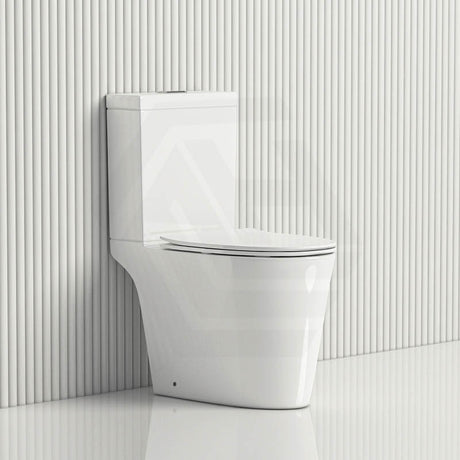
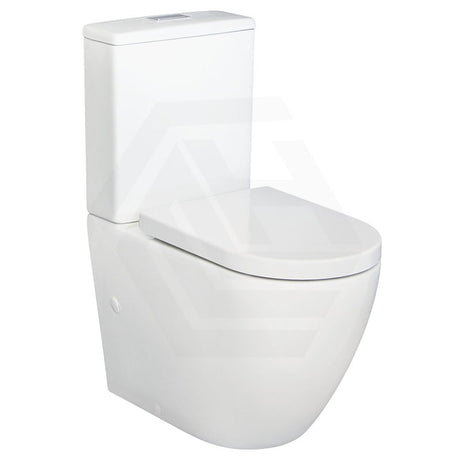
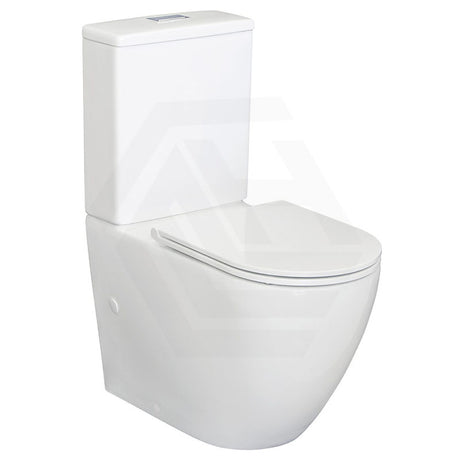
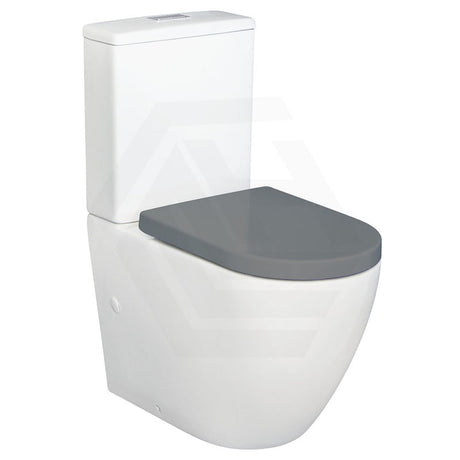
Once you have those measurements, it's a simple case of looking at your room clearances and comparing them with the main toilet options for Australian homes. A close-coupled suite — where the cistern sits directly on top of the pan — is probably what comes to most people's minds. These are often the most affordable, at under $400. The combined projection of close-coupled suites is usually around 650–680 mm, which isn't as compact as other options but is well suited to granny flats and second bathrooms where space isn't the primary factor.
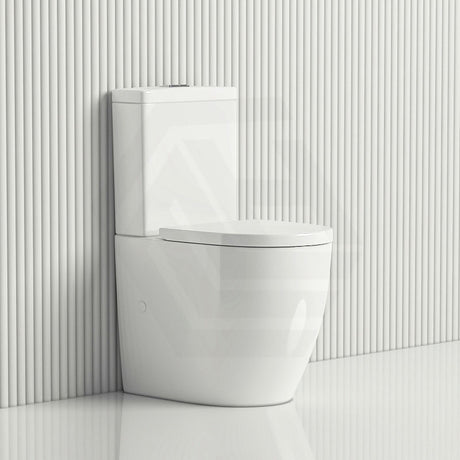
Back-to-wall suites have reduced projection, with pan measurements sitting between 500 mm and 540 mm from the wall. The cistern can sit flush to the wall or inside a built-in cabinet, giving the room a cleaner, more considered finish overall. The next level of space-saving is to go wall-hung. With a wall-hung pan, the pan is suspended off the floor, giving a visual lightness and making the toilet appear much smaller in the room itself — but whichever style you choose, there is one compliance box every product must tick.
Every toilet suite sold in Australia is required to carry WaterMark certification (WaterMark Certification Scheme) — a mandatory national product certification for plumbing and drainage products — so it is worth checking each one when you are comparing products. Remember, there is a lead-free compliance deadline for all WaterMark-certified products from 1 May 2026.

Back to Wall and In-Wall Cistern Options
Of all the small toilet ideas available for compact Australian bathrooms, back-to-wall suites and in-wall cistern systems consistently deliver the greatest space savings — and they work quite differently from each other.
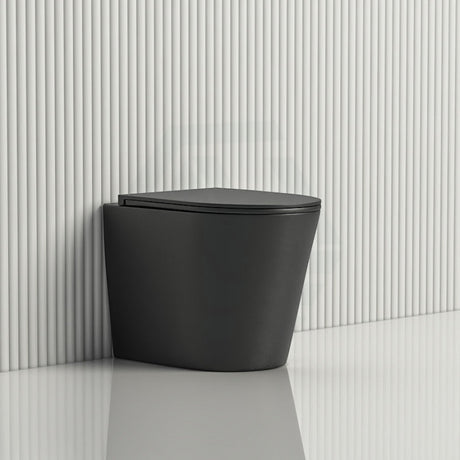
A back to wall toilet consists of a floor-mounted pan with the cistern hidden behind a wall or vanity cabinet. A back-to-wall pan projects between 500 mm to 540 mm from the wall. Brands such as Poseidon and Fienza offer solid ranges, with prices ranging from $185 to $1,199 depending on features; almost all include a rimless flush for easy cleaning.
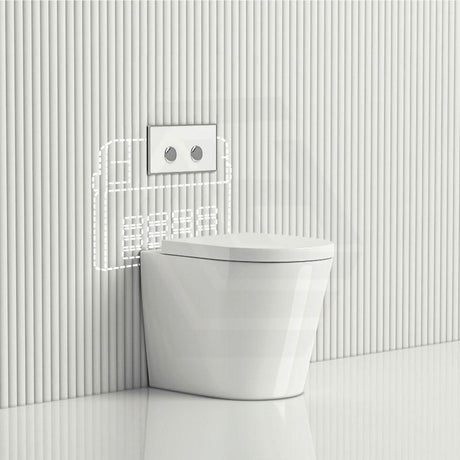
An in wall cistern system differs from this. In this system, the cistern is installed into a wall cavity — a minimum finished wall depth of 100 mm is required to accommodate it — and a wall-hung pan is mounted to a steel carrier frame installed within that cavity. Flush buttons are recessed into the wall behind a flush plate. Wall-hung pan projection reduces to 480–500 mm, with the added benefit of the cistern being fully concealed. A complete in-wall suite ranges from $543 to $1,284.
In every Australian state and territory, toilets — both back-to-wall and in-wall — must be installed by a licensed plumber (state plumbing licensing legislation). Sanitary drainage for an in-wall cistern installation is covered under AS/NZS 3500.2 (AS/NZS 3500.2), so remember to factor trade labour into the budget — these are a great space-saver, but installation costs can be considerable beyond the listed product price.

Small Vanity and Layout Considerations
Once you have the toilet sorted — dimensions, style, and installation costs accounted for — choosing a small toilet is only part of the story. You also need to pair it with an appropriately sized small vanity and consider the layout of the entire room.
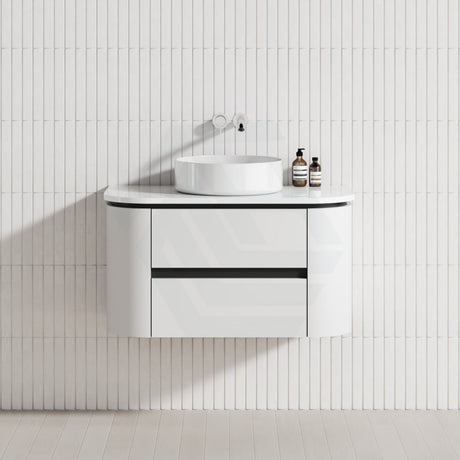
For a compact bathroom or powder room, a vanity width of 450 mm to 600 mm is ideal. At 450 mm or 500 mm wide, a vanity can easily accommodate a toilet and basin on a single wall without appearing overcrowded. A wall-hung vanity cabinet in a warm timber finish in a small space — such as 900 mm × 1500 mm — paired with a back-to-wall toilet in matte white can feel very considered and luxurious.
A wall-hung vanity also opens up the floor beneath the cabinet, giving the impression of a larger room. Brands such as Lukka, CETO and ABS offer wall-hung vanity cabinets in these widths at various price points. Be aware that most vanity cabinets do not include a basin, mixer, and waste — budget for those separately, and engage a licensed plumber for all plumbing connections.
Other layout considerations include whether placing the toilet and vanity on different walls might give the room more functional space. A mirror cabinet or LED shaving cabinet above the vanity adds storage without consuming floor area. Even a small room can feel welcoming and functional when carefully considered.
References
National Construction Code 2022, ABCB Housing Provisions, Part 12.2 Livable Housing
WaterMark Certification Scheme, Australian Building Codes Board
State plumbing licensing legislation (VBA Victoria; Fair Trading NSW; QBCC Queensland; Building Practitioners Board WA; CBOS Tasmania; ACTPLA ACT; Building & Energy SA; ABPB NT)
AS/NZS 3500.2 Plumbing and Drainage — Sanitary Plumbing and Drainage, Standards Australia