

26 May, 2026
Bathroom Style Ideas for Australian Bathrooms
Explore bathroom style ideas that actually suit Australian homes. Get practical advice on size, layout and materials for your renovation.

Video Credit: P. J. Hussey Construction
What Makes a Bathroom Style Work in Australian Homes
I see way too many people approach their bathroom renovation by picking something from Pinterest and then trying to make the space look like it, which is the wrong approach. A style might look amazing in a European flat or a Queensland Hamptons beach house, but that same approach is totally not going to work in a small inner-city bathroom of 4 to 6 square metres, which is the type of bathroom that most Aussies have. Before we get into any discussion of tiles, tapware and finishes, we have to establish some parameters for the space itself.
The size of the room is important. A small bathroom of 4 to 6 square metres needs space-saving fittings and a pared-back selection of materials, whereas a medium bathroom of 8 to 12 square metres can accommodate freestanding baths, double vanities, feature walls. Ventilation is also important; Australia's range in climate from tropical in the north to cooler climates in the south means ventilation through the use of mechanical exhaust fans is a requirement of the National Construction Code, not a choice. All tapware and fixtures specified in Australian bathrooms should carry a WELS rating — the higher the star rating, the lower the water consumption. This is something I am very conscious of as part of our bathroom specification for display homes.
Once you've considered the room size, ventilation requirements, and WELS water rating, it becomes easier to figure out which of the main style options will suit your particular bathroom.

Popular Bathroom Style Directions for Australian Homes
There are four main style directions that Aussies have been choosing for their bathroom renovations in recent times. Each has specific material requirements, suits particular room sizes, and falls in roughly different cost tiers.
Coastal and Hamptons bathrooms typically incorporate white or pale timber-look vanities, light-coloured stone-look tiles, brushed nickel tapware and shiplap style wall panelling. They are best suited to medium to large bathrooms and sit in the mid-to-high price range.
Contemporary minimalist bathrooms are characterised by clean lines, wall hung fixtures, large format porcelain tiles in concrete- or stone-looks, and black or gunmetal grey matte finish tapware. This direction works well in small bathrooms because the lack of visual clutter creates a sense of space.
Industrial style bathrooms rely on raw finishes, featuring exposed concrete look tiles with darker grouts, matte black fittings and terrazzo elements.
The classic bathroom style uses white subway tiles and chrome or brushed nickel fittings of a more classic or period silhouette. These bathrooms can sit in a lower price point range if you choose simpler fixtures, but the cost increases if you choose a higher specification of quality heritage or period style taps and baths. Each of these bathroom style ideas connects directly to specific material and fixture choices, making these decisions crucial.

Materials and Finishes That Define Each Style
Porcelain is the most commonly used material for Australian bathrooms. It's a highly durable and low-maintenance option. Nowadays, porcelains are produced in stone, marble, terrazzo, and concrete finishes so convincingly that it is challenging to distinguish these surfaces from the natural materials at a fraction of the cost. Large format porcelain tiles at 600 × 1200 mm are becoming increasingly popular — they appear more contemporary, require less grout, and look particularly effective when paired with the minimalist or industrial look. Floor tiles must meet a minimum P3 slip resistance rating per AS 4586 in wet areas, with highly polished finishes only suitable for walls.
Waterproofing is the foundation beneath every material decision and must comply with NCC 2022 Part 10.2, with shower walls waterproofed to a minimum of 1800 mm above the floor substrate (NCC 2022, ABCB Housing Provisions, Part 10.2), and bath-adjacent walls to at least 150 mm above the rim. Most builders and tilers will work through a licensed waterproofer to comply with AS 3740:2021. No matter what tile finish you opt for, this specification remains a constant.
The tapware finish is another point of visibility for any style decision. Matt black tapware has seen a spike in popularity, with brands including Meir and Bella Vista offering a range of options. Brushed gold and brushed nickel work best in classic styles such as Hamptons and contemporary. Gunmetal grey tapware has grown in popularity over recent years, providing an alternative to dark matte and chrome finishes. A good rule for grout colour is to match its tone with the tapware — warm grey grout with warm metals, and cool tones or black grout when using polished chrome or matt black tapware.
Surfaces and finishes create the background story in a bathroom, but major fixtures — vanities, baths, and toilets — are what people notice most and are typically the most expensive items to install.

Fixtures and Fittings That Anchor Your Bathroom Style
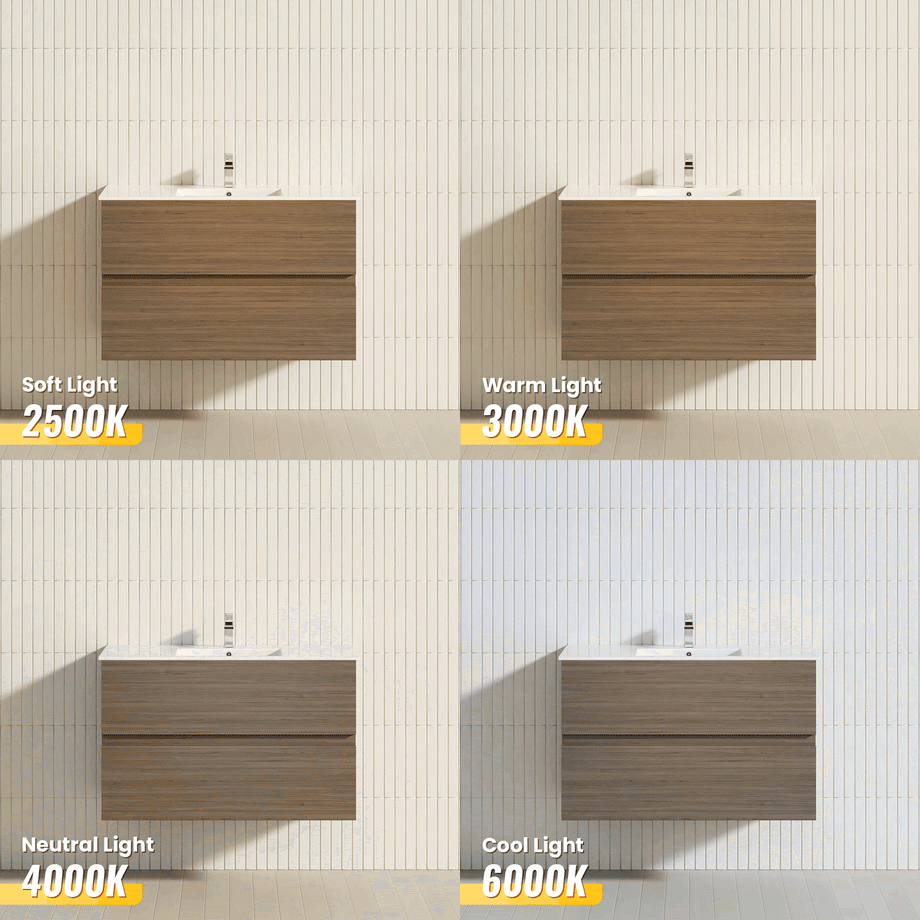
One of the most effective fixtures for small Australian bathrooms is a wall hung vanity. Since the cabinets do not rest on the floor, cleaning underneath is straightforward. Wall hung vanity widths range from 600 mm to 1500 mm. Because a wall hung vanity must be mounted to the wall, timber noggins in the wall framing at the appropriate height are required prior to tiling — confirm this with your builder or carpenter before proceeding. Vanity cabinetry materials indicate the price point: PVC is most affordable and completely waterproof, MDF cabinetry is mid-range, while plywood cabinets such as the Aulic range offer a more luxurious timber grain look suited to Japandi and contemporary styles. A basin mixer and waste are not included with cabinetry and must be separately ordered and installed by a licensed plumber.
Few things define a classic or heritage-inspired bathroom quite like a clawfoot bath. Floor clearance of at least 1600 mm is needed for the length, plus roughly 300 mm of clear surround on each accessible side — any bathroom under 8 square metres really isn't suited to one, so clawfoot baths are best left to medium or larger rooms. Older homes deserve a floor load check before you commit — the bath, water, and occupant together add up to a serious combined weight, and a structural opinion is money well spent. Depending on material and shape, Broadway freestanding baths can cost anywhere from $878 to over $7,000 AUD.
Vitreous china with a powder-coated finish makes a black toilet a natural fit for contemporary and industrial-style bathrooms — the sanitaryware body colour pairs well with matte black tapware for a deliberate, cohesive look, and a rimless pan keeps cleaning straightforward. Worth noting: the body colour on a black toilet is a sanitaryware finish decision — it's separate from matte black tapware or black tile grout, which are their own distinct choices.
LED mirrors, heated towel rails like those from ThermoGroup, and in-wall lights all need a licensed electrician for installation — zone requirements under AS/NZS 3000:2018 apply to every one of them. WaterMark certification is a legal requirement — without it, a licensed plumber can't lawfully fit the fixture.

Bathroom Style Ideas: Practical Planning Tips Worth Knowing
Get the budget wrong and even the best fixtures won't save you. Expect tiles, waterproofing, and adhesives to swallow 40 to 50 per cent of the total budget — labour, fittings, and a 10 to 15 per cent contingency account for the rest. Past $20,000, bring in both a builder and a bathroom designer — the coordination grief you dodge tends to more than offset their combined fee. A standard bathroom of 4 to 8 square metres — demo to final fix-off — usually takes four to six weeks; on top of that, every waterproofing coat wants at least 24 to 48 hours to cure, and the exact window is product-dependent. Spend everything on tiles and skimp on tapware — that's the trap most renovators fall into, and the colour palette pays the price. Finish coordination has a few rules that'll save you grief:
Decide on your tapware finish first — towel rails, toilet roll holders, and robe hooks all follow from that call; mixing cool and warm metallics across accessories almost never lands well.
One feature wall in a large-format stone-look tile is the move for dark tiles in a small bathroom — plaster them wall-to-wall and the room shrinks; keep the rest complementary and you'll spend less too.
Have waterproofing signed off before any tiling starts — non-compliant waterproofing is a building defect, and the only fix is pulling up the finished surface; there's no shortcut.
Every style direction covered here demands the same thing: materials, fixtures, and fittings chosen as a system, with each decision made in view of the others. Layout to last accessory — that level of planning rigour is what separates a bathroom that photographs well from one that holds up in daily use.
References
National Construction Code 2022, ABCB Housing Provisions, Part 10.2 Wet Areas
AS 3740:2021 Waterproofing of Domestic Wet Areas, Standards Australia
WaterMark Certification Scheme, Australian Building Codes Board
AS/NZS 3000:2018 Electrical Installations (Wiring Rules), Standards Australia