09 July, 2026
How to Plan a Bathroom Renovation: a Step-by-step Aussie Guide
Learn how to plan a bathroom renovation with confidence. This guide covers budgets, compliance, layout and fixtures for Australian homes.

Honestly, a bathroom renovation is one of those projects that looks straightforward on a mood board and then absolutely humbles you the moment the first tile comes off the wall. Here's the thing — getting the planning right from the very start is what separates a smooth, satisfying result from a budget-blowing disaster. A simple cosmetic refresh starts from around $9,000–$15,000, a mid-range renovation runs $15,000–$25,000, and a full structural overhaul can reach $25,000–$35,000 or more. This guide walks you through every critical step — budget, compliance, layout and style — so you go in with your eyes wide open.
Video Credit: The Funny Carpenter
Step 1: Set Your Goals, Scope and Budget
It might seem like common sense, but understanding exactly what you want to achieve with your bathroom renovation well before you knock the first tile off the wall is critical. Getting your how to plan a bathroom renovation right makes the difference between your renovation being on budget, or going off budget and becoming a disaster. And, sadly, I know way too many people who are on the receiving end of the latter.
| Renovation Tier | Typical Cost Range | Scope of Work |
|---|---|---|
| Cosmetic Refresh | $9,000–$15,000 | New tapware, fresh paint, accessories — no layout changes |
| Mid-Range Renovation | $15,000–$25,000 | New fixtures, full retiling, minor layout adjustments |
| Full Structural Overhaul | $25,000–$35,000+ | Complete gut to studs, premium finishes, structural changes |
It is important to be honest with yourself when deciding on your bathroom renovation goals. A simple cosmetic refresh with new tapware, fresh paint and some new accessories costs from the bottom end of the scale, from around $9,000–$15,000 depending on your location. A mid-range bathroom renovation, including new fixtures, tiling and changing the layout, will be priced from $15,000–$25,000, and a full structural change involving a complete gut to the studs, with premium finishes, can cost $25,000–$35,000 or more, especially if you are renovating in Sydney or Melbourne.
Write down your renovation scope and ideas on paper, even if it is just a plan of the basic elements or a bulleted list of the items that you would like included in your renovation. This is helpful because it helps you distinguish between your essentials (like a good functional shower, practical storage and adequate ventilation) and your luxury items you don't really need (such as a freestanding bath, heated towel rail and a double vanity). While it's an easy step, it helps keep you focused on your budget. Without question, going over budget — especially due to scope creep, which is one of the most likely causes of going over budget in any bathroom renovation — is something you want to avoid at all costs.
Once you have your bathroom budget and renovation scope sorted out, it is imperative that your designs and ideas are up to the relevant standards set by the Australian Building Codes Board (ABCB). One of the most expensive mistakes a renovator can make is failing to adhere to these standards.

Step 2: Understand Australian Regulations and Compliance
Let me guess, most people don't read this section when they plan a bathroom renovation, and then are extremely regretful they didn't when it comes time to sell the house.
The National Construction Code (NCC) dictates that in a bathroom renovation shower area walls must be waterproofed up to a minimum of 1800 mm (NCC 2025, ABCB Housing Provisions, Part 10.2) above the floor substrate, and the shower floor must be waterproofed in its entirety. In addition, walls adjacent to a bathtub must be water resistant — not waterproof, there is a technical distinction — up to a minimum of 150 mm above the top of the vessel. Perimeter flashing at wall-to-floor junctions must have a horizontal leg not less than 50 mm and a vertical leg not less than 25 mm above finished floor level.
All plumbing work must be carried out by a licensed plumber, and in most Australian states that plumber must issue a compliance certificate on completion. Electrical work must also be installed by a licensed electrician with RCD protection according to the relevant electrical zones for bathrooms under AS/NZS 3000:2018. DIY plumbing and electrical work is illegal in any Australian state or territory. Full stop.
Once you understand the compliance standards, you can go about designing your new bathroom within these boundaries and within the confines of your existing plumbing locations to avoid cost blowouts.

Step 3: Design Your Layout and Choose a Style
Plumbing moves cost money. Real money. Moving a toilet, shower drain or anything of the sort can add $1,500–$3,000 to a project pretty much instantly, so trying to work within the existing plumbing locations as much as possible is one of the most financially wise moves.
Draw your new bathroom design to scale before you start buying. You need a clear 600 mm minimum in front of a toilet. Shower recesses must be 900 mm x 900 mm minimum. These aren't recommendations; they're requirements.
Porcelain tiles (in a 600 x 600 mm or 600 x 1200 mm format) are hard-wearing and easy to maintain, ranging between $6–$150 per tile depending on the brand and range. Natural stone looks beautiful but requires sealing, stains more easily and has much higher maintenance costs. Pick the material you prefer first, put together a mood board, order some samples, and make sure you're happy with how it looks in the natural lighting of the actual room before committing to anything.

Step 4: Select Your Fixtures and Fittings
Every plumbing product installed in Australia must be WaterMark certified by law — there are no exceptions. From May 2026, plumbing products made with copper alloys for drinking water, including taps, fittings and hoses, will also require Lead Free WaterMark certification. Do your research when selecting plumbing products.
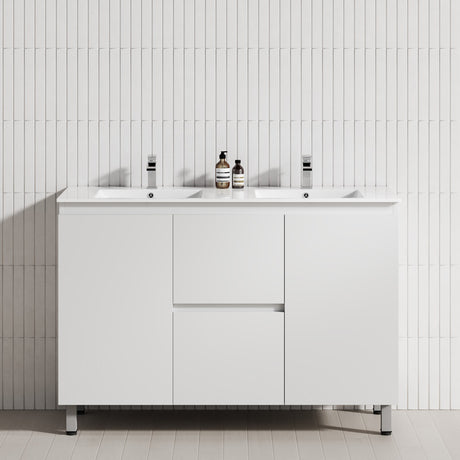
The bathroom vanity is typically the centrepiece of the room. Wall-hung bathroom vanity styles usually range between 600 mm to 1500 mm wide, provide a sense of more space by exposing the floor, and must be fixed to a stud wall. Freestanding units are designed to sit on the floor and are generally a little easier to install, particularly in older-style bathrooms. Prices for basic PVC bathroom vanity units are $300–$600; mid-range MDF and plywood bathroom vanity units are $600–$1,200; and premium Australian-made bathroom vanity prices (Aulic, CETO) are $1,200–$2,800. Most include a basin.
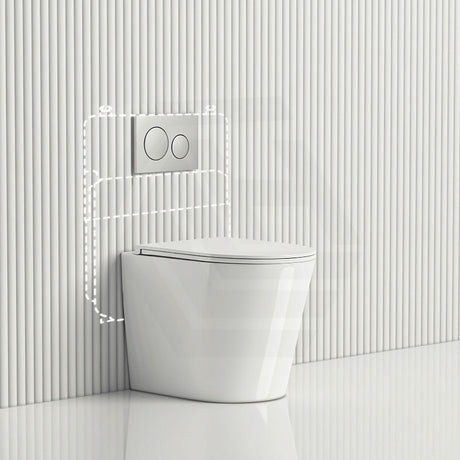
The toilet is another key fixture. Close-coupled toilet suites are $185–$400; wall-faced rimless toilet pans are $400–$800 and are easier to clean, making them the go-to for most mid-range bathroom renovation projects. In-wall cisterns offer a modern, clean-lined appearance, but the installation process is more complex as it involves in-wall rough-in work. Look for the WELS rating on all toilets — a four-star rated toilet uses 4.5 litres for a full flush and 3 litres for a half flush.

Step 5: Plan Your Renovation Timeline and Trades
Now that you have ordered your bathroom fixtures and fittings, get all your trades sequenced and ready to go. Once your trades are properly sequenced, you can expect them on site for between two to four weeks. If you don't have the sequence right, you'll end up waiting around and paying for downtime. The correct sequence is: demolition and strip-out; plumbing rough-in work; electrical rough-in work; waterproofing; tiling; installation of bathroom fittings and fixtures; cabinetry and door architrave fitting; accessories; final inspection.
One area that is often underestimated is waterproofing cure time. Each coat needs 24–48 hours to cure, and you are typically applying three coats — so factor in at least 72 hours before a single tile goes down. Never tile over waterproofing that is wet or under-cured. The cost of putting a job right later is so much greater than the time saved by rushing.
If you have specified a bathtub — especially a freestanding bathtub — in your design, check the floor joist framing can take the additional weight and ensure there is a clear floor space of at least 1.8 m around it. Broadway freestanding baths start at $878 and go up to $7,000 and beyond, depending on design. They can make a real difference, but only if you have the space for them.
Get at least three quotes from a licensed tradie per job type and make sure you ask questions about hold points with the waterproofing. Knowing how to plan a bathroom renovation well in advance of making that first phone call is your single best use of time, so don't hesitate to invest in doing that properly.
References
National Construction Code 2025, ABCB Housing Provisions, Part 10.2 Wet area waterproofing
State and territory plumbing licensing authorities (Building and Plumbing Commission Victoria; Building Commission NSW / NSW Fair Trading; Queensland Building and Construction Commission; Plumbers Licensing Board Western Australia (administered by Building and Energy); Consumer, Building and Occupational Services Tasmania; Access Canberra ACT; Office of the Technical Regulator / Consumer and Business Services South Australia; Plumbers and Drainers Licensing Board Northern Territory)
AS/NZS 3000:2018 Electrical Installations (Wiring Rules) (incorporating Amendment 3:2023), Standards Australia
WaterMark Certification Scheme, Australian Building Codes Board