

26 May, 2026
Bathroom Cabinet Ideas for Australian Bathrooms
Discover practical bathroom cabinet ideas suited to Australian homes, from compact apartments to humid coastal climates. Find your perfect fit.

Video Credit: 91Homes
Why Australian Bathrooms Need Purpose-Built Cabinet Storage
Envision entering your bathroom, but now each item occupies a designated spot. The benchtops are free of clutter, the bottles have not taken over the basin, and you are left with a clean, intentional space. And more importantly, that space makes you want to linger in it. But this all begins with understanding the types of storage that are best suited for Australian bathrooms.
Here is the thing, Australian bathrooms aren't like others. Sydney and Melbourne apartments will often have dimensions that start at around 1,500 mm × 1,800 mm. Coastal Queensland and the Northern Territory bathrooms must contend with year-round humidity. Even in southern temperate zones, bathrooms still cop plenty of steam from hot showers with limited ventilation to clear it. As the NCC 2022 states that all windowless wet areas have to exhaust at least 25 litres per second (NCC 2022, ABCB Housing Provisions, Part 10.8), you'll see there's no doubt moisture is seriously considered in Australian building standards.
When planning storage, it is not only a design choice but a case of specifying a product built for the thermal, humidity, and dimensional conditions of that particular room.
The next step is to understand the format of cabinet that best fits your bathroom footprint and pipework.

Choosing the Right Cabinet Type for Your Bathroom Layout
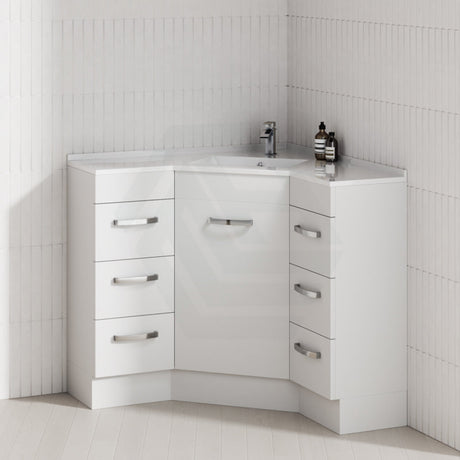
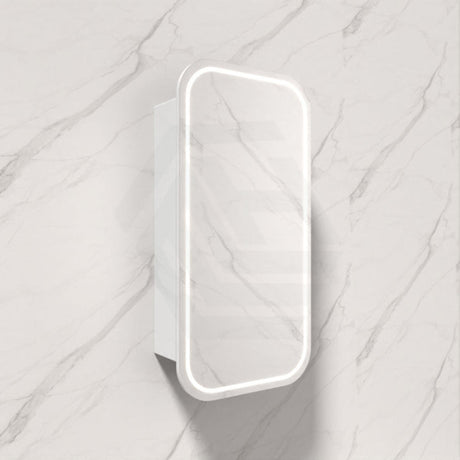
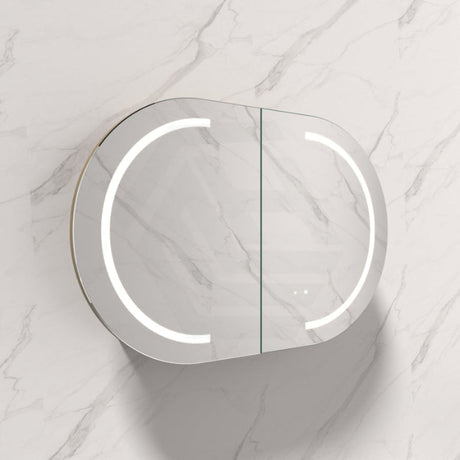
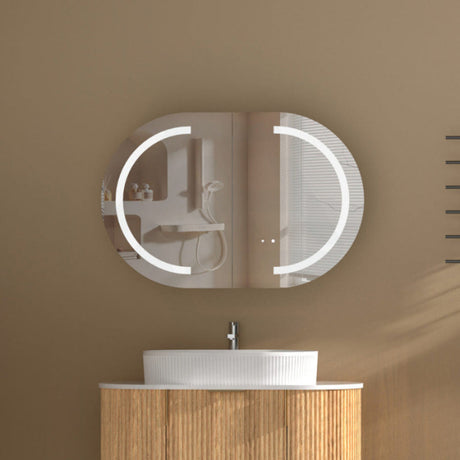
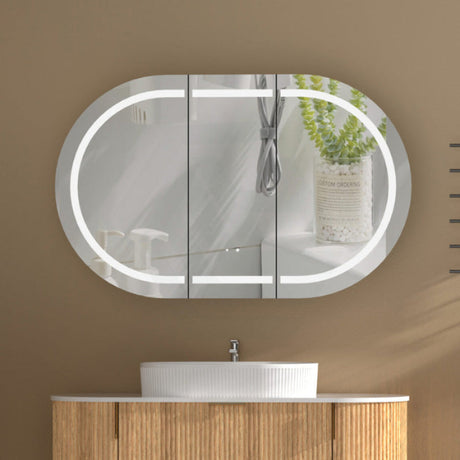
There are four types of cabinets you will come across in Australian bathrooms. Wall-hung vanity units create an illusion of more floor space and are easier to keep clean, making them a popular choice in smaller ensuites. Freestanding, floor-level cabinets fitted with legs are suitable for period homes or Scandinavian-style renovations where a softer furniture-like look is preferred. Tall boy tower cabinets stand next to a vanity and are great in bathrooms where wall space is limited, but height is in abundance. Shaving cabinets are the preferred term in Australia, not medicine cabinets, and are wall-mounted above the basin, serving double duty as mirror and storage.
View the bathroom as multiple storage zones, specifically the basin area, the wall space above your head, and any awkward spaces alongside the toilet or shower. Each will require its own storage solution. A wall hung vanity is well suited to the basin zone, while tall bathroom cabinets make good use of vertical space that would otherwise remain untapped.

Materials, Finishes and Moisture Resistance
Now that you have established which cabinet format you will need, the material it is made out of is also important, as the material determines how long it will last in a high-moisture environment.
PVC-wrapped board is at the bottom end of the budget, but that doesn't mean it's not suitable. PVC is truly waterproof, resists swelling, and will be hard-wearing for a bathroom close to a body of water. MDF sits at a mid-range price point and is common in Australian bathrooms; it takes painted finishes well, be it gloss or matt, and can be sealed to prevent water damage. Left without a proper coating, however, any dampness will cause the MDF to swell and fall apart. Two-pack polyurethane or a high-quality laminate would be good coatings to ensure longevity. Plywood is the top-end choice and is dimensionally stable and moisture-resistant. It can be veneered to produce a striking woodgrain that improves with age.
Gloss white remains the favoured finish in Australian bathrooms, but other finishes are gaining popularity too. Gloss white reflects light, keeps the look clean, and fits well with coastal to contemporary styles. Matt white is growing in popularity due to its softer, more textured effect. Woodgrain finishes — be it veneer or PVC wrap — offer the added benefit of warmth that no painted finish could fully replicate.

Sizing, Installation and Practical Fit-Out Considerations
Getting the right material and look for your bathroom cabinet ideas is only half the job; the wrong size and poorly installed cabinetry will make any moisture-resistant vanity work for nothing.
Standard vanity height in Australia sits between 850 mm and 900 mm to the benchtop, whilst 460 mm is the most common vanity cabinet depth — and sizing considerations extend beyond the vanity itself. Under NCC 2022 requirements introduced in October 2023, new Class 1a dwellings must have a 900 mm × 1,200 mm (NCC 2022, ABCB Housing Provisions, Part 12.2) clear zone in front of the toilet. Even outside of those requirements, clear spaces should always be considered — they simply make for a more comfortable bathroom.
A wall hung vanity requires stud or noggin fixing where the wall must be structurally sound to carry the weight of the cabinet, the basin, and everything stored inside. A tiled wall is not always structurally sound, so locate the studs first. A licensed plumber typically takes two to three hours to complete a wall-hung vanity swap, while cabinet mounting itself can take under an hour for a carpenter or handyperson. Installing a hardwired LED shaving cabinet requires a licensed electrician under AS/NZS 3000:2018; however, plug-in models are a safe DIY project. Plumbing connections to the basin always require a licensed plumber.
A common mistake is choosing a vanity size that does not provide ample storage, ignoring the position of the existing plumbing rough-in, or selecting a cabinet that is too deep for the door swing of a shower screen. In corner spaces beside the shower, a slim 300 mm tall boy can resolve this without sacrificing storage.

Top Bathroom Cabinet Ideas to Suit Every Budget
With the right dimensions and knowledge of proper installation, you are ready to explore options across various price points.
At an entry level of under $500, a PVC wall-hung vanity in a 600 mm width paired with a shaving cabinet starting from around $153 is a practical, low-cost fit-out. This combination suits rental properties, secondary bathrooms, and staged renovations.
The $500 and $1,500 mid-range tier is the sweet spot for bathroom cabinet ideas in Australia. Brands like ABS and Lukka offer durable MDF cabinets with gloss or matt finishes, soft-close drawers, and Blum or Häfele drawer runners to match modern Australian homes. Vanities with drawers are often the most practical choice, providing easy access to everyday items without rummaging behind cabinet doors. A 750 mm vanity with a drawer configuration paired with tall bathroom cabinets can provide ample storage for even the tightest bathroom without compromising floor space.
For a premium look at $1,500 and over, options include plywood carcass construction, real timber veneer finishes, and integrated LED lighting which is a level of craftsmanship that genuinely transforms a bathroom. CETO and Australian-made cabinetry by Aulic are standouts at this price point. For context, small ensuite renovations cost between $10,000 and $25,000 (HIA Bathroom Renovation Cost Guide 2025) or more depending on state, so bathroom cabinetry represents a significant but manageable portion of that investment.
Whether you are after a quick refresh or a full-scale renovation, start with your layout, account for moisture and space, get the sizing right, then let your budget and design preferences guide the final choice.
References
National Construction Code 2022, ABCB Housing Provisions, Part 10.8 Condensation Management
National Construction Code 2022, ABCB Housing Provisions, Part 12.2 Livable Housing
AS/NZS 3000:2018 Electrical Installations (Wiring Rules), Standards Australia
HIA (Housing Industry Association) — Bathroom Renovation Cost Guide 2025