

12 May, 2026
Small Bathroom Renovation Ideas: Big Impact on a Small Budget
Discover practical small bathroom renovation ideas for Australian homes. Maximise every centimetre and achieve big results on a small budget.

Video Credit: Rebecca Robeson
Why Small Bathrooms Demand a Smarter Game Plan
Take a good look at your bathroom. Imagine it didn't feel like a cramped little box — what if it actually worked for you, felt twice as roomy? That's the whole point of a small bathroom reno, really. Trouble is, a compact bathroom gives you almost zero margin for error. Every centimetre matters.
Roughly 1.5 m × 2.5 m is what most Australian small bathrooms measure so tight that a vanity, toilet, and shower only fit with a properly considered layout. Treat a small space like a large one and clutter's already won before the reno wraps up. Ignore the spatial strategy on a budget reno and you'll cop the cost twice over — first at the checkout, then again when it all falls apart.
The DIY-assisted route typically lands somewhere between $3,000 and $8,000 all up including fixtures, tiles, and finishes covered, with painting and assembly handled by you. Give the whole job to licensed trades — waterproofing, plumbing, electrical, the lot — and expect the bill to land somewhere between $10,000 to $20,000, or higher, depending on scope, location, and finishes. Sydney and Melbourne tend to sit at the upper end, whereas regional areas are far kinder to the budget.
With budgets and footprint constraints clear, the priority is working out which layout and storage changes deliver the most usable space per dollar — long before a single fixture gets ordered.

Layout and Storage Moves That Deliver Without Wrecking the Budget
Rule one for small bathroom renovation ideas — don't move the plumbing unless you absolutely have to. Shift a waste point or relocate a toilet and the bill can leap by $2,000 to $4,000, just like that. Leave the plumbing put and channel your energy into everything else.
A sliding or pocket door in place of a hinged one is one of the most underrated wins you'll find in a small bathroom reno. A standard 820 mm door burns through roughly 0.67 m² on its swing arc alone — switch to a slider and that space is yours again. Reclaim that area and suddenly there's room for a towel rail, a hook rail, or just a bit of breathing space.
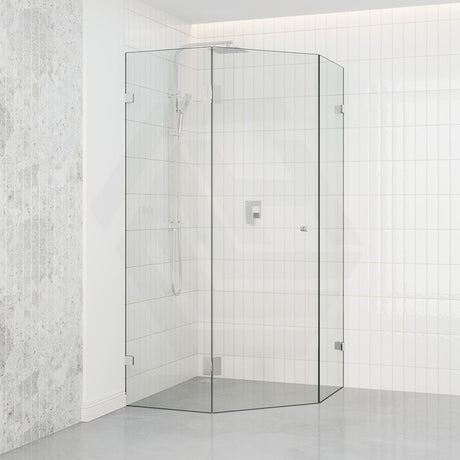
Those walls? Untapped storage, full stop. Tucked between studs at roughly 100–150 mm deep, a recessed shower niche costs about $200 to $500 to install and gets rid of surface-mounted shelves entirely. Can't recess into the wall? A slim corner shelf unit does the job neatly — usually $80 to $150 all in. Dead floor space — that's all a barely-used bathtub is. Pull it out, drop in a 900 mm × 900 mm corner shower, and the footprint shifts completely. Just that one change can return up to 1.2 m² of usable floor space.
With the layout locked in, attention turns to fixtures, tiles, and finishes that look premium without gutting the budget — and still tick every Australian compliance box.

Fixtures, Fittings, and Finishes That Are Actually Worth the Money
Tiles do more visual heavy lifting in a small bathroom than almost any other choice you'll make. Large-format tiles — 600 × 600 mm or 600 × 1,200 mm — slash the grout line count, letting walls and floors read as one unbroken plane rather than a cluttered grid. The result feels bigger, calmer, and far more expensive than the price tag suggests. At the entry level, porcelain tiles start at around $6 per piece; mid-range options climb to $80 or more per piece.
Finish choice has more impact than most people realise. Gloss tiles bounce light beautifully, but watermarks and fingerprints show up on every surface. Matte finishes handle daily grime far better — and on wet area floors, a matte or textured surface is what the slip-resistance P-rating requirements under AS 4586 actually call for.
For tapware, WaterMark certification is a legal requirement in Australia — not a style preference. All plumbing products must carry it to be legally installed. Fienza basin mixers are WaterMark certified and start from $56 at the entry level, rising to between $150 and $400 at mid-range. Wall-panel systems offer a cost-effective, attractive, and easy-to-clean finish for walls, priced at $80 to $120 per m² — worth considering for a cheap bathroom renovation where tiling costs need to be managed.

Choosing the Right Vanity for Your Small Bathroom
The right vanity is one of the most valuable small bathroom ideas, yet it is easy to make the wrong choice. If your bathroom is under 5 m², opt for a cabinet depth of 350 to 450 mm rather than the standard 460 to 500 mm — the difference is immediately noticeable underfoot.
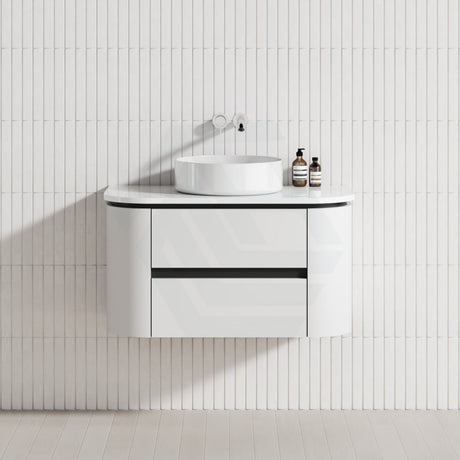
A wall-hung vanity is an excellent choice for a small bathroom renovation. With the benchtop mounted 850 to 900 mm above the floor, the floating design lets flooring continue uninterrupted beneath, boosting the sense of space. A compact ensuite or main bathroom often benefits from a small bath vanity in the 400 to 600 mm wide range. Where the space includes only a toilet and basin, a small powder room vanity of 400 to 500 mm wide will serve the purpose well. For a small bathroom vanity in a main bathroom or ensuite where extra storage is a priority, a wall-hung cabinet of that same width saves floor space while maximising cabinetry.
PVC is waterproof and the more budget-friendly option — Lukka vanity cabinets start at $300 to $600. Premium plywood construction is offered by Aulic and CETO from $1,200, providing superior moisture protection over the long term. Bear in mind that vanity cabinets do not include a basin mixer or waste fitting, which will add a further $150 to $400 to the overall cost.

DIY Tasks vs. Trade Work: Where to Spend and Where to Save
Within Australia's legal parameters, a diy bathroom renovation allows homeowners to:
• Paint walls and ceilings
• Mount towel rails, hooks, and mirrors
• Assemble a flat-pack vanity cabinet (not connecting the plumbing)
• Apply silicone sealant between tiles
• Replace a toilet seat
• Replace a screw-on showerhead
A licensed plumber is required for all connections to the basin, toilet, and tapware — even after you have assembled the vanity cabinet yourself. State and territory plumbing licence laws mandate that all plumbing connections be completed by a licensed plumber. A licensed electrician must carry out all electrical work, including LED mirrors, heated towel rails such as those from ThermoGroup, and exhaust fans. Waterproofing membrane application in wet areas must be completed by a licensed waterproofer. Under NCC 2022, shower walls must be waterproofed to a minimum height of 1,800 mm above the floor substrate — non-compliance can result in water damage costs that exceed the entire renovation budget.
Where can you save as a DIYer? Painting walls and ceilings yourself saves $400 to $800 in labour. Assembling and mounting a flat-pack vanity cabinet (without the plumbing connection) saves a further $200 to $400. Regrouting existing tiles and applying grout sealer costs only $50 to $150 in materials. Redirect those savings toward licensed trade work in waterproofing, plumbing, and electrical — that is how a cheap bathroom renovation is done without cutting corners.
References
WaterMark Certification Scheme, Australian Building Codes Board
State plumbing licensing legislation (VBA Victoria; Fair Trading NSW; QBCC Queensland; Building Practitioners Board WA; CBOS Tasmania; ACTPLA ACT; Building & Energy SA; ABPB NT)
National Construction Code 2022, ABCB Housing Provisions, Part 10.2 Wet Areas