

12 May, 2026
Bathroom Plumbing Guide: What Every Homeowner Should Know
Get to grips with bathroom plumbing before you renovate. Our Australian guide covers supply lines, drainage, wet walls and how to avoid costly mistakes.

Video Credit: Home Repair Tutor
Understanding Your Bathroom Plumbing System
We tend to overlook our bathroom plumbing until disaster strikes. It's not uncommon for me to meet people in the middle of renovations who don't even know where their wet wall is, or the fact it could cost an additional $3,000 to move a toilet two metres across the room. A grasp of the fundamentals will empower you to make some decisions upfront before you call in the trades.
Bathrooms have two separate plumbing systems: the water supply system with hot and cold lines, and the drainage system of pipes that move used water away. The supply pipes feed every wet fixture (basin mixer, toilet, shower, bath). The drains include the waste pipes themselves, the P-traps below each wet fixture (the curved part under sinks and baths that holds water and creates a seal to prevent foul smells from the drains entering your home) and the vent stack that draws air into the system to allow waste to flow freely.
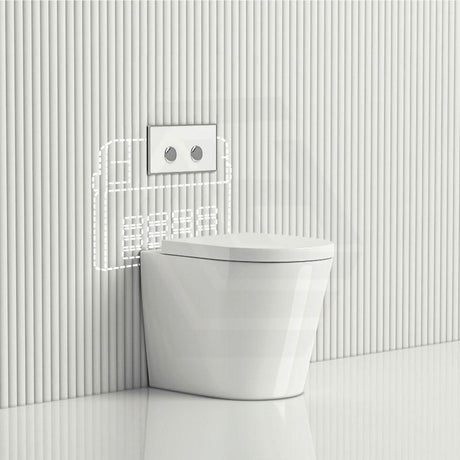
The wet wall is where all your water supply and drainage rough-ins reside and, not coincidentally, is where the most expensive costs in any bathroom renovation will be if you're forced to move them. Standard Australian rough-in dimensions play a significant part in which fixtures you choose, so it's always best to check. For toilets: an S-trap setout sits at 100–120mm from the finished wall; a P-trap sits at 185mm. If you ignore this, you may find your new suite won't fit.
Costs will be highest where any plumbing moves away from the existing wet wall so, if at all possible, make the most of what's there.
Once you've established how water enters the room through the supply system and leaves through the drainage system, the next major consideration is ensuring every wet zone is properly sealed — which is where Australian waterproofing standards come in.

Bathroom Waterproofing: Requirements and Best Practices
There are no shortcuts when it comes to bathroom waterproofing. I know people with subfloors and framing that have rotted due to poor waterproofing or the absence of it entirely, and the cost is far more significant than the original renovation outlay. Bathroom waterproofing is a legal requirement in Australia, not a recommendation.
Under the NCC and AS 3740:2021, shower walls must be waterproofed to a minimum height of 1800mm (AS 3740:2021) above the floor substrate, and bath-adjacent walls must be waterproofed to at least 150mm above the rim. Wall and floor junctions require a flashing with a horizontal leg of no less than 40mm (NCC 2022, ABCB Housing Provisions, Part 10.2).
For residential bathrooms, there are two main types of waterproofing membranes. Sheet membranes are pre-manufactured with consistent thickness and are often used on timber-framed substrates where movement is a factor. Liquid-applied membranes are applied with a brush or roller and work well on concrete and masonry substrates — they're also better suited to getting in accurately around corners and penetrations. Both are used depending on the substrate type and the waterproofer's experience.
Often overlooked is adequate curing time. Liquid membranes generally need 24–72 hours to cure fully, so tiling before a membrane has fully cured is a mistake. Other typical failures include missed corners and penetrations around the waste flange, wall junctions, and hob transitions. In most Australian states, waterproofing must be carried out by a licensed waterproofer. Check your state or territory requirements before proceeding.
While bathroom waterproofing ensures water doesn't penetrate surfaces, managing the airborne moisture that accumulates during daily use requires an equally deliberate approach to ventilation.

Bathroom Ventilation: Stop Moisture Before It Starts
Leave out ventilation and mould will follow — it's never a question of if, only when. Under the NCC, all windowless wet areas must have mechanical exhaust — the minimum capacity is 25 litres per second (NCC 2022, ABCB Housing Provisions, Part 10.8). Room volume dictates fan size in larger bathrooms — aim for one full air change every three minutes as a rough guide.
Exhaust ducting must terminate outside — through the eave or through a vent cap mounted on an external wall. Never discharge into the ceiling space — that's a direct route to the moisture damage you set out to prevent. Humidity-sensing fans are worth every cent — they kick in the moment moisture builds up, with no need for anyone to remember the switch. If cost is a concern, a timer switch is a decent fallback — far better than leaving the fan uncontrolled. A licensed electrician must carry out exhaust fan installation — no exceptions.
Once ventilation is sorted, attention turns to cabinetry and fittings.

Vanities and Storage Solutions
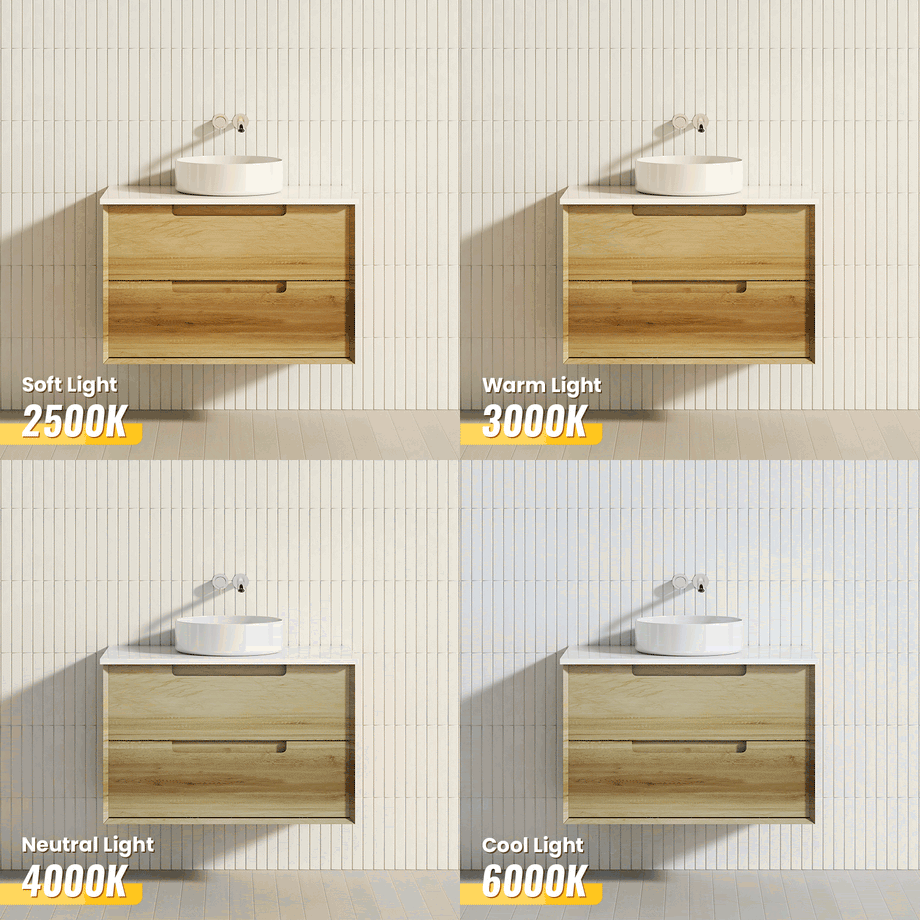
Think of the vanity as where your plumbing rough-in meets your style and material choices — the two have to line up. Get them aligned before you buy anything — it'll save a lot of grief down the track. Vanity widths range from 600mm right up to 1800mm, so lock in your plumbing setout before you order. Of all the cabinet materials, PVC handles moisture best. MDF is popular and budget-friendly, though sealed edges and a watertight base are essential — standing water will wreck it otherwise. Plywood cabinetry is a step up in quality and durability, with a realistic lifespan of 15–20 years before any real deterioration sets in.
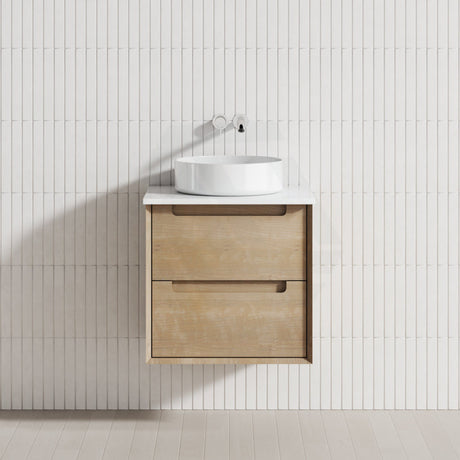
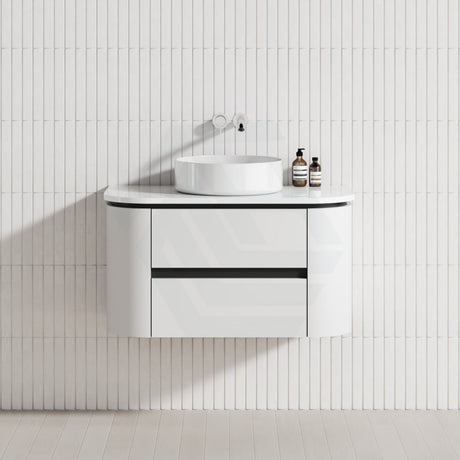
White vanities have stayed a firm favourite across Australia — they work with virtually any tile or colour scheme you throw at them. It's a look that ages well and freshens up easily with a swap of hardware. Smaller bathrooms benefit from a floating bathroom cabinet — the visual lift is real, though solid stud work and plumbing coordination are non-negotiable. Before committing to floating bath cabinets, verify the wall framing can take the load — brackets on their own won't cut it long-term.
Cabinetry and storage eat up a big chunk of the budget, so work from an actual figure rather than a rough guess.

Bathroom Renovation Costs: How to Budget and Plan
Renovations are a moving target, and any quote given without a physical inspection is little more than a guess. In Australia, a small ensuite bathroom renovation cost ranges from $10,000 to $25,000 (HIA Bathroom Renovation Cost Guide 2025), with Sydney and Melbourne sitting at the top end and Adelaide and regional areas below.
Realistic trade cost expectations:
• Licensed plumber (rough-in and fit-out): $2,500–$6,000 (relocation adds cost)
• Bathroom waterproofing: $800–$2,000 for a standard bathroom
• Tiling (labour): $45–$85 per square metre
• Licensed electrician (exhaust fan and lighting): $600–$1,500
• Fixtures and fittings (vanity, toilet, tapware, shower): $2,000–$10,000+
Other cost items to factor in are waterproofing inspections, council permits, and asbestos testing — the last one applies to any home built before 1990. Expect wall reinforcement to add to the bill as well, especially when a floating bathroom cabinet or floating bath cabinets are on the plans. Relocating plumbing is where costs really climb — stick with the existing layout and you'll free up budget for quality fixtures and fittings that'll last.
References
AS 3740:2021 Waterproofing of Domestic Wet Areas, Standards Australia
National Construction Code 2022, ABCB Housing Provisions, Part 10.2 Wet Areas
National Construction Code 2022, ABCB Housing Provisions, Part 10.8 Condensation Management
HIA (Housing Industry Association) — Bathroom Renovation Cost Guide 2025