26 May, 2026
Bath Shower Ideas for Australian Bathrooms
Discover the best bath shower ideas for Australian homes. Smart combo designs that save space and work hard in any Aussie bathroom.

Video Credit: Phoenix Home Remodeling
Why Combining a Bath and Shower Makes Sense in Australian Bathrooms
Picture it: a bathroom that's thoughtfully designed to handle it all. On a lazy Sunday, you're sinking into your bath while the weather's cold; on the other six days of the week, you're jumping into the shower. A bath shower combo makes this the daily reality for an awful lot of Australians, and it makes absolute sense.
Most Australian family homes have only one bathroom to do all the heavy lifting. With an average bathroom size of between 3 m² and 5 m², and a bath length of anywhere from 1500 mm to 1700 mm, it just doesn't make a whole lot of sense to try to have a shower separate to the bath. It's the bath shower combo solution that's most common to Australian homes, both in new builds and renovations, because a bath and shower combo will save you space compared to a separate shower and bath.
In terms of costs, a separate shower and bath wet area means you're paying for two sets of waterproofing, two shower screens, two drain installations and more tiling. By combining the two in one area of the bathroom, you're able to save significantly on materials and labour. When you consider all the tradespeople that have to visit throughout a bathroom reno, you're looking at some significant savings.

Choosing the Right Bath Type for a Shower Combo
Of course, not all baths work with an overhead shower, and this is the first consideration in your bath shower ideas. Baths are generally one of three types: inset (or alcove), back to wall, or freestanding. These make very different considerations in a bath shower combo.
An inset bath sits on three tiled walls, making it relatively easy to add a shower above. The most common types are acrylic (generally the most affordable option) or stone resin (much heavier and more premium), and will cost anything from $312 to $1,184 AUD depending on material and size.
A back to wall bath — where the flat edge of the bath sits flush against the bathroom wall — is in many ways the most popular choice for shower combos in Australian bathrooms right now. It gives you that clean, contemporary profile while still providing a solid wall surface for a screen or shower rail, making it ideal for a shower above bath combo. Broadway and Poseidon both offer excellent back to wall options in acrylic and stone resin, ranging from approximately $938 to $2,085 AUD.
Freestanding baths are a very different scenario. They're gorgeous, no question — but they're not designed for overhead water exposure, and they lack the flat wall side needed to properly anchor a shower screen. If a freestanding bath is calling your name, keep it as a standalone soaking bath rather than attempting a shower combo.

Layout and Sizing Considerations for Bath Shower Setups
Now you know the kind of bath you need, it's time to think about layout and dimensions — because your chosen bath will underperform if the layout hasn't been thought through carefully.
A 1500mm bath is the minimum practical length for adults in a combo setup. A 1700 mm bath is more comfortable and is the most common specification in Australian builds. For alcove and back to wall bath configurations, you should leave at least 750 mm of clear floor space beside the bath for safe entry and exit, in line with AS 1428.1 accessibility clearance guidance.
Showerhead positioning above the bath is typically set at 2000 mm to 2100 mm above the floor substrate, giving adequate clearance for standing comfortably in the bath while showering. Ceiling height matters here because anything under 2400 mm can make a ceiling-mounted overhead showerhead feel cramped. A wall-mounted rail shower is the better option in those situations.
Drain placement is equally important. The bath waste should be positioned at the tap end (the foot end of the bather) to allow efficient draining of shower water. Waterproofing under AS 3740 requires the whole area to be treated as a wet area, meaning waterproofing on adjacent walls must extend at least 150 mm above the top of the bath rim.

Shower Screens, Tapware, and Fittings for Your Bath Shower
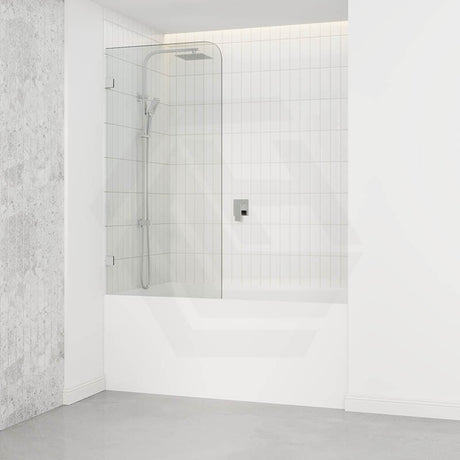
With the layout decided, your fittings are where the fun begins. Bath combo shower screens come in three main styles: fixed panel, hinged, and bi-fold. A fixed panel suits alcove baths with at least one solid wall. Hinged screens open outward on an upright frame and work best for wider shower areas. Bi-fold screens fold inward and suit more compact spaces.
For glass thickness, over bath shower screens should be a minimum of 6 mm toughened glass, with premium frameless options available in 10 mm. All glass must comply with AS/NZS 2208 safety glazing requirements — this cannot be compromised. Covey offers a strong range of frameless and semi-frameless options priced from $130 to $2,550 AUD. Frameless screens in brushed gold and matte black finishes are particularly popular in Australian bathrooms right now.
When it comes to tapware for a bath shower combo, the essential fitting is a wall mixer with a diverter — a single-unit mixer that lets you switch water flow between the showerhead and the bath spout. Meir and Bella Vista both offer a variety of finishes and designs in diverter mixer sets, ranging from $83 to $758 AUD. A twin rail shower set (fixed overhead plus handheld) completes the picture for a highly functional installation.
For freestanding bath tapware — where a freestanding bath is used solely as a soaking bath rather than in a shower combo — a floor-mounted or deck-mounted tapware installation delivers a stunning result. Fienza offers a strong range of freestanding bath tapware options worth exploring.
All tapware must carry WaterMark certification (WaterMark Certification Scheme) and a WELS rating by law. Per AS/NZS 3500.4, hot water at bathroom outlets must not exceed 50°C (AS/NZS 3500.4) — your licensed plumber will ensure this is met during installation.

Installation Tips and Common Mistakes to Avoid
Having the right screens and tapware is only half the job — proper installation is equally critical. Poor installation will result in a bath shower that leaks within months rather than lasting years.
All bath shower combinations must be waterproofed in accordance with AS 3740:2021 (NCC 2022, ABCB Housing Provisions, Part 10.2) and NCC 2022 Part 10.2, which requires:
• Shower walls to be waterproofed to a minimum height of 1800 mm above the floor substrate.
• Adjacent walls to be waterproofed to at least 150 mm above the bath rim.
• Wall-to-floor junctions to include a flashing with a horizontal leg of not less than 40 mm (AS 3740:2021).
This is the job of a licensed waterproofer — not a generalist tiler, and definitely not a DIY weekend project. Cutting corners here means paying for leaks for the lifetime of your bathroom.
With a bath shower combo, waterproofing always happens first, before the bath is fitted. Doing it the other way around is a common and expensive mistake in bathroom renovations. Waterproofing membranes require a minimum curing time of 24 to 48 hours before tiling can begin — rushing this step is another costly error to avoid.
Tapware connections, bath waste installation, and shower mixer fitting must all be completed by a licensed plumber in every Australian state. Typical labour for a bath shower installation runs $800 to $1,800 AUD; waterproofing adds $400 to $900 AUD; screen supply and installation generally falls between $300 and $1,200 AUD depending on screen type; and tapware packages add another $200 to $1,200 AUD. Budget carefully and you won't be caught out mid-project.
Other common mistakes to avoid include insufficient overlap between the screen and bath rim allowing water to escape, showerheads positioned too close to the screen, and failing to account for adequate hot water supply when the bath and shower are used simultaneously. Get these bath shower ideas right from the start, and your bath shower will serve you well every day.
References
National Construction Code 2022, ABCB Housing Provisions, Part 10.2 Wet Areas
AS 3740:2021 Waterproofing of Domestic Wet Areas, Standards Australia
WaterMark Certification Scheme, Australian Building Codes Board
AS/NZS 3500.4 Plumbing and Drainage — Heated Water Services, Standards Australia