01 October, 2026
Tornado Flush Toilet vs Rimless: Which Flush System Wins?
Tornado flush toilet vs rimless explained for Australian renovators. Discover how each system works and which delivers better cleaning and hygiene.

The tornado flush (or cyclonic) is different to the rimless: one describes the action of the flush; the other a bowl shape.
In this article, we'll help you better understand how they work and help you work out what's best for your renovation.
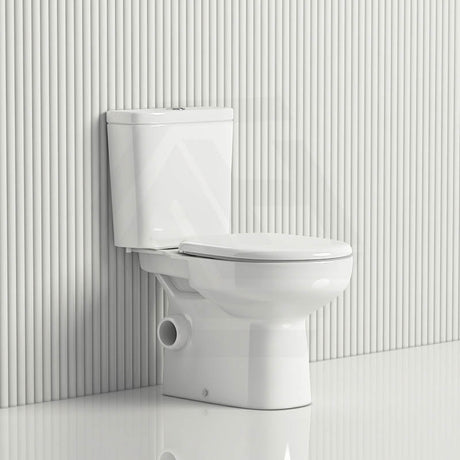
Here's the thing — most people shopping for a new toilet assume tornado flush and rimless are two competing options sitting on opposite ends of the same shelf. They're not. One describes the action of the flush; the other a bowl shape — and honestly, that distinction changes everything about how you choose. A rimless tornado flush toilet stacks both features: cyclonic cleaning below the waterline, plus an open bowl that ditches the hidden rim cavity for good. Prices spanning $298 to $2,128 mean there's a configuration for most budgets — but picking the right one depends on understanding what each term actually means.
Video Credit: Henan Fohome Sanitary Ware Co.,Ltd
Right, So What Even Is a Tornado Flush Toilet?
A tornado flush toilet is designed with two or three angled jets through which water enters the toilet bowl. These jets are built into the vitreous china, so the action cannot be applied to an existing toilet.
The water enters the bowl at these points and is pushed in a circular direction as it makes its way around the bowl — a centrifugal, cyclonic motion that covers the entire circumference in one continuous vortex. Note that tornado flush jets require a minimum mains pressure of 150–200 kPa at the cistern inlet to operate correctly.
Your standard sheet flush just drops water straight down the centre of the bowl. This? Completely different story. Think washing machine drum, not bucket tipped over a drain.

Rimless Toilet — What's the Deal?
A rimless toilet is one where there is no cavity under the rim of the bowl. This makes the toilet easier to clean and prevents any build-up of bacteria or limescale in that hidden space.
The water is introduced at a different point to a conventional toilet. It either drops down in an open channel on the back wall of the bowl or is pushed out of a direct-flush plate into the bowl — sheeting down the interior surface in one clean sweep.
Rimless models sold in Australia must meet WaterMark certification and WELS registration requirements before they can be stocked.

Tornado Flush vs Rimless: Where They Actually Differ
This is where the tornado flush toilet vs rimless comparison gets interesting — and slightly more nuanced than most people expect, because these are two separate product dimensions, not two competing products on the same shelf.
The term tornado flush describes the mechanism — specifically how water enters the bowl and moves around it. Rimless is about bowl shape — the rim cavity's gone entirely. One's about how water moves; the other's about what the bowl looks like. That's the crux of it. The two aren't mutually exclusive.
On water efficiency, both technologies pair with standard dual-flush cisterns rated to AS/NZS 6400:2016. Run the numbers on a 4.5 L full / 3 L reduced flush and the average lands at 3.3 L per flush — that's the threshold for a 4-star WELS rating. Neither system is inherently thirstier than the other — it comes down to the model you pick.
Here in Australia, rimless toilets kick off at around $198, while tornado flush models sit anywhere from $298–$2,128. Both come in S-trap and P-trap configurations — worth a quick chat with your plumber before anything gets ordered.
Don't overlook noise. The cyclonic action in a tornado flush can be a touch louder than a sheet-flush rimless — not dramatic, but worth knowing if the loo backs onto a bedroom wall.

Cleaning Performance: Which System Wins?
Both beat a standard rimmed toilet hands down — they just go about it differently.
Ask where a tornado flush toilet earns its keep and the answer's below the waterline. Spinning jets push water into corners a straight-down flush can't reach. Hard-water areas — regional Queensland, parts of Western Australia — will still see limescale form eventually, though the cyclonic action slows that build-up in a noticeable way.
That hidden rim channel — arguably the worst hygiene trap in any bathroom — vanishes altogether with a rimless toilet. Bacteria and limescale have nowhere to take hold — there's no cavity for them. Brush, wipe, done — cleaning one really is that straightforward.

Rimless Tornado Flush Toilet — What's That Then?
Tornado flush and rimless toilets are not mutually exclusive. As noted above, tornado flush describes the action and rimless describes the shape of the bowl.
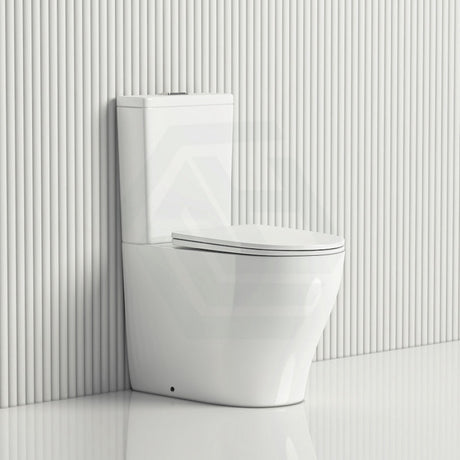
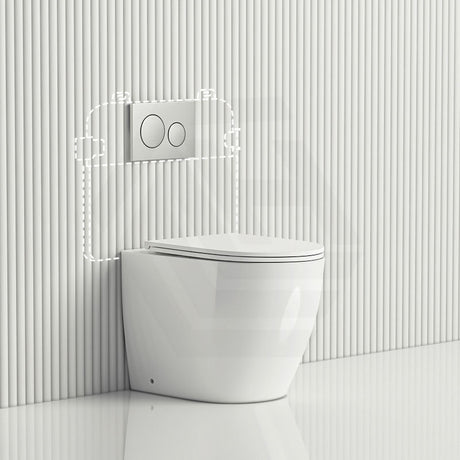
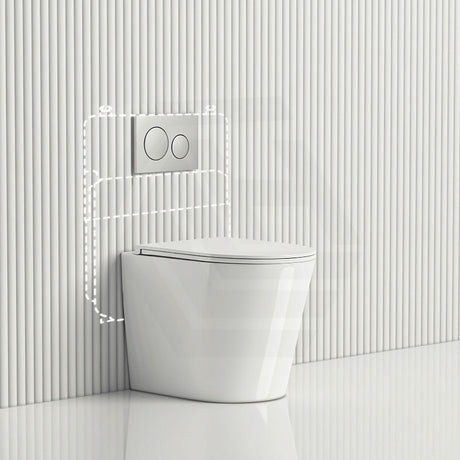
A rimless tornado flush toilet stacks both features: cyclonic cleaning below the waterline, plus an open bowl that ditches the hidden rim cavity for good. Brands like Poseidon, Fienza and Kohler all offer this hybrid configuration, with prices spanning $298 to $2,128.

What Should You Actually Look For?
Most quality options will carry a 4-star WELS rating, meaning they are dual flush with an average water usage of 3.3 L per flush (4.5 L full flush, 3 L reduced flush).
### Price
• Rimless toilets in Australia start from about $198
• Price-wise, tornado flush toilets range from roughly $298 to $2,128
• Rimless tornado flush models land in the same price bracket — check current listings for what's available
What you need and what you've got to spend will drive the choice.

Standards and Compliance
Every dual-flush cistern sold in Australia must meet AS/NZS 6400:2016. Under Australian law, a licensed plumber must do the installation, make the connection, and hand over a compliance certificate — that's required under state and territory plumbing licensing rules. WaterMark certification and WELS registration — confirm both before you hand over any money.
### Set-Out
S-trap toilets carry a standard set-out of 180 mm, measured from the finished wall to the floor outlet centre. For P-trap toilets, the standard set-out is 185 mm, measured from the finished floor to the centre of the wall outlet. Have your licensed plumber verify the set-out measurement well before the suite arrives on site.

Tornado Flush vs Rimless: The Bottom Line
Stack any of the three — tornado flush, rimless, or the hybrid — against a conventional toilet and you'll get better flushing and cleaner results.
If hygiene is the priority, rimless is hard to beat — there's nowhere for mould or limescale to hide, and cleaning is dead simple. When it comes to tornado flush toilet vs rimless, it really is a matter of priorities — cyclonic action covers the entire pan below the waterline and keeps limescale build-up in check. Want both? Want both in the one suite? That's exactly what the rimless tornado flush delivers.
References
AS/NZS 6400:2016 Water efficient products — Rating and labelling (incorporating Amendment No. 1:2022 and Amendment No. 2:2022), Standards Australia
State and territory plumbing licensing authorities (Building and Plumbing Commission Victoria; Building Commission NSW / NSW Fair Trading; Queensland Building and Construction Commission; Plumbers Licensing Board Western Australia (administered by Building and Energy); Consumer, Building and Occupational Services Tasmania; Access Canberra ACT; Office of the Technical Regulator / Consumer and Business Services South Australia; Plumbers and Drainers Licensing Board Northern Territory)
AS/NZS 3500.2:2025 Plumbing and Drainage — Sanitary Plumbing and Drainage, Standards Australia
WaterMark Certification Scheme, Australian Building Codes Board