

19 May, 2026
How to Choose a Bathtub: Material, Size and Style Guide
Learn how to choose a bathtub that suits your space and budget. Our Australian guide covers materials, sizes and styles to help you decide.

Video Credit: RemodelMedia
When you step into your bathroom after a weary day, envisioning a steaming bath that's ready to welcome you, you're actually visualising a plan you've been making for weeks. To start with, you need to know how to choose a bathtub that suits your space, lifestyle, and budget. The selection process might seem daunting due to the vast choice you'll have on the Australian market, but by proceeding slowly and methodically, you're bound to come up with the best option in no time.
Bathtub Materials: Properties, Costs and Trade-Offs
You'll want to start with the material of your new bathtub, because that one decision dictates everything from the installation process and cost to your bathing routine 15 years later. In Australian bathrooms, acrylic is the most popular choice of bathtub material for a range of reasons: it is relatively lightweight, easy to repair if it gets scratched, offers warm-to-the-touch water and is available in many different styles. To make it stronger and more robust (yet still lightweight), an additional fibreglass backing is added to the acrylic tub. Prices start as low as $312 for drop-in bathtubs. Just because it is affordable, it doesn't mean that you can't have a high-quality product.
Cast iron, on the other hand, is extremely heavy — often 100 kg or more — and usually requires you to strengthen the floor to bear its weight. A huge plus with cast iron and stone resin is that the bath retains heat so that you can get the most from your water. The costs associated with cast iron and stone resin include the price of the unit itself and also the labour involved with installation. Stone resin is similar to cast iron in that it is dense, heavy, warm and luxurious but requires careful consideration in terms of floor load. For the most budget-friendly option, fibreglass bathtubs are the lightest, but do not last as long as other bathtub materials and fade over time. These options are more suitable for rental properties or guest bathrooms that won't get as much use. Regardless of the choice you make, any fittings and plumbing must carry WaterMark certification (WaterMark Certification Scheme). This is a legal requirement in Australia. Don't use fittings with no certification as they may not be accepted by your local plumbing authority — that would be very expensive indeed.

Bathtub Sizes and Dimensions: What Fits Your Bathroom
Now that you've got your preferred material picked out and have noted which options will require extra structural support for heavy models, it's time to look at bathtub sizes and bathtub dimensions to determine which will fit your specific bathroom. Standard Australian bathtub sizes run from 1400 mm through to 1800 mm in length. For adult bathing, the practical minimum length is generally 1500 mm; however, a 1700 mm bath accommodates most adults comfortably and fits into the majority of standard bathroom recesses. In terms of width, sizes typically run between 700 mm to 800 mm, while the internal depth usually falls between 380 mm to 480 mm, depending on the style chosen.
However, it is not just the footprint of your tub that needs measuring — you also need to measure the dimensions of your recess, including the height of any surrounding walls, and consider the clearance required to transport and place the bath within the bathroom. Under NCC 2022 Livable Housing provisions, a bathroom doorway must have a clear opening of at least 820 mm (NCC 2022, ABCB Housing Provisions, Part 12.2), which can impact the practical delivery and placement of a larger bath. Consider that a 1700 mm bath isn't helpful if you can't get it into the room through the hallways on delivery day. Be sure to measure any doorways, corridors or other obstructions on the path to the bathroom before you order.

Freestanding Bath vs Built-In: Which Style Suits You
Now that you have established the floor dimensions of your bathroom, you need to decide how the bath will be located within the room — and that is where the freestanding bath vs built in question really matters.
A freestanding bath is a striking feature piece. It sits independently on the floor and typically requires positioning of floor waste below or adjacent to the bath, needing a minimum of 1.8 metres of clear floor space (and often more). Plumbing access is more complex since pipework cannot be hidden behind a surrounding wall, and the base requires regular cleaning. Freestanding baths start at approximately $878 and can reach up to $7,000 for premium models. This is not a budget option.
Conversely, built-in baths — specifically drop-in or back-to-wall — are far more practical for smaller bathrooms. A drop-in bath sits within a tiled surround or hob, making waterproofing straightforward and concealing plumbing. Drop-in bath costs start around $312. A back-to-wall bath sits flush against the wall and can only be installed after waterproofing is complete, as required under AS 3740:2021 — waterproofing must be carried out by a licensed waterproofer before installation proceeds.
Labour and material costs for installation vary. A built-in drop-in bath usually costs less in labour than a freestanding installation, which requires a licensed plumber to expose pipework or floor-mount the mixer tap. All plumbing connections for any bath style must be performed by a licensed plumber.

Choosing the Right Bathtub Shape and Configuration
Once you've settled on the freestanding-versus-built-in distinction, you then need to decide the shape of your bath. If you have an oddly shaped bathroom or specific therapeutic needs, this decision may be a little more complex. Understanding how to choose a bathtub shape that complements your floor plan is just as important as selecting the right material or size.
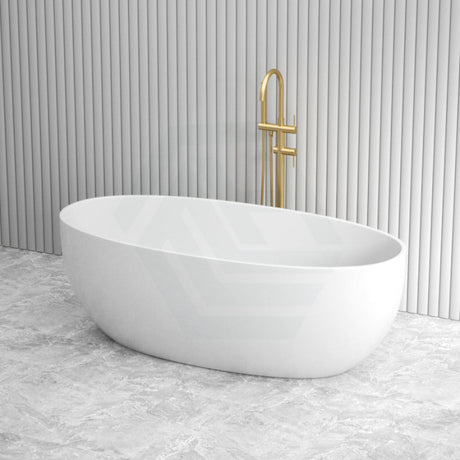
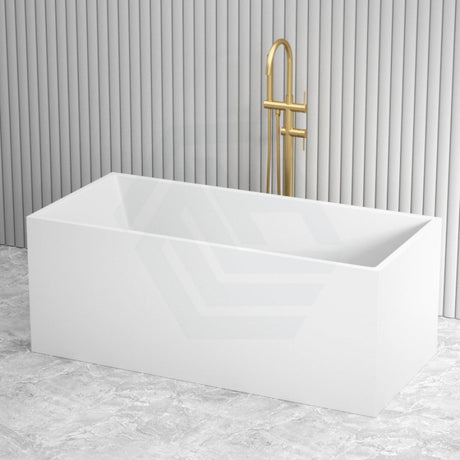
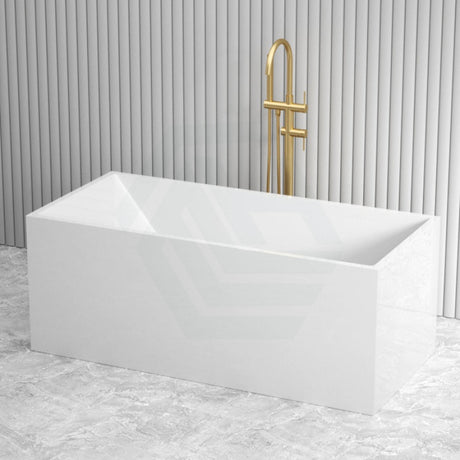
Rectangular baths are the most common and fit perfectly inside most alcoves while offering a larger internal bathing area relative to their overall footprint. Oval freestanding baths are primarily a design choice and, despite being beautiful sculptural pieces, will have a smaller internal bathing area compared to their external dimensions.
A corner spa bath can transform an unused corner into the most indulgent area of a home, with prices ranging from approximately $1,598 to $4,988 depending on jet configuration. Spa baths require a licensed plumber for all plumbing connections and a licensed electrician for jet pump wiring in accordance with AS/NZS 3000 electrical requirements for wet areas — include these costs when budgeting.
Oval drop-in baths and rectangular spa baths can also deliver the benefits of a spa in a more traditional footprint, with prices starting from $1,458.

Common Mistakes to Avoid When Buying a Bathtub
Once you've decided on the material, size, configuration and shape of your bath, it's important to know what to watch out for before you place an order. Knowing how to choose a bathtub correctly means avoiding the pitfalls that catch many renovators off guard.
The most common mistake is buying a bath without checking whether the rough-in plumbing positions will align. With a fixed waste and water supply, any changes will incur additional licensed plumber hours — so ensure you select a bath compatible with your existing floor waste position, or budget to have it repositioned.
Also check whether your floor can bear the weight of the bath you're considering. Cast iron or stone resin baths can exceed 150 kg before water and a person are added, and a standard timber frame structure will likely require reinforcement — confirm this with a qualified builder prior to purchasing.
Bathrooms are often compact, and 1400mm baths can fit a space far better than a standard 1700 mm model. The right bath length is the one that works for your space, not the longest available.
Finally, confirm that all tapware and fittings carry WaterMark certification as required under NCC 2022, and check whether your chosen bath includes a pop-up waste and overflow, as these are not included on all models. A thorough understanding of what you need before ordering will make your reno far smoother.
References
WaterMark Certification Scheme, Australian Building Codes Board
National Construction Code 2022, ABCB Housing Provisions, Part 12.2 Livable Housing
AS 3740:2021 Waterproofing of Domestic Wet Areas, Standards Australia
AS/NZS 3000:2018 Electrical Installations (Wiring Rules), Standards Australia
National Construction Code 2022, ABCB Housing Provisions, Part 10.2 Wet Areas