14 July, 2026
How to Clean the Toilet Bowl with Stains
Learn how to clean the toilet bowl with stains — rust rings, limescale, and black mould — using the right products and proven techniques.

Let's be honest: your toilet bowl is the least-appealing surface in the bathroom — at least until it gets filthy. Everyone knows what that looks like: brown rings around the waterline, or a trail of orange rust stubbornly refusing to budge after weeks of scrubbing. We've all seen this.
So knowing how to clean the toilet bowl with stains properly means you won't have to endure hours of scrubbing — and it's nowhere near as horrific as just swishing your brush around and slapping a cleaner onto the bowl.
Video Credit: Jonny DIY
Why Toilet Bowl Stains Are Stubborn (and What Causes Them)
Porcelain might look smooth but, microscopically, the surface is porous. Minerals and organic debris along with bacteria seep into those microscopic pores of the porcelain over time and settle down — this is why simply brushing your toilet regularly with a small amount of cleaning product often does little to remove those long-standing stains.
In Australia, there are three main types of toilet stains you should be wary of. The first is limescale: the chalky yellow-brown build-up caused by minerals in hard water, mainly calcium and magnesium. The longer the water is left in, or if there are more droplets dripping inside your toilet bowl, the greater the limescale will build up (this is also a major issue when you rely on bore water). The second is rust, mainly from bore water that contains iron, or the corrosion from ageing metallic items in your cistern. The third is mould, which comes in black or pale grey-pink patches and tends to thrive in damp bathrooms with poor airflow. All three stain types look and smell differently, so you will also need different cleaning methods to deal with them.
Now that you know the reasons behind those stubborn stains, we will go over some safety tips and the cleaning supplies that you will need before beginning the process.

What You'll Need: Cleaning Supplies and Safety Tips
For most stains, you shouldn't need any special supplies. For the vast majority of toilet stains you will encounter, you will need nothing more than white vinegar, bicarbonate of soda, citric acid powder ($3–$5 for a 250g pack in the baking aisles of Coles or Woolworths) or a store-bought limescale remover like CLR, and a decent toilet brush, a pumice stone for mineral deposits, along with rubber gloves (and safety glasses if you plan on using some stronger cleaning agents).
One crucial tip: never combine bleach with any cleaning agents that are acidic like vinegar or limescale removers, as it will produce chlorine gas that poses a danger to your health. Use one or the other, ensure proper ventilation by leaving a window open and the exhaust fan on, and you should be fine.
Having got that straight, here is a step-by-step guide on how to tackle that stained toilet bowl.

How to Clean a Toilet Bowl with Stains: The Method
First, try to bring the water level down (this can be done by turning off your toilet water supply — it is usually behind the wall or beside the toilet suite, then flushing) so you expose the entire surface that you are going to be cleaning, and avoid diluting the cleaning product you are about to use.
Now simply apply the cleaner liberally along the inside of the bowl, under the rim included since both limescale and mould love to hide there. An angled bottle nozzle aids the process here. Leave it to sit — at least 10 minutes for light staining, up to 30 minutes for anything heavier. Do not skip this step.
Next, scrub with the brush for general staining, and use a pumice stone (always wetted first) for the mineral deposits near the waterline. Use firm pressure for the best results; frantic scrubbing can wear down the glaze over time, resulting in even more stains. Flush, check, and re-scrub if needed.
Most general stains can be treated with this simple process, but some stain types require a more targeted treatment — below we cover how to deal with specific types of staining, such as rust rings, limescale, and black mould.

Treating Rust Rings, Limescale, and Black Mould
To remove limescale staining, citric acid is the best choice: simply dissolve 100g into 500mL warm water, apply it to the stained area, and allow it to sit for 30 to 60 minutes before scrubbing. A cleaner such as CLR, available at hardware and home improvement stores, can be used in the same manner. Rust rings can be removed using a cleaner based on oxalic acid, or by gently working a wetted pumice stone back and forth over the stain to remove the iron-oxide deposit without damaging the glaze.
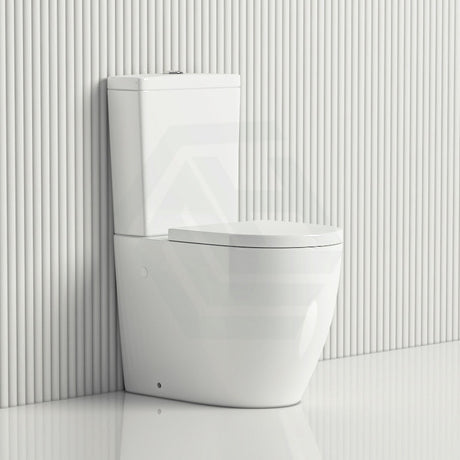
Black mould can generally be removed using bleach diluted at a 1:10 ratio of bleach to water. Apply it to the area and leave it to sit for 15 to 20 minutes before scrubbing. Be aware that a back to wall toilet suite with a concealed cistern can present access challenges when cleaning under the rim due to the bowl's contours, so select a small cleaning brush or an angled cleaner.
If the bowl starts to stain again within a week or so of cleaning, it is worth having a licensed plumber investigate, as it may indicate a plumbing fault.

Keeping Your Toilet Stain-Free: Maintenance and Toilet Parts to Check
To prevent most general staining, wash your toilet bowl at least once a week with a mild toilet cleanser. Once a month, pour 250mL of white vinegar into the bowl and leave it overnight before flushing in the morning. This helps remove calcium, iron, and magnesium deposits before they bond with the glaze.
It is also worth checking your lavatory cisterns once a month for slow leaks from a malfunctioning inlet valve or flush washer. If water trickles into the bowl consistently, the mineralised water will cause staining from calcium and magnesium. Listen for a faint hissing noise, or check the water level in the bowl when the toilet is not in use. If your TDS (total dissolved solids) reading exceeds 300 mg/L — measurable with a test kit available for under $20 at aquarium shops or hardware stores — it is worth discussing a water softener with a licensed plumber.
When sourcing replacement toilet bowl parts such as inlet valves and washers, check your local bathroom supplier. However, any plumbing work involving disconnecting the water supply, removing the pan, or installing new toilets must be carried out by a licensed plumber, in accordance with all state and territory plumbing licensing legislation. All toilets sold in Australia must comply with the Water Efficiency Labelling and Standards (WELS) scheme and AS/NZS 6400:2016; when replacing, ensure the toilet and its parts comply with AS/NZS 3500.2:2025.
Now you know how to clean the toilet bowl with stains, simply follow the above maintenance tips and understand how your cistern components work so that staining doesn't take hold in the first place.
References
State and territory plumbing licensing authorities (Building and Plumbing Commission Victoria; Building Commission NSW / NSW Fair Trading; Queensland Building and Construction Commission; Plumbers Licensing Board Western Australia (administered by Building and Energy); Consumer, Building and Occupational Services Tasmania; Access Canberra ACT; Office of the Technical Regulator / Consumer and Business Services South Australia; Plumbers and Drainers Licensing Board Northern Territory)
AS/NZS 6400:2016 Water efficient products — Rating and labelling (incorporating Amendment No. 1:2022 and Amendment No. 2:2022), Standards Australia
AS/NZS 3500.2:2025 Plumbing and Drainage — Sanitary Plumbing and Drainage, Standards Australia