04 June, 2026
Small Toilet Room Ideas for Australian Bathrooms
Discover practical small toilet room ideas for Australian homes. Get design tips on layouts, space-saving fixtures, and NCC compliance.

Video Credit: Omni Home Ideas
Why Small Toilet Rooms Need a Different Design Approach
The challenge of designing a toilet room, and indeed the fun that can come from it, is that you can't mess around with a lot of things. In full bathrooms, you can generally do all sorts of different things to the walls and floor, but that is not the case for a separate WC or powder room, which is usually just a small room dedicated to toileting. These standalone toilet rooms typically range between 0.9 m × 1.2 m and 1.2 m × 1.5 m in size.
When planning a small room, everything from door swings to wall protrusions becomes important. The typical toilet room planning regulations that exist won't work in a small toilet room. The National Construction Code's Livable Housing Design Standard states there must be a clear circulation space of 1,200 mm by 900 mm (NCC 2025, ABCB Livable Housing Design Standard) measured from the front edge of the toilet pan, and the width between finished wall surfaces either side of the pan must be no less than 900 mm. These minimum thresholds shape every decision that follows, so it is important to make them early in the design process.
The best small toilet room ideas start not with aesthetics, but with a clear understanding of what the space must do before it can look beautiful.

Space-Saving Layouts and Dimension Guidelines
If you understand the clearances, the next step is deciding on a layout and a door that will suit those clearances, regardless of how beautifully designed the fixtures or fittings are.
Single-wall and corner-entry are the most common configurations for toilet rooms in Australian homes. In a single-wall layout, the door will be opposite the toilet. In a corner-entry layout, the toilet is located either diagonally or along the wall adjacent to the door. Single-wall layouts are easy to plumb, as most S-trap setouts sit 100–120 mm from the finished wall, while P-trap locations (which you might encounter in an apartment or renovation) sit at approximately 185 mm from the finished wall. Make sure you get this right before tiling commences, or it will be costly to change later.
Another thing to remember when designing small rooms is the door opening, as an inward-opening door will use up almost 30 per cent of the available clear space if the room is 900 mm wide. Pocket doors are space-saving, as you won't have a swing to account for when considering clearance space. Outward-opening doors are also an option, as long as you have clearance in the hallway. The Livable Housing Design Standard also states that internal doorways leading into the sanitary compartment need a minimum clear opening width of 820 mm. Select your door carefully from the start, and plan around the tightest part of the room.

Fixtures and Fittings That Maximise Floor Space
Once you settle on the layout and rough-in location, picking a fixture is the biggest lever for adding usable floor area. Choosing between a back to wall toilet and a floating toilet can determine how comfortably a small room works.
A back to wall toilet suite hides the cistern in a floor-standing unit placed against the wall. The pan typically projects 680–720 mm from the wall — a noticeable reduction compared to a close-coupled suite where the visible cistern adds considerable depth. Prices range from $185 to $1,199, and installation is more straightforward than a wall-hung alternative. In many small toilet rooms this combination offers the best overall package.
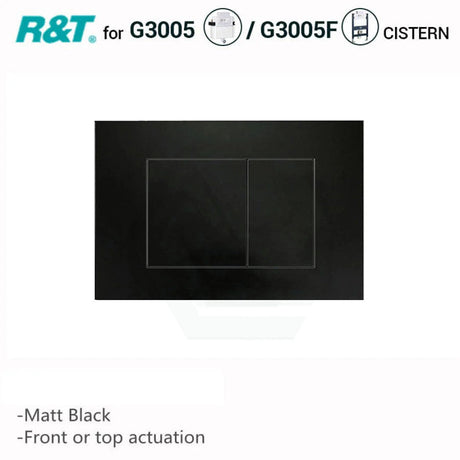
A floating toilet takes space savings a step further. The cistern sits hidden inside the wall — Geberit is the industry benchmark here, with R&T offering a reliable mid-range option — and the pan projects only 490–540 mm from the wall. That 150–200 mm of reclaimed floor space does not sound like much until you are standing in a 0.9 m room and realise it can make a significant difference. Wall-hung toilet pans are available from $303 to $934, and in-wall cistern systems range from $165 to $1,283. Both require a licensed plumber — this is not a DIY job.
Whether you opt for a floating toilet or back to wall toilet, choose a model with WaterMark certification that meets Water Efficiency Labelling and Standards (WELS) requirements — and pay close attention to the star rating. A 4-star (AS/NZS 6400:2016) rated toilet uses just 4.5 litres on a full flush — and ventilation is just as important as water efficiency. Also ensure your exhaust system meets the NCC minimum ventilation requirement of 25 L/s (NCC 2025, ABCB Housing Provisions, Part 10.8).
Consider pan shape too. For rooms with a depth below 1.0 m, a round pan is a better choice than an elongated model.

Storage, Surfaces, and Practical Finishing Choices
Once you have picked the right toilet, the final elements determining usability and cleanability come from the finishes and fittings — including storage.
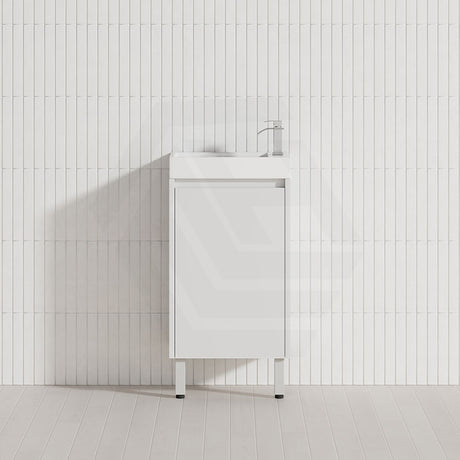
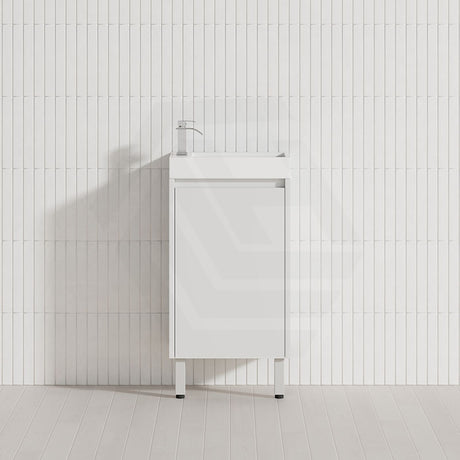
Storage in a small toilet room requires careful thought. A recessed niche cut 100–150 mm into a non-structural wall keeps toilet paper and hand wash accessible without consuming any floor space. An above-toilet slim cabinet is another solid choice. If space allows for a basin, a small bathroom vanity in the 400–500 mm width range — wall-hung styles are ideal here, as they create the appearance of more floor space — provides storage and hand washing in one compact unit. PVC vanities are worth recommending in this context as, unlike MDF, they won't be affected by moisture over time.
Surface finishes can make a bigger impact than you might think. Lighter-coloured walls in waterproof paint or large-format wall tiles will make the room feel larger rather than claustrophobic. For floors, 200 × 200 mm format tiles read as visually larger in a small room; large-format floor tiles with wide grout lines tend not to work as well. Porcelain is the material of choice for small-space bathroom flooring — it has low porosity, good durability, and comes in matte finishes that meet slip requirements under AS 4586. In a smaller space, grout lines become part of the overall design, so keep them subtle.

Putting It All Together: Product Selection and Budgeting
Now that you've identified all the components, it's a good time to put a realistic budget together so you're not surprised when the bill arrives from your plumber, tiler, and others.
A straightforward small toilet room renovation with a back-to-wall suite, painted walls, and simple accessories will typically cost $2,500 to $3,500, depending on your state and existing plumbing configuration. A wall-hung toilet with an in-wall cistern, full porcelain tiling, a compact vanity, and a pocket door will sit closer to $5,500 to $6,500. Plumbing labour for fixture installation and rough-in generally runs $800 to $1,500, and tiling labour for a room this size is typically $600 to $1,200 depending on tile size and wall coverage.
Where to spend and where to save? Invest in the toilet suite and any in-wall cistern system — these are permanent fixtures that influence long-term liveability. Accessories such as a toilet roll holder, robe hook, and towel rail can be purchased as a matched-finish set for around $200 to $800, and a coordinated finish makes a complete look far easier to achieve. If you're adding a basin to an existing toilet-only room, budget an additional $400 to $800 for the extra plumbing work.
Avoid the common mistake of selecting a pan that doesn't suit your rough-in, or specifying non-WaterMark fittings. These small toilet room ideas pay off well beyond the reno itself — practical decisions that make the room feel considered rather than compromised.
References
National Construction Code 2025, ABCB Livable Housing Design Standard, Part 3 Internal doors and corridors and Part 4 Sanitary compartment
National Construction Code 2025, ABCB Housing Provisions, Part 10.8 Condensation management
AS/NZS 6400:2016 Water efficient products — Rating and labelling (incorporating Amendment No. 1:2022 and Amendment No. 2:2022), Standards Australia
AS 4586:2013 Slip resistance classification of new pedestrian surface materials (incorporating Amendment No. 1:2017), Standards Australia
WaterMark Certification Scheme, Australian Building Codes Board