04 June, 2026
Small Toilet Decorating Ideas for Australian Bathrooms
Transform your compact bathroom with small toilet decorating ideas suited to Australian homes. Tips on colour, storage and style.

Video Credit: Decor Home Ideas
Why Small Australian Toilets Need a Dedicated Decorating Strategy
Think about this for a second: you step into a tiny toilet and it feels… spacious. Peaceful. Even pretty. While the National Construction Code has its own ideas about what makes a decent small toilet, the majority of decorating advice simply doesn't work in the typical Australian small toilet room. The NCC mandates the clear width between finished opposing walls in a sanitary compartment is to be no less than 900 mm (NCC 2025, ABCB Housing Provisions, Part 10.8). Plus, there must be a circulation space in front of the pan of no less than 1,200 mm by 900 mm. It's hard to make a lot of changes, but in the usual small toilet, the cistern is large, the hinged door opens into the room and eats into the necessary clear space, and the vanity is big and also eats into the room. Getting ventilation right is just as important as the spatial constraints above, and it's another area where the code sets a clear baseline.ilation — the NCC also sets minimum exhaust airflow requirements for sanitary compartments.
A further overlooked issue is ventilation. The NCC states that an exhaust system for a sanitary compartment must provide a minimum flow rate of 25 L/s, so make sure your exhaust fan is planned for the correct place, otherwise it's a mouldy set of tiles come next summer. The best small toilet decorating ideas start with getting specifications correct first and aesthetic appearance second, but when you have that done the decorating is actually quite fun.

Space-Saving Layouts and Sizing Specs for Compact Toilet Rooms
So, given that, the first port of call is the floor plan itself — getting the measurements and layout right before you choose any single fitting, fixture or finish. Think about the toilet pan being installed, which typically projects 700–750 mm from the wall to the very front of the pan, and you're using almost the full 1,200 mm floor depth in your small toilet. Add to this, a standard hinged door opening into the room will take up a 700–800 mm swing arc, which in a small toilet of 900 mm width will easily clip the toilet suite.
The one major change you can make to layout is to install a sliding or pocket door. A pocket door will generally cost $400–$800, depending on wall construction and finish, to supply and install. However, it will give you back 150–200 mm of floor space and make the room feel significantly bigger — though any door replacement does need to meet minimum code requirements. For reference, the NCC Livable Housing Design Standard states that the clear opening width of any internal doorway leading to a sanitary compartment is to be not less than 820 mm (NCC 2025, ABCB Livable Housing Design Standard), so this is an upgrade you need to be mindful of. It's also possible to move the toilet pan from a central position to one adjacent to the corner of your small toilet, opening up the entire entry area. This is something you should always employ a licensed plumber to complete as it changes the position of the S-trap or P-trap setout.

Colour, Tile, and Surface Material Choices That Work in Tight Spaces
So with the layout fixed, we have to look at the surfaces: the tiles, paint and finishes that make that space feel larger or smaller. It's important to look at large-format tiles like 600×600 mm or even 600×1,200 mm, as smaller mosaics can make a small room look busier with more grout lines. Large tiles with the least possible amount of grout will look much nicer and make a small room feel larger. Ceramic tiles start from around $30 per square metre, porcelain from approximately $55 per square metre, and stone-look porcelain from around $90 per square metre. Porcelain is the more pragmatic option for humid Australian toilet rooms — denser, less porous, and easier to maintain.
When it comes to floor tiles, it's worth keeping slip resistance front of mind — especially in a room that sees regular moisture. Industry guidance recommends a P3 rating (AS 4586:2013) or higher for residential bathroom floors per AS 4586:2013 and HB 198:2014, and many P3-rated matte floor tiles are available in porcelain. Matte also tends to show fewer water spots and scuff marks than polished tiles.
A satin or semi-gloss paint finish provides some reflectivity without being too shiny. White, soft stone, or pale shades of green and blue are practical and easy to keep clean. Tiling from the floor up can visually increase the height of the room, particularly if done in vertical stacks. To achieve a uniform result rather than a busy look, match the tile and grout colours.

Fixture Selection: Back-to-Wall and Floating Toilet Options
A smaller toilet room can make the most of a more compact fixture, and choosing the right toilet suite can also free up floor space.
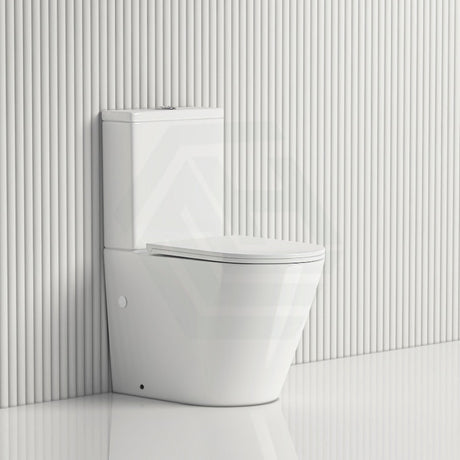
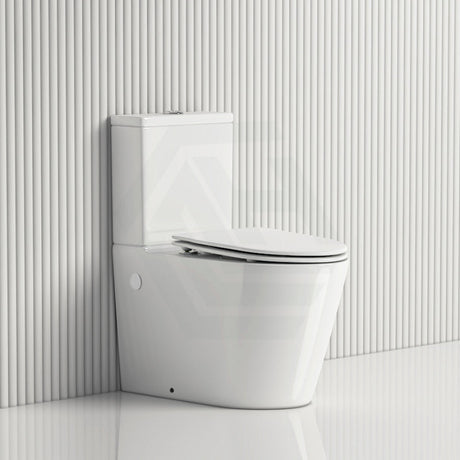
A back to wall toilet suite incorporates a cistern hidden behind a shroud which fits against the wall, achieving a streamlined finish. Back to wall toilet suites range from $185 to $1,199. The shroud sits on the ground and a licensed plumber can install the suite once the rough-in point is in place.
A floating toilet, also known as a wall-hung pan, is raised off the floor and fixed to a concealed steel in-wall frame set back at least 150 mm into the cavity wall. A floating toilet recovers 150–200 mm of clear floor space, which also makes cleaning underneath much easier. Wall-hung pans range from $303 to $934, and in-wall cisterns from $165 to $1,283. In-wall toilets are more complex to install and a licensed plumber is required to undertake the work. Any toilet suite used should be WaterMark certified and carry a minimum 4-star WELS rating, delivering a full flush of 4.5 L and a half flush of 3 L.

Narrow Vanity and Accessories
With the toilet suite and floor space sorted, look next at storage and decorative finishing. Often the best option for a small toilet room is a narrow vanity, and these small toilet decorating ideas extend naturally into accessory choices too.
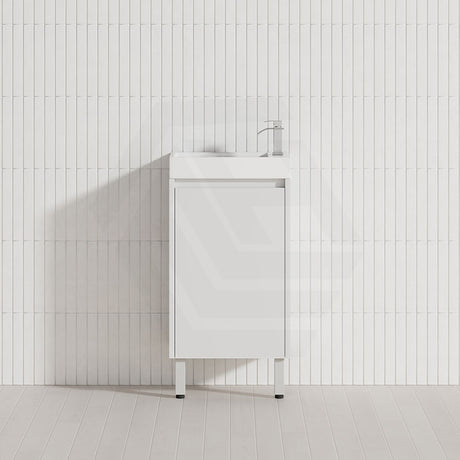
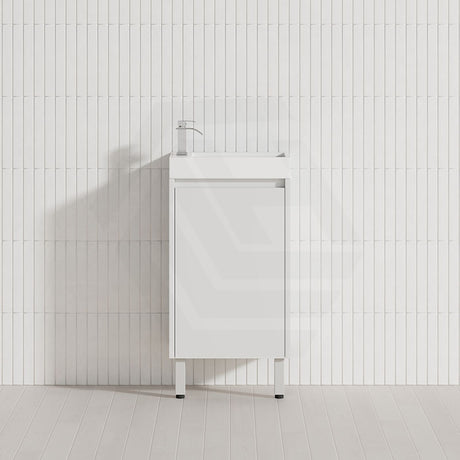
A standard vanity is 460–500 mm deep, leaving just over 400 mm of floor space in a 900 mm wide room. A narrow vanity is 300–400 mm deep, and a wall-hung narrow vanity takes up even less space while providing storage below. Budget PVC narrow vanity options start from $300. Solid timber or quality plywood options are available from Aulic and CETO for a more luxurious finish, and need to be suitably sealed and protected from water damage.
LED shaving cabinets ($390–$1,096) hardwired to the wall require a licensed electrician, but they eliminate the need for separate mirror, shelf, and light fitting. For shelves, try to position them between the studs to reduce how far they protrude from the wall. For other accessories such as towel rails, toilet paper holders, and robe hooks, stick to one metal finish — brushed nickel, chrome, or matte black — to provide a cohesive look and add sophistication to your small toilet decorating ideas.
References
National Construction Code 2025, ABCB Housing Provisions, Part 10.8 Condensation management
National Construction Code 2025, ABCB Livable Housing Design Standard, Part 3 Internal doors and corridors and Part 4 Sanitary compartment
AS 4586:2013 Slip resistance classification of new pedestrian surface materials (incorporating Amendment No. 1:2017), Standards Australia
WaterMark Certification Scheme, Australian Building Codes Board