28 August, 2026
Outdoor Toilet Designs: Smart Ideas for Aussie Backyards
Explore outdoor toilet designs for Australian backyards. From materials and sizing to compliance, find smart ideas for a durable outdoor bathroom.

Every time a guest tracks pool water or grass clippings through your back door, the case for a dedicated outdoor toilet grows stronger. Function comes first here — the layout, materials, and compliance requirements must be resolved before aesthetics enter the conversation. Rendered masonry or brick is the most durable option at $180 to $250 per m², while fibre cement sheet cladding offers a leaner entry point at $60 to $90 per m², and treated hardwood or composite timber sits comfortably in between. Getting the planning, sizing, and construction sequence right is what separates a well-executed outdoor bathroom from an expensive headache.
Video Credit: All About IDEAS
Why Aussie Backyards Need a Dedicated Outdoor Toilet
Our backyards are places to be enjoyed – hosting pool parties, relaxing in the afternoon sun, and hanging out late into the night during social gatherings. Given the extent to which we use our outdoor living spaces, outdoor toilet designs have to accommodate this fact.
Basically, every time a guest goes to the toilet inside, they're bringing outside contaminants such as water, grass clippings, and sunscreen inside. If you have a pool, granny flat, or large outdoor entertaining area, an outdoor toilet becomes essential. I've worked on a lot of display homes that have outdoor bathrooms. Visitors always ask about the outdoor toilet, and every single person says they love them.
The Australian climate can affect outdoor installations. The sun is tough on materials, the sea air eats away at metal parts, and the heat causes issues with outdoor plumbing. These are all key considerations when deciding what kind of outdoor dunny to install.

Planning Your Outdoor Toilet: Layout, Sizing, and Compliance
Now that you know why an outdoor toilet might be useful, you need to figure out its dimensions, placement, and compliance requirements.
The NCC 2025 Livable Housing Design Standard stipulates that a separate sanitary compartment must have a clear internal width of no less than 900 mm (NCC 2025, ABCB Livable Housing Design Standard) measured between finished wall surfaces. The minimum required circulation space must be 1200 mm by 900 mm, measured from the front edge of the toilet pan. The access doorway must have a clear opening width of no less than 820 mm. These are the minimum acceptable measurements, but it's up to your licensed builder or certifier to make sure everything meets the code.
Another thing to consider is connecting the new toilet to the sewer system. A licensed plumber must carry out all plumbing work, and they'll provide a compliance certificate when they finish. Plumbing products must also have WaterMark certification. This isn't optional – it's mandatory according to AS/NZS 3500.2:2025. Each council has its own regulations about setback distances from boundaries, so check with your council before settling on a site.

Best Materials and Construction Methods for Outdoor Dunny Builds
After you've figured out the layout and dimensions, and have the necessary approvals, you can move on to the actual construction. There are various options available, depending on budget and maintenance preferences.
| Cladding Material | Cost (Supplied & Installed) | Durability | Maintenance Level |
|---|---|---|---|
| Rendered masonry or brick | $180 to $250 per m² | Most durable; heat-resistant and moisture-proof | Low |
| Treated hardwood or composite timber | $120 to $180 per m² | Good; warmer aesthetic for casual spaces | Moderate; extra care needed in coastal or humid areas |
| Fibre cement sheet cladding | $60 to $90 per m² | Good if correctly primed and painted with exterior paint | Low to moderate |
Rendered masonry or brick is the most durable option at $180 to $250 per m² supplied and installed. This type of construction is robust, heat-resistant, and moisture-proof, and doesn't require much upkeep. Fibre cement sheet cladding is a cheaper option at $60 to $90 per m². It holds up well if it's correctly primed and painted with an exterior paint product. Treated hardwood or composite timber cladding falls in the middle, at $120 to $180 per m². It looks warmer and fits well in casual entertaining spaces. However, it does require a bit more care if you live in a coastal or humid area.
Roofing also needs some consideration. Colorbond is the safe bet, whilst polycarbonate is an acceptable option if natural light is a priority, but will cause heat build-up in north-facing structures. Make sure you provide good ventilation to whatever type of roof you go with. Your floor slab will need a waterproofing membrane system installed by a licensed waterproofer before laying the floor tiles. Not doing so is one of the most common errors in outdoor builds.

Choosing a Toilet Suite for an Outdoor Bathroom
Having decided on the construction of the building, the next step is choosing a toilet suite. This needs to suit the waste outlet, the footprint of the building, and the requirements of the external environment.
The trap type will determine what type of waste outlet your suite will connect to. A p trap toilet connects to a wall outlet with a setout of 185 mm from the finished wall, typical of a slab-on-ground where the waste comes out of the wall. Where the waste comes out of the floor, you'll need an S-trap, with the setout usually being between 100 to 120 mm from the finished wall to the centre of the pipe. Verify this with your plumber before purchasing a suite.
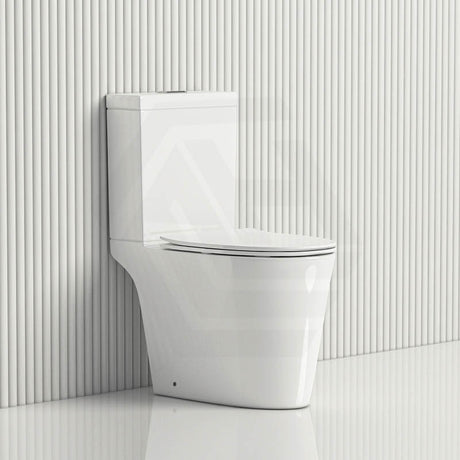
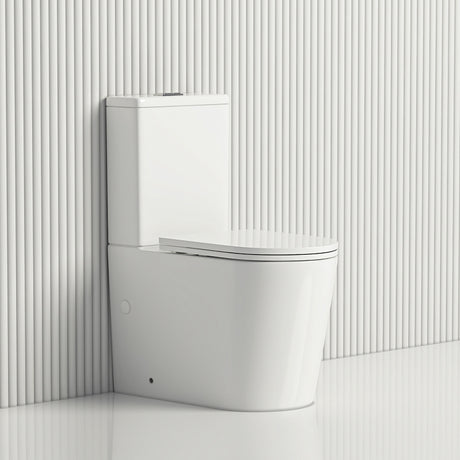
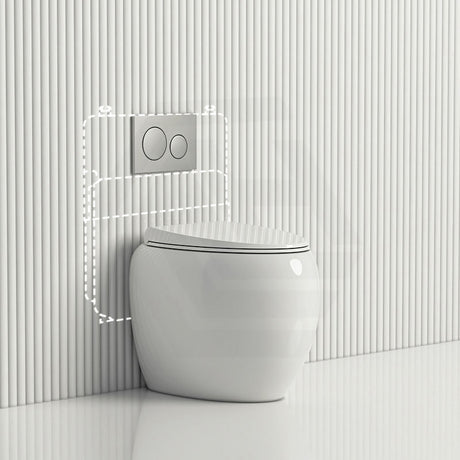
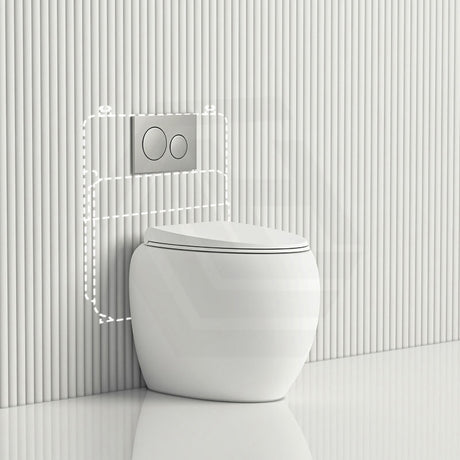
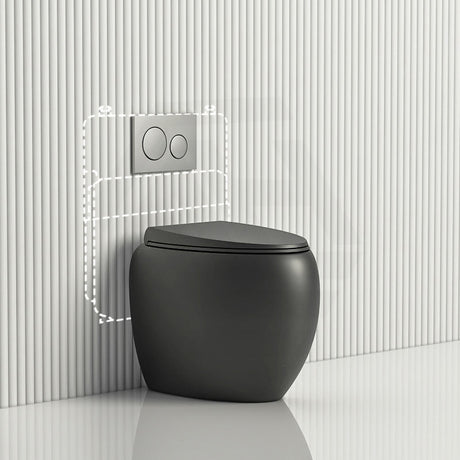
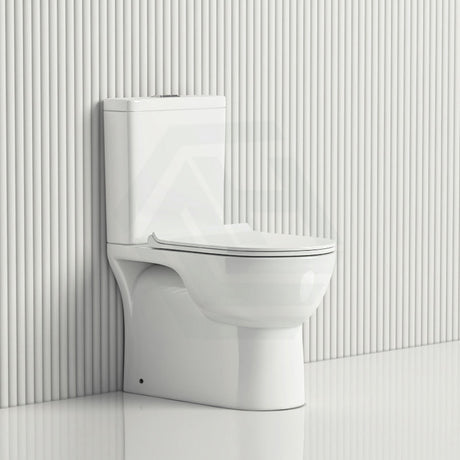
A close coupled toilet suite is usually the best fit for a small outdoor footprint, with the cistern sitting above the pan — no in-wall cistern or concealed pipework required. Close coupled toilet suites generally cost between $300 to $900 AUD. There are many options in the mid-price range from Poseidon and Fienza, with a WELS 4-star rating — 4.5 litres for a full flush and 3 litres for a half flush, which is important if your toilet is serviced from a tank.

Other Considerations and Costs
Once you've chosen your toilet suite, there are a number of other considerations which will impact the performance and longevity of your outdoor toilet designs, as well as the final cost.
It's important that the ventilation meets or exceeds the requirements of AS 1668.2 of 25 litres per second exhaust rate. Any lighting must be a minimum of IP44 for wet areas outdoors. Door hinges, handles, and locks must be 304 grade stainless steel to prevent corrosion — anything less will not last long enough. A wall-hung basin saves valuable floor space in a small building. Select a short basin mixer with a WaterMark to complete your specification.
I highly recommend a rimless toilet for any outdoor build. With no rim channel for water to collect under, the rimless flush system is much easier to clean and more hygienic, particularly if it doesn't get cleaned as often as the main house. Fienza offers a rimless toilet range, which sits in the mid-price bracket.
Costs for a basic outdoor toilet build range from $2,500 and $5,000, including a fibre cement clad structure, basic plumbing, and standard fittings. A mid-range build — for example rendered masonry, a quality suite, fan, and basin — could range between $5,000 to $10,000. More premium outdoor toilet designs using composite timber cladding, designer fixtures, and bespoke finishes will start from $10,000. These are rough guidelines, and prices will depend on the size, location, and materials used.
References
National Construction Code 2025, ABCB Livable Housing Design Standard, Part 3 Internal doors and corridors and Part 4 Sanitary compartment
State and territory plumbing licensing authorities (Building and Plumbing Commission Victoria; Building Commission NSW / NSW Fair Trading; Queensland Building and Construction Commission; Plumbers Licensing Board Western Australia (administered by Building and Energy); Consumer, Building and Occupational Services Tasmania; Access Canberra ACT; Office of the Technical Regulator / Consumer and Business Services South Australia; Plumbers and Drainers Licensing Board Northern Territory)
AS/NZS 3500.2:2025 Plumbing and Drainage — Sanitary Plumbing and Drainage, Standards Australia
National Construction Code 2025, ABCB Housing Provisions, Part 10.2 Wet area waterproofing