05 June, 2026
How Much Would It Cost to Renovate a Bathroom: a Step-by-step Aus
Find out how much would it cost to renovate a bathroom in Australia. Our step-by-step guide covers all the key cost factors.

Video Credit: Built By Becker
What Drives Bathroom Renovation Costs in Australia
Well, the short answer is, it depends. Yes, I am aware that this is a somewhat unsatisfying answer, but there is no escaping the fact that it is absolutely true. Having spent years on the tools before moving into writing, I have seen bathroom renovation project values start at a humble $9,000 and end at a rather costly $45,000 — and both were reasonable given the scope.
The overall cost of the renovation largely depends on the size of the bathroom, how extensive the work is, and whether the existing plumbing remains in place. A cosmetic update will cost you much less than stripping the entire bathroom, taking down walls, ripping up your flooring and redoing the entire layout. Any moving of plumbing, such as relocating fixtures or the shower, requires extra labour and will drive up your renovation price tag.
Labour costs across the various Australian states may also differ. Sydney and Darwin tend to sit at the higher end, while Adelaide and Hobart generally come in lower. The most accurate way to understand your local market is to request quotes from licensed tradespeople.
Another important factor is accessibility. A ground-floor bathroom with easy access to subfloor spaces will be easier and faster to work in than a second-storey bathroom above a finished ceiling. The additional time spent in areas of difficult access drives up labour costs.
Now that we have discussed the key factors that determine renovation prices, I will outline the broad cost brackets for renovating a bathroom in Australia.

Typical Cost Ranges: Budget, Mid-Range and High-End Bathrooms
Generally, Australian bathroom renovations can be broken down into three cost brackets.
Budget renovations typically fall between $8,000 to $15,000. If you are working with a lower budget, you will be restricted to your existing plumbing layout. Mid-market fixtures, ceramic tiles and a PVC vanity are generally the most affordable material choices at this level.
Mid-range renovation costs sit between $15,000 and $25,000. You will be able to afford higher-quality tapware, stone or semi-recessed basins, porcelain tiles and, perhaps, some layout alterations. This is the typical cost range for a full bathroom renovation in Australia.
A high-end bathroom renovation will run from $25,000 to $45,000 and beyond. Expect to pay extra for large-format tiles, heated underfloor heating, frameless glass shower screens, premium vanities and custom joinery. If you are asking how much would it cost to renovate a bathroom at the luxury end, budget generously and add a contingency of at least 15 per cent.
While knowing the broad cost brackets provides a useful starting point, a clearer picture emerges when you break the total down into individual line items.

Step-by-Step Breakdown of Renovation Expenses
Working through a bathroom renovation in sequence, here is roughly what each stage costs:
1. Demolition and waste removal: $500 to $1,500 depending on size and skip hire.
2. Waterproofing and screeding: $50 to $80 per m². This is non-negotiable and must not be attempted as DIY. Under NCC requirements, shower walls must be waterproofed to at least 1,800mm (NCC 2025, ABCB Housing Provisions, Part 10.2) above the floor substrate, and the shower floor must be fully waterproofed. Your waterproofer must be licensed. Compliance can also be demonstrated via AS 3740:2021.
3. Tiling — supply and labour: tile supply runs $35 to $120 per m², with laying labour at $50 to $70 per m².
4. Plumbing rough-in and fit-off: your plumber will charge $80 to $120 per hour. Rough-in and fit-off combined typically represents $2,000 to $5,000 of a standard renovation.
5. Electrical: $80 to $130 per hour. RCD protection is mandatory in wet areas — a licensed electrician is required by law.
6. Vanity and cabinetry: $300 to $2,800 for supply, plus installation.
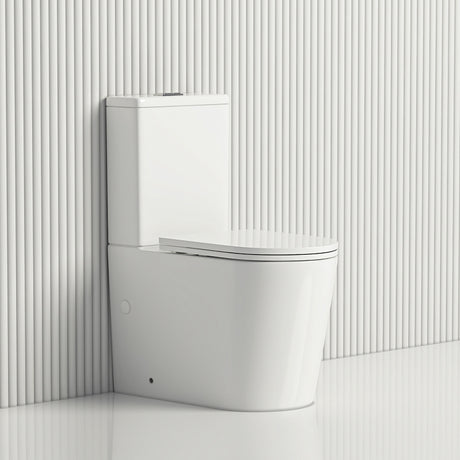
7. Toilet suite: $185 to $1,200 depending on style.
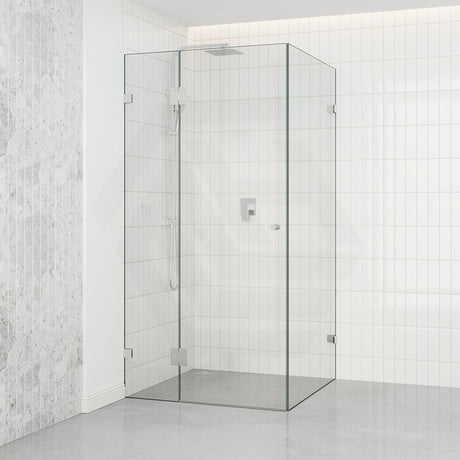
8. Shower screen: $130 to $2,550. 9. Painting and finishing: $400 to $900.
After you have calculated what labour and construction expenses look like, the fixtures you choose will form the next major variable in your costings.

What Fixtures Fit in What Budget
The final cost of your bathroom renovation will heavily depend on your fixture choices, but this can also be affected by the preparatory work your trades need to complete behind the wall for specific fittings.
A wall hung vanity will need noggings or frames built into the wall structure before tiling can occur. This structural work is an additional cost on top of the wall hung vanity itself, which runs $600 to $2,800 for supply.
A back to wall toilet requires a concealed cistern with pipework set into the wall cavity at rough-in stage — this cannot be done once tiles are in. A back to wall toilet suite varies in supply cost from $185 to $800 depending on the chosen suite, with installation costing a little more than a close-coupled unit, though you do get a cleaner, more timeless result.
Lead times on fixtures are also worth considering. If a fitting is on back order it can hold up the entire project. Confirm availability before locking in a start date with your tradie.

How to Save Money Without Cutting Corners
The most effective way to save on renovation costs is to keep the plumbing where it is. Moving a drain by as little as 500mm can add $800 to $1,500 to your budget. If a layout works, leave it as is.
A freestanding bath can also offer good value — you only need a floor-mounted bath mixer and a waste connection, with no tiling required for a bath hob surround. A freestanding bath ranges from $878 up to $7,000 for premium options, and you will need a minimum of 1.8m clear floor space to accommodate one.
To cut costs without cutting corners:
• Source your tiles at end-of-season clearance sales to save 20 to 40 per cent on supply
• Get three quotes for each trade to establish a reliable price range
• Engage a builder or project manager to co-ordinate trades so there is no waiting around between tasks
• Set aside a contingency fund — Ten to fifteen per cent is a sensible allowance, as renovations budgeted to the last dollar rarely go to plan
One place you should never cut costs is licensed compliance work. DIY plumbing, electrical and waterproofing is illegal throughout Australia. Poorly installed work leads to repair costs, insurance complications and issues at sale. When people try to save money on licensed trades and ask how much would it cost to renovate a bathroom, it usually ends up costing more in the long run.
A mid-range renovation typically takes three to four weeks on site from start to finish. Ultimately, the total depends on scope, location and the trades you choose — but with a realistic line-by-line budget, you can still achieve the result you are after.
References
HIA (Housing Industry Association) — Bathroom Renovation Cost Guide (2025 edition)
National Construction Code 2025, ABCB Housing Provisions, Part 10.2 Wet area waterproofing
AS 3740:2021 Waterproofing of Domestic Wet Areas, Standards Australia
State and territory plumbing licensing authorities (Building and Plumbing Commission Victoria; Building Commission NSW / NSW Fair Trading; Queensland Building and Construction Commission; Plumbers Licensing Board Western Australia (administered by Building and Energy); Consumer, Building and Occupational Services Tasmania; Access Canberra ACT; Office of the Technical Regulator / Consumer and Business Services South Australia; Plumbers and Drainers Licensing Board Northern Territory)