08 October, 2026
Rimless vs Tomado (Tornado) Flush Toilets Compared
Rimless vs tomado flush toilets explained for Australian bathrooms. Discover how bowl shape and flush type differ, and which suits your renovation budget.

Choosing a new toilet sounds simple — until you're standing in a showroom comparing terms like "rimless" and "tornado flush" and realising you're not entirely sure what either actually means. Here's the thing: these two terms describe completely different aspects of toilet design, and mixing them up is probably the number one reason most people have problems when choosing a new toilet. Rimless refers to the shape of the bowl (no hidden under-rim cavity), while tornado flush refers to how water is delivered — a swirling vortex that clears waste aggressively. They're not mutually exclusive. And price-wise? A basic rimless toilet can start from as little as $198, while a tornado flush toilet will cost you around $450.
Video Credit: Fienza
What Is A Rimless Toilet And How Does It Flush?
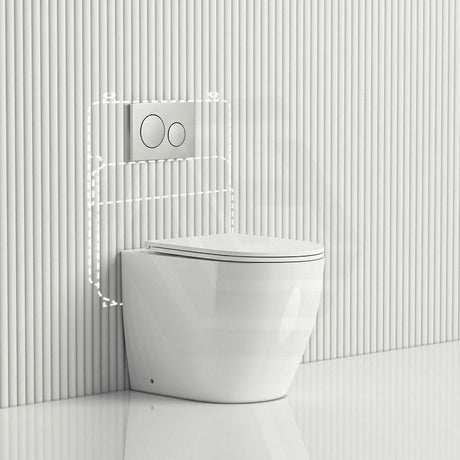
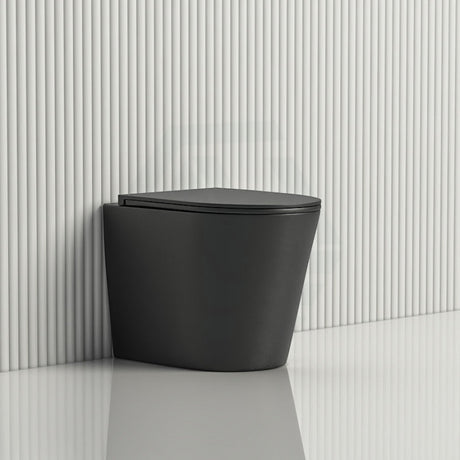
But here is where most people get tripped up: when you hear "rimless," you may assume it refers to the outer rim of the toilet. However, this isn't true. The word rimless is used to describe the bowl itself. It means there is no under-rim cavity.
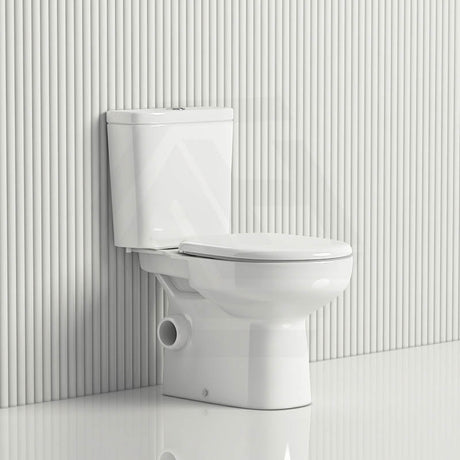
In traditional toilets, water enters the cistern and then flows through this hidden channel underneath the rim, exiting via holes along the sides of the bowl. While it does work, it is a dark, damp space that accumulates limescale, biofilm and bacteria, which are difficult to remove with a quick swipe of a toilet brush and bleach. In fact, the idea of such a space makes me shudder.
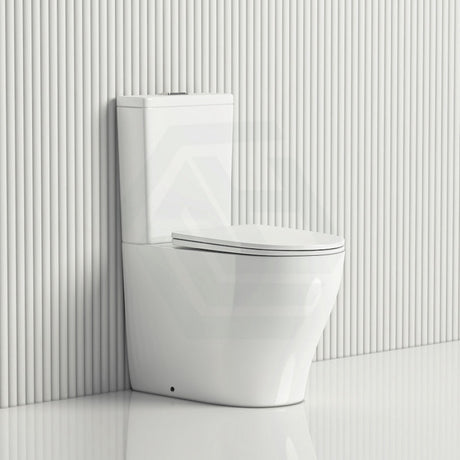
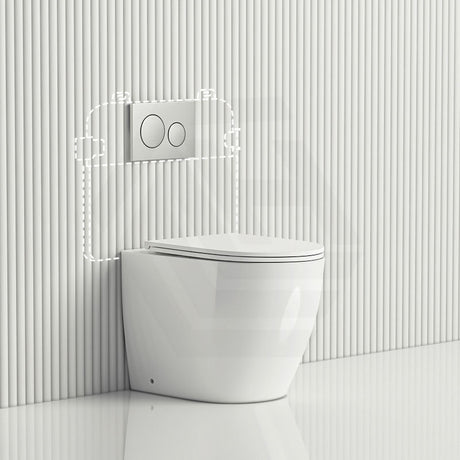
With a rimless bowl, the under-rim cavity is removed. Instead, the bowl is washed by powerful jets of water that spray downwards onto the bowl surface, washing the bowl in one wide wave, leaving no dark corners or crevices to worry about. Most rimless toilets available on the Australian market come standard with a dual flush system. They will have a full flush volume of 4.5 litres and a partial flush of 3 litres, providing an average flush volume of 3.3 litres and a 4-star WELS rating (AS/NZS 6400:2016). This level of water efficiency is crucial not only for cost savings, but also for WELS compliance, which is a requirement for all toilets sold in Australia.

What Is A Tornado Flush Toilet And How Does It Work?
Now that we know what rimless means and how it flushes, let's take a look at the tornado flush, another flushing mechanism that focuses on how the water is delivered and rotates around the bowl, regardless of whether there is a rim or not.
A tornado flush toilet (or "tomado flush," as some manufacturers call it, the same thing with a different spelling) features two or more angled inlet jets built into the bowl. The jets are angled toward each other, which creates a vortex effect and causes the water to swirl around the bowl with significant centrifugal force. While it is satisfying to watch, if that's your sort of thing.
The spinning action helps to cover the entire surface of the bowl, allowing waste to be cleared away more efficiently with every flush. Importantly, a tornado flush toilet isn't necessarily rimless. While some tornado flush toilets do have rims, others feature a vortex flushing mechanism combined with a rimless bowl shape, resulting in a new type of toilet altogether, which we'll examine later.

Rimless vs Tornado Flush: Key Differences Compared
Now that we know what rimless and tornado flush mean, it's easier to compare the two directly, looking at how they are similar, how they are different and which is more important.
Essentially, when comparing rimless vs tomado, we're comparing two aspects of toilet design. Rimless refers to the shape of the bowl, specifically the lack of an under-rim cavity. Tornado flush refers to the flushing method, specifically the use of rotating water flow. The former concerns the shape of the bowl, while the latter deals with the way water is delivered. These are not mutually exclusive concepts, and mixing them up is probably the number one reason most people have problems when choosing a new toilet.
When it comes to cleanliness, a rimless toilet has an advantage in terms of accessibility since you can easily clean the entire interior of the bowl. However, when it comes to cleaning power, the tornado flush wins. The spiralling water vortex will sweep waste away more aggressively than a regular cascade. In terms of noise, a tornado flush will be louder than a typical rimless cascade, which could be a concern if your toilet is next to a bedroom.
In terms of price, a basic rimless toilet can start from as little as $198 at MyHomeware, while a tornado flush toilet will cost you around $450.
Both styles of toilets need to be WaterMark certified and registered for sale under the WELS Standard (AS/NZS 6400:2016).
### Which Flush Type Is Easier to Clean and Maintain?
One thing that most people don't take into account when choosing a new toilet is the amount of effort it takes to keep it clean. On this point, the differences between the two types are far greater than most people expect.
It's a lot easier to clean a rimless toilet. You can use a traditional toilet brush to clean the whole interior of the bowl because there are no hidden recesses or channels to hide dirt and grime.
A tornado flush toilet is slightly more difficult to clean and maintain. The angled jets can accumulate mineral deposits over time, particularly if you live in an area with hard water, such as Queensland, Western Australia and regional NSW. You will need to descale the jets every couple of months using a citric acid cleaner that is safe on ceramic glaze to prevent them from clogging up and losing their effectiveness. It's not too difficult, but it is something to be aware of.

Choosing the Right Toilet for Your Australian Bathroom
Other than ease of cleaning, other factors to consider when buying a new toilet include your budget, bathroom size and Australian standards.
Start by looking at your budget. A tornado flush toilet costs from around $450, while a rimless tornado toilet can start from $298 and go up to $2,128 at MyHomeware. If you want to have the best of both worlds, why not consider a model that combines these two features?
Next, consider the size of your bathroom. For an S-trap toilet, the set-out should be 180 mm from the finished wall to the centre of the floor outlet. For a P-trap toilet, the set-out should be 185 mm from the finished floor to the centre of the wall outlet. Measure first, buy second. Every toilet suite sold in Australia must have WaterMark certification (WaterMark Certification Scheme) and WELS registration. Every toilet suite must be installed by a licensed plumber — it is illegal to install a toilet suite yourself in any state or territory. A straightforward toilet replacement should take one to two hours.
So what's the answer to the question of rimless vs tomado? The best solution is to choose a toilet that combines both technologies — a rimless tornado toilet gives you an open bowl geometry and a powerful vortex flush in one unit.
References
AS/NZS 6400:2016 Water efficient products — Rating and labelling (incorporating Amendment No. 1:2022 and Amendment No. 2:2022), Standards Australia
WaterMark Certification Scheme, Australian Building Codes Board
State and territory plumbing licensing authorities (Building and Plumbing Commission Victoria; Building Commission NSW / NSW Fair Trading; Queensland Building and Construction Commission; Plumbers Licensing Board Western Australia (administered by Building and Energy); Consumer, Building and Occupational Services Tasmania; Access Canberra ACT; Office of the Technical Regulator / Consumer and Business Services South Australia; Plumbers and Drainers Licensing Board Northern Territory)
AS/NZS 3500.2:2025 Plumbing and Drainage — Sanitary Plumbing and Drainage, Standards Australia