

30 March, 2026
Types of Toilets Explained: A Complete Guide for Australian Bathrooms
Explore the main types of toilets in Australia: close-coupled, back-to-wall, wall-hung, plus P trap vs S trap. Learn key differences, flush systems and tips to choose the right toilet for your bathroom.

I never thought I’d spend a Saturday afternoon researching toilets. And yet here we are — because when my partner and I started planning our bathroom renovation, the sheer number of options honestly floored me.
If you’re in the same boat, I’ve done the legwork. Here’s what I’ve learned about the different types of toilets available in Australia, and why the details matter more than you’d think.
What counts as a ‘type’ of toilet?
When most people say, “types of toilets,” they’re picturing the shape. Round or elongated. But the category covers way more ground — the way it flushes, how it connects to your plumbing, where the cistern sits, whether the unit hangs off the wall or sits on the floor.
Getting this wrong means buying something that physically does not fit your bathroom. I’ve spoken with plumbers who say it’s one of the most common renovation mistakes. Someone falls in love with a wall-hung model at a showroom, then discovers their plumbing cannot accommodate it.

Close-coupled, back-to-wall or wall-hung — the big three
These are the main types of toilets you’ll encounter at places like Reece or Bunnings.
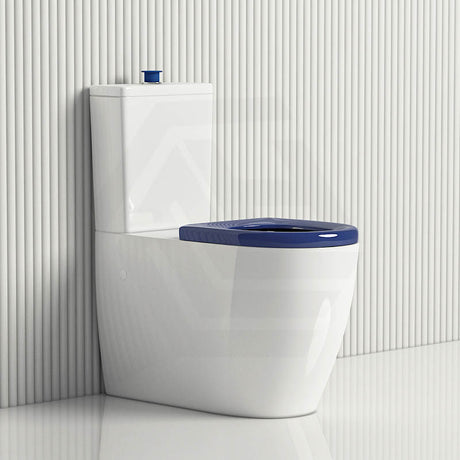
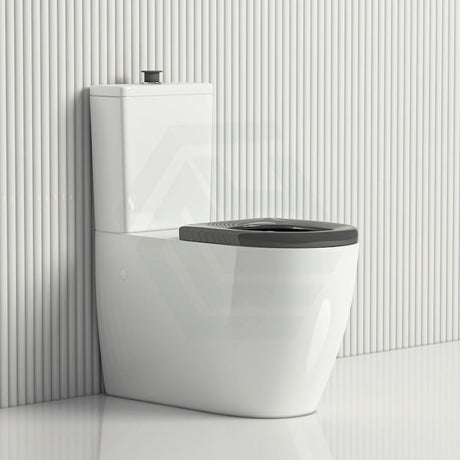
Close-coupled toilets are what most Australians grew up with. The cistern sits directly on top of the bowl, all in one visible unit. Straightforward to install, easy to source replacement parts. If your bathroom is more than fifteen years old, this is probably what you have.
Back-to-wall models hide the cistern behind a panel or inside the wall cavity. Cleaner look — the kind you see in magazine shoots. The trade-off is accessing the cistern for repairs means getting behind that panel.
Wall-hung toilets mount the entire bowl off the floor, supported by a concealed steel frame inside the wall. Brilliant for cleaning. They look stunning, but require specific structural support and in-wall plumbing — not a simple swap if you currently have a floor-mounted unit.

The flush mechanism nobody thinks about (until it breaks)
Australia was one of the first countries to mandate dual flush systems. That two-button setup? Half flush and full flush. We’ve had it since the early 1980s.
But not every toilet flush mechanism is the same. Some use gravity to drop water from the cistern. Others rely on a wash-down method forcing water across the bowl surface. The difference affects cleaning performance and water usage.
Most Australian toilets carry a WELS star rating — more stars means less water per flush. A four-star model uses roughly 4.5 litres on a full flush. Check the rating when comparing. Not glamorous, but it will save you real money over time.

P trap, S trap, and why your plumber keeps asking
This is where people get confused — and I was no exception until a plumber drew me a diagram on the back of an invoice.
Your toilet connects to the sewer through a curved pipe called a trap. That curve holds water, creating a seal that prevents sewer gas from entering your bathroom.
An S trap has the waste pipe going down through the floor — common in older Australian homes. A toilet plumbing diagram shows the pipe curving in an S shape before connecting to the sewer line below.
A p trap toilet has the waste pipe exiting through the wall behind the unit. More common in newer builds where plumbing runs through wall cavities.
You cannot install a P trap on an S trap connection without significant work, and vice versa. Before purchasing, check what trap type your setup uses. Get behind the toilet and look at which direction the waste pipe goes — floor or wall. If you see something labelled as a pee trap toilet, that’s just another way of spelling P trap.

When it’s time to swap — what replacing a toilet actually involves
So you’ve decided the existing toilet has to go. Maybe it keeps running, or maybe you cannot stand that beige bowl from 1993 any longer. Fair enough.
Understanding how to replace a toilet starts with measuring the set-out distance — from the finished wall to the centre of the waste pipe. For P traps, it’s typically around 180mm. For S traps, it varies from 60mm to 200mm. Get this wrong and your new toilet will not line up.
If your current model is a standard close-coupled toilet with tank, replacement is relatively straightforward — disconnect the water, unbolt the old unit, clean the flange, install the new one. Most plumbers can do it in under two hours.
Switching from floor-mounted to wall-hung is a different story. That requires opening the wall, installing a steel frame, rerouting plumbing, then re-tiling. Bigger job, bigger budget. Worth it for the right bathroom, but plan for it properly.