

30 March, 2026
P Trap vs S Trap Toilet: What's the Difference and Which Should You Choose?
P trap vs S trap toilet: what's the difference? Learn how to identify your existing setup, choose the right toilet suite, and avoid costly mistakes when replacing your toilet in Australia.

What Is a Toilet Trap and Why Does It Matter?
The toilet trap is the curved part of the toilet pipe that always has water in it. It prevents sewer gases coming back up into your bathroom. Trust me, if you walk into a bathroom and the trap has dried out, you'll know about it.
But when it comes to P trap vs S trap, the main difference is whether your waste pipe goes out through the floor or through the wall.
A P trap vs S trap toilet is determined by which direction the waste pipe comes out of the toilet. An S trap goes down through the floor, while a P trap goes out through the wall. In Australia, it depends on the age of the house. If your house was built a long time ago (pre-2000s) you’ll most likely have an S trap because the plumbing was done through the floor slab. Anything built recently or renovated will likely have a P trap because the plumbing goes through the wall cavity.

How P Traps and S Traps Actually Work
The reason it’s important is because it affects which toilet suite you can purchase and the ongoing performance of your toilet system. I’ve seen plenty of customers buy a new P trap vs S trap toilet suite online, only to find it doesn’t fit their existing plumbing. An expensive mistake.
Among the different types of toilets available in Australia, the trap configuration is one detail that catches people off guard. The type of trap you need is dependent on your existing waste pipe. If it goes straight down through the floor, you need an S trap. If it comes out through the wall behind the toilet, you need a P trap.

Which Trap Type Does Your Bathroom Need?
The biggest problem I see, is customers think they can just buy whichever toilet suite they like, without realising the trap is the limiting factor.
To check, get down behind the toilet and look at which direction the pipe goes. Or pull the toilet away from the wall if you can. If it goes into the floor, it’s an S trap. If it goes into the wall, it’s a P trap. Easy.
You should also check the set-out (the distance from the centre of the waste pipe to the finished wall behind the toilet). A P trap vs S trap toilet suite will have a set-out which should match the distance of your existing waste pipe. If you don’t get the right set-out measurement, your new toilet won’t fit properly. (Measure twice, order once, I always say).
If you want to change from an S trap to a P trap or vice versa, be prepared for a big cost. You’ll have to cut into the concrete slab or wall, alter the plumbing and risk affecting the waterproofing. It’s not a simple task, and one that shouldn’t be taken lightly.

Common Problems I’ve Seen with Each Trap Type
In my experience as a plumber, I’ve dealt with both types of toilets, and S traps tend to give me more trouble.
The main issue with S traps is siphoning. Because the waste pipe goes straight down, rapid water flow can create enough suction to pull all the water out of the trap. When this happens, there’s nothing preventing sewer gas from entering your bathroom. It doesn’t happen on every flush, but it happens enough for it to be a recurring problem in the trade.
P traps are less likely to siphon because the horizontal outlet doesn’t create the same suction. This is why a lot of plumbers (including me) prefer P trap installations where possible.
A well-installed S trap with proper venting shouldn’t cause issues. The problem is that a lot of older homes don’t have the correct venting installed, which exacerbates the problem. So, if you’re renovating and have a choice between S trap and P trap installation, the latter is a safer bet for reliability.
S traps can also be more fiddly to unblock. Blockages sit at the bottom of the S bend, which can make it difficult to position a plunger or plumber’s snake.

Choosing the Right Toilet for Your Setup
Now that you know what type of trap you have and your set-out measurement, selecting a toilet suite is easier.
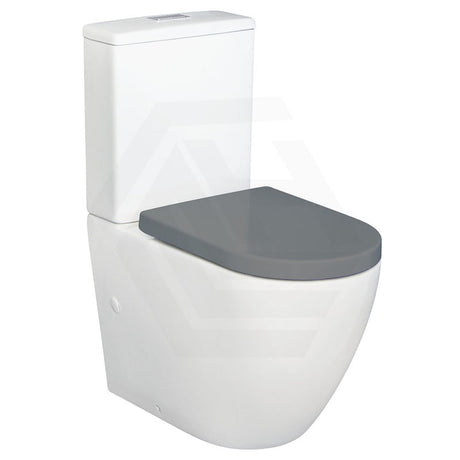
For P trap configurations, make sure the toilet suite is compatible with P trap. Many toilet suites sold in Australia are now marked as pee trap toilet suites that are designed for wall outlet configurations. Ensure the set-out is correct. Most p trap toilet comes in 180mm or 185mm set-outs, but this varies.
If you’re replacing an older S trap toilet suite, confirm the set-out distance. S trap toilet suites can have set-outs between 60mm and 200mm. An incorrect set-out means the new toilet won’t line up with the existing waste pipe.
A quality p trap commode or S trap toilet suite will have the trap type, set-out distance and water connection details clearly specified. Don’t skip over this detail, I’ve seen too many returns and costly replumbing jobs because someone assumed their new toilet suite would have the same measurements as their old one.
One final tip. If you’re renovating and have the option to choose your trap type, consult with a plumber to determine what the best configuration is for your bathroom. It’s better to get it right upfront than have to deal with issues for the next 15-20 years.