

05 May, 2026
P Trap or S Trap: Choosing the Right Toilet Trap Plumbing for Your Bathroom
P trap or S trap: understand the key differences in toilet plumbing and choose the right configuration for your bathroom. Essential guide for Australian renovations and waste pipe setouts.

What Is a Toilet Trap and Why Does It Matter?
When people buy a new toilet suite they are usually focused on looks — the shape, buttons and seat. The trap is something you think about later. And that's when things go wrong.
A trap is part of a toilet plumbing system which creates a small water seal in the toilet pan. This seals out sewer gases that can leak up through the waste pipe and into your bathroom. The toilet trap plumbing you have or need is dependent on the waste pipe position. If it is the wrong type you risk poor drainage, smells and even a failed plumbing inspection.
Unlike most other bathroom components, trap plumbing is not a style consideration. It is dictated by whether your toilet waste pipe exits through a wall or through a floor. This means only a specific toilet pan configuration will physically connect to your bathroom rough-in.
With trap plumbing explained and the purpose of a toilet pan outlet established, let's look at what a P trap and S trap configuration are and exactly how they move waste water.

P Trap vs S Trap: How Each One Works
If you picture the toilet pan outlet, the difference is straightforward.
A P trap waste pipe exits through the wall. The outlet sits at the back of the toilet pan and connects with a waste pipe running through the wall cavity. If you look at the profile it resembles a letter P on its side. The standard setout for a P trap is 185mm — measured from the finished floor level to the centre of the wall waste pipe.
An S trap waste pipe exits through the floor. The outlet drops straight down from the pan base into a floor waste. The setout is measured from the wall behind the toilet pan to the centre of the floor waste pipe, which in most Australian homes falls in the 100–120mm range. That measurement is to the centre of the pipe — not the edge, which is a common measuring mistake.
Both configurations hold a water seal inside the pan. The geometry is what differs, and it must match your existing rough-in exactly. Australian toilet pans typically have a 90mm outlet diameter, and most are available in both configurations — but you need to confirm which one you need before purchasing anything.
Now you understand what a toilet trap is and the purpose of each one, let's look at the real-world differences between a P trap and S trap when measuring rough-ins.

The Difference Between P Trap and S Trap: Installation and Rough-In Requirements
The difference between p trap and s trap toilet waste plumbing comes down to floor construction and the rough-in location — either in the wall or the floor.
In Australian homes with timber floors — common for upper-level bathrooms and many older homes — both P and S trap toilets may be available, but it depends on what was originally installed. With concrete slab construction it is less flexible: if the slab has a floor penetration for the waste, you need an S trap. If the waste runs through the wall, a p trap for toilet is required. Changing between the two requires relocating the waste pipe, which is licensed plumbing work in all Australian states.
Any toilet suite you purchase must carry WaterMark certification (WaterMark Certification Scheme) — this is a mandatory national requirement, and your plumber will check for it before installation. Plumbing authorities may refuse non-compliant products.
Accessibility is also worth considering if you are planning a bathroom layout from scratch. AS 1428.1 sets out minimum clearance requirements around fixtures, and those spatial constraints can influence where a toilet can be positioned — which in turn affects which rough-in position is practical.
Finally, if you are relocating a toilet as part of a bathroom project, ensure your licensed plumber advises on the new rough-in position before tiling starts. Changing the waste outlet position after tiles are laid is an expensive exercise.

Which P Trap Toilet Suite Is Right for Your Bathroom?
P traps are the standard configuration for new builds and apartment bathrooms across Australia. If your waste outlet is wall-faced — that is, the waste pipe exits through the wall behind the toilet — you require a p trap on toilet suite.
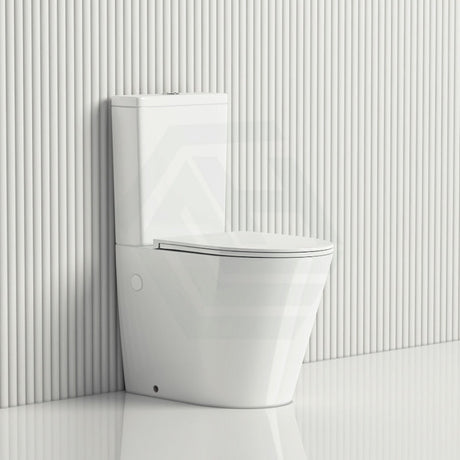
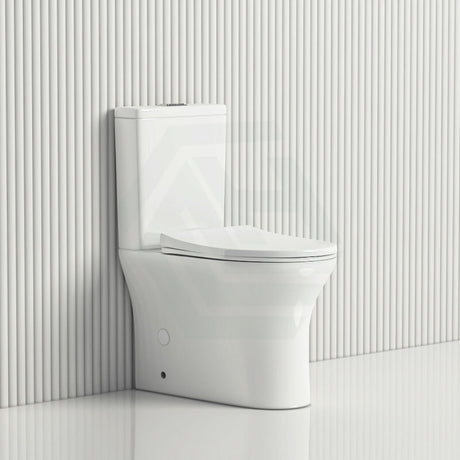
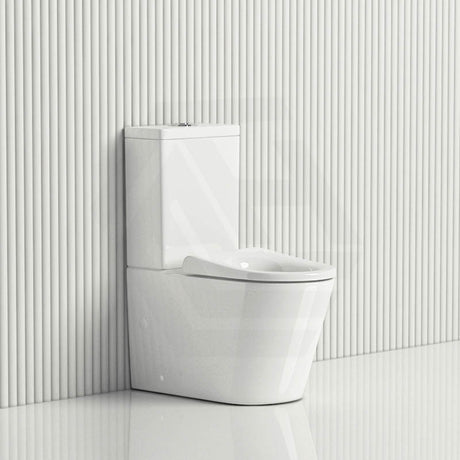
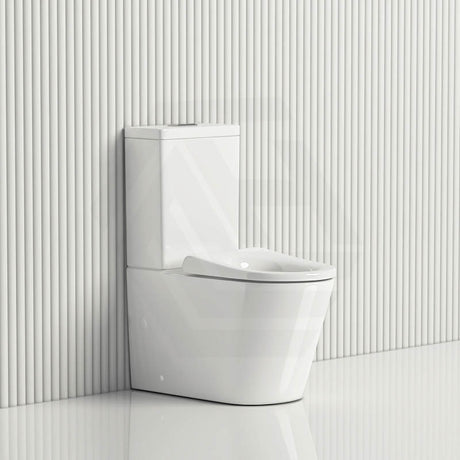
P trap suites are the standard fitment for upper-floor bathrooms, apartments and new builds where the plumber has run the waste through the wall. Most P trap toilets sold today come as back-to-wall or wall-faced suites.
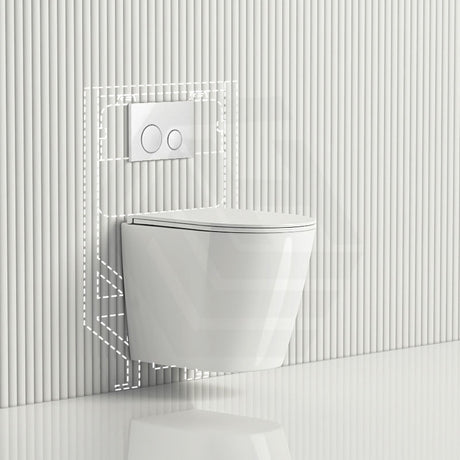
Confirm with your plumber before ordering: the outlet height from finished floor level (185mm to the centre of the pipe), the setout measurement from the wall, and whether an in-wall cistern is required. Fitting a p trap or s trap toilet with a concealed in-wall cistern — using a Geberit frame and cistern system, for example — is a popular choice for wall-hung suites. Poseidon and Fienza both offer mid-range back-to-wall P trap suites priced from $400 up to $1,199.
If your waste outlet is through the floor rather than the wall, a P trap will not connect properly. That is where the S trap is required.

Which S Trap Toilet Suite Is Right for Your Bathroom?
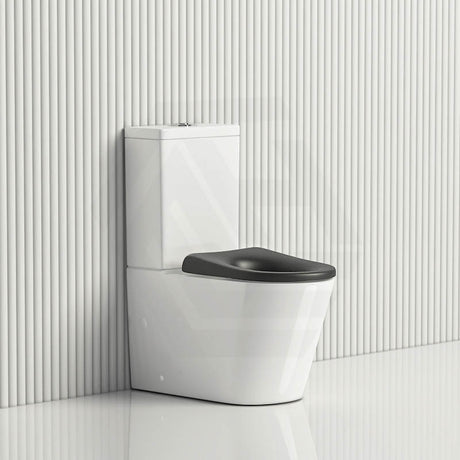
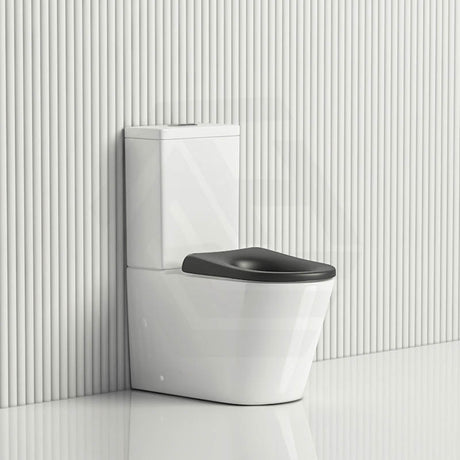
Australian homes built on a concrete slab are most likely to have an in-floor waste outlet, meaning an s trap for toilet suite is required.
The S trap remains the most common configuration for bathroom replacements in Australia, particularly in existing homes with in-floor drains. For a like-for-like replacement in the same location, an S trap suite will align with the existing plumbing provided the setout measurement is correct.
Most S trap suites feature adjustable setouts of 90–230mm from the wall to the pipe centre, which suits older Australian homes where the waste position is not always predictable. Measure from the wall to the pipe centre before ordering.
Poseidon, Fienza and Macho all offer budget and mid-range options. Back-to-wall S trap suites are available from $185–$800, making like-for-like replacements cost-effective.
A licensed plumber should always carry out an S trap to P trap changeover — it can involve waste pipe relocation and, on slab construction, cutting concrete. Choosing p trap or s trap correctly from the outset avoids this cost entirely. A straightforward like-for-like toilet replacement typically takes a licensed plumber one to two hours.
References
WaterMark Certification Scheme, Australian Building Codes Board