

15 April, 2026
Bathroom Lighting Ideas: How to Create the Perfect Ambience
Bathroom lighting ideas to create the perfect ambience: task lighting for vanities, warm ambient layers, LED upgrades and dimmer switches. Practical tips for functional and relaxing Australian bathrooms.

Bathroom Lighting Fundamentals: Function and Ambience Balance
Bathroom lighting ideas have become a mild obsession of mine, especially since I got it so wrong the first time around in my own bathroom renovation. It's a mistake many of us make when renovating bathrooms; in the showroom, we stare at the look of each light, ignoring their function.
Your bathroom should actually have two kinds of lighting: task and ambience. Task lights give a bright light at your bathroom mirror at face height and, according to Australian lighting standards, this should be about 300-400 lux in the vanity area, whereas ambient lighting in the rest of the bathroom will be at 100 to 150 lux. The best way to create an ambience in your bathroom is by layering lights and having a dimmer. You can also change the colour temperature of your light from cool 5000K white for a bright, alert morning or to 3000K warm white for a relaxing soak. The trouble is that if you only have one downlight in the bathroom ceiling, it's going to be too dark for task or too bright for an ambience.

Task Lighting: Achieving Proper Light at Your Mirror
Task lighting at your bathroom mirror is arguably the most important decision you can make. On The Block, you might have noticed bathrooms that look amazing until you look at the close-up reveal of the couple shaving or applying make-up; they just can't get the job done because of the harsh shadows from the ceiling lights.
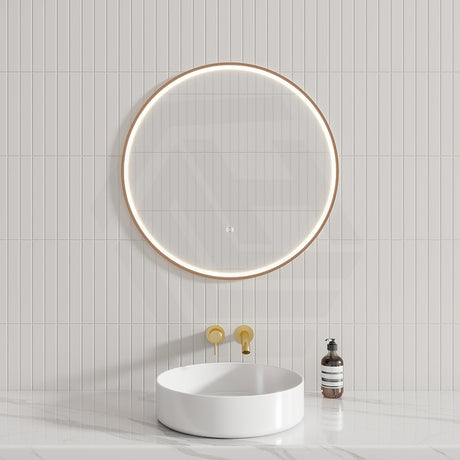
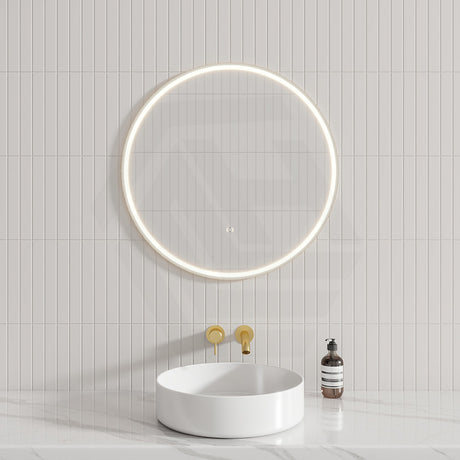
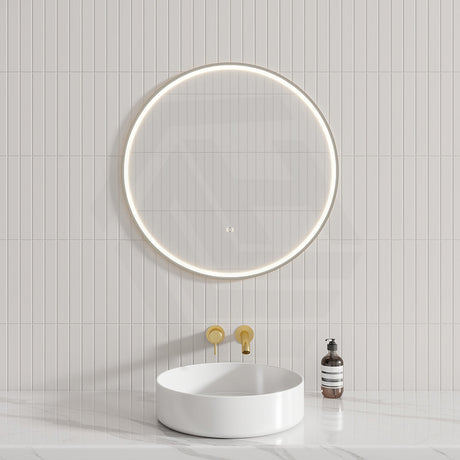
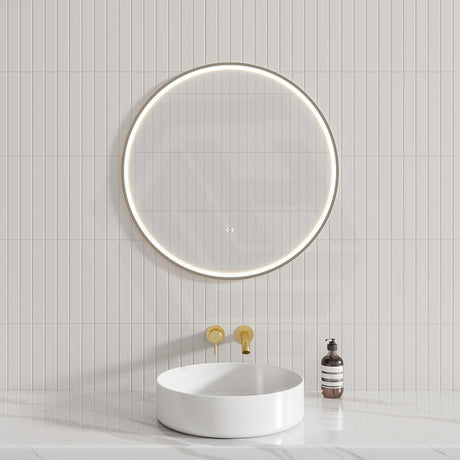
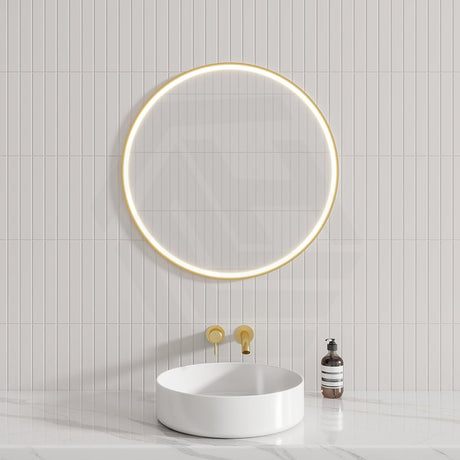
For the gold standard of bathroom mirror ideas, it's sconces on both sides of the mirror. Light comes from both sides of the room to illuminate your face and you don't get dark shadows under the eyes that an overhead light creates. The height is important too, with 1,500mm above the floor the ideal height of bathroom sconces. Bathroom mirror light options include an LED strip on the back ($30-$100), traditional side sconces ($80-$300 per sconce), or a bathroom mirror with integrated LED strip lighting (Reece Bathrooms $300-$800, becoming the standard at many Reece stores). Adding bathroom vanity side sconces to an existing vanity will require new wall rewiring and an additional $200-$400 for electrician labour.

Ambient Lighting: Creating Spa-Like Relaxation Zones
This is where bathroom lighting ideas get fun. Task lights allow you to work; ambient lights make it somewhere you want to spend time.
Start with ambient dimmable ceiling lights from 100 to 300 lux. If you have an LED light strip hidden behind the bulkheads around your bathtub, give this a softer 50 to 100 lux. You'll want ambient light for your relaxation areas to feel the same soft warmth that comes from indirect light in luxury bathroom design spaces. The key is to distinguish between light you can see, and light bounced off a surface; direct light feels harsh, ambient light feels cosy. Use warm white lights for ambience areas and dimmable (3000K or lower) for your relaxation zone. Budget $100-$300 per fixture for ceiling lights, plus $200-$400 for an electrician.

Mirror and Light Integration: Maximising Reflection and Coverage
It's not talked about much in bathroom renovation guides, but how a vanity is mounted also has an impact on your vanity lighting, which needs to sit directly over the bathroom vanity. If you wall mount your vanity at 800-900mm from the floor, it puts your sconces at the perfect height. Another aspect to consider is your vanity colour; for light reflection, a white vanity will cast more light into the room, while dark timber and matte black are good options only if you plan on having brighter task lighting. Frameless or edge-lit mirrors ($300 to $800) provide more even light distribution than framed versions. The rule of thumb is to settle on the vanity and mirror first, then light them to suit. In a room with a spa bath, consider where the mirror wall shines light onto the area of the room where people get into the spa: the indirect bounce lighting is surprisingly effective.
A similar process should be used when planning around freestanding bathroom tubs: a freestanding tub is another object that can act as a focal point. The addition of a few accents above the tub or around it can turn an average bathroom into a very special room.

Dimmers, LED Technology and Cost-Effective Upgrades
My top advice for all people renovating their bathrooms is to install a dimmer switch. At $20 to $80 each, dimmer switches offer the most bang for your buck; it's a one-thing upgrade with a dimmer that gets you two things.
The development of LED lighting technology was a huge advancement in bathroom lighting. Not only do LEDs offer up to an 80 per cent reduction in energy usage compared to incandescent lights, the long-life factor (25,000-plus hours) makes them attractive for anyone watching their bathroom remodel cost. They are also cool-running lights and that can be a plus in a wet environment. My advice is to replace the main ceiling fixture with a dimmable LED light fixture ($100 to $300), add wall sconces around the bathroom mirror ($100 to $200) and a dimmer switch ($30 to $80). The total is just $230 to $580 to turn the ordinary into extraordinary.
LED light fixtures with dimmable switches, or a smart-lighting system ($100 to $500) that allows you to change the light's colour temperature via your smartphone, paired up with soaking tubs, allow you to create a spa-like atmosphere with no major demolition and reconstruction.